
Building 34, No. 535 Shunfeng Road, Hangzhou, Zhejiang, China
[email protected]
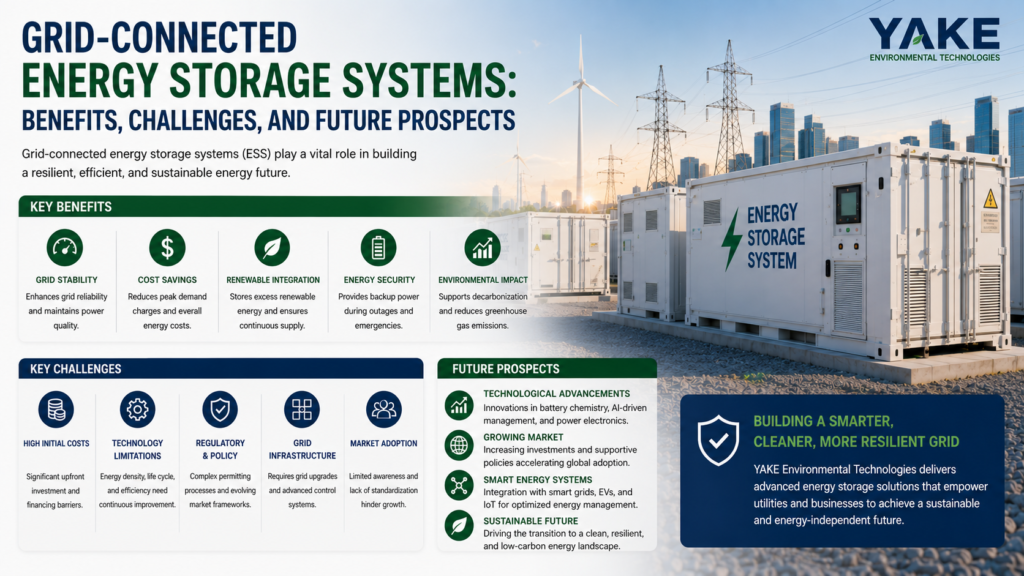


Grid-connected energy storage systems are massive battery or hybrid units that connect to the grid to capture and discharge electrical energy as needed. They do this by smoothing out load peaks, stabilizing voltage and frequency, and supporting higher shares of variable renewables such as solar and wind. Many plants employ them to reduce peak demand charges, handle backup supply, and enhance power quality for delicate lines and equipment. They frequently feature a mix of lithium-ion batteries, inverters, and sophisticated control software integrated with plant SCADA or energy management systems. For factory locations, they can integrate with dehumidifiers, HVAC, and process equipment to maintain consistent environmental conditions while reducing energy expenses. The next sections cover types, design points, and use cases in detail.
Grid-connected energy storage stores electrical energy from the grid and sends it back when the grid requires support. They sit between power plants, renewables, and loads, and they help keep supply and demand in balance by soaking up surplus energy and discharging during peaks. They are connected to renewables, like solar and wind, and to traditional plants, and they provide today’s grids with a solution for managing intermittent and unpredictable electricity flows.
Grid-connected storage essentially acts as a buffer between generation and use. It absorbs power when the grid has too much and then dumps it back when demand soars or a generator drops offline. It is this straightforward buffer function that makes it convenient for peak shaving, load shifting, and backup.
They work on the fly. They smooth fast supply fluctuations, like a cloud bank dousing solar output and short demand spikes from big industrial loads. They support two-way energy flow: they charge from the grid and discharge into the same grid, usually many times per day.
Fast response is the point. Many systems can ramp from zero to full output in seconds. They’re great for frequency regulation and voltage support. For plant and facility teams, that quick reaction helps prevent process trips, nuisance shutdowns, and bad power quality that can damage sensitive equipment.
At its core, a grid-connected energy storage system consists of a storage medium (pumped hydro, lithium-ion batteries, flow batteries, flywheels), a power conversion system with inverters and transformers, and control software that runs dispatch and safety limits.
Inverters convert DC from most storage devices into AC for the grid. They handle reactive power to help with voltage and power factor, which is significant for large industrial facilities with substantial motors and drives.
Monitoring and communication systems monitor state of charge, temperature, and performance. They connect to grid operators and plant SCADA to operate the system within safe limits and comply with market or grid codes.
| Component | Role | Typical Technologies |
|---|---|---|
| Storage medium | Holds energy | Pumped hydro, Li‑ion, flow, flywheel |
| Power conversion | DC/AC exchange, grid interface | Inverters, transformers, switchgear |
| Control & software | Dispatch, safety, optimization | EMS, SCADA, grid communication protocols |
Its principal task is to keep the grid stable by intelligently balancing supply and demand. Storage soaks up excess energy that would otherwise be curtailed and then supplies it back during spikes, which reduces waste and decreases demand for peaking plants.
Systems provide backup power during outages or grid faults. They can keep critical loads – cleanrooms, paint lines, or data centers – online while upstream problems are addressed. In numerous plants, this additional resilience is as important as energy savings.
In addition to bulk energy, it offers frequency regulation and voltage support. By adjusting output in very short time steps, it helps maintain grid frequency around 50 or 60 Hz and voltage within narrow limits. This ensures drives, robots, and humidity‑control equipment operate in spec, and it enables consistent operation of dehumidifiers and other precision climate systems that rely on clean, stable power.
Operation follows a charge, hold, and discharge cycle shaped by grid needs and market signals:
Generally, these systems execute this cycle via automatic controls that select the optimal moment to minimize damage and maximize income. Lithium-ion is now the most common for short-duration use, usually under 8 hours, due to steep price declines, whereas pumped-storage hydro continues to boast the biggest global share for long-duration bulk storage. Flow batteries and alternative chemistries cover longer-duration gaps where multiple hours of support are required for high renewable share grids.
Grid storage has become a central asset for a stable, flexible, and resilient power system. With more plants, data centers, and commercial sites dependent on variable renewables and distributed energy resources, storage smoothes the gaps between when power is generated and when it is consumed. It reduces blackout risk, increases energy resilience, and is able to reduce costs for both utilities and end users who optimize around it.
Storage reacts quickly to changes in load and generation. When a large motor line starts, a cloud crosses a solar farm, or a feeder trips, batteries or other storage inject power in milliseconds and keep system frequency near its setpoint. That speedy response aids grid operators in staving off under-frequency trips, brownouts, and equipment damage.
It relieves line and transformer overloads. Storage units located near industrial loads can discharge during local peaks, so upstream assets operate closer to their design rating rather than in permanent emergency mode. This means less thermal stress and a longer life for switchgear, cables, and substations your plant depends on every day.
Key stability challenges storage helps with include:
Storage is what makes high solar and wind shares workable. Solar and wind are intermittent, so storage soaks up excess output during production peaks and releases it when the resource dips. On a gusty night or sunny weekend, storage prevents that excess from being spilled or throttled, instead banking it for the next demand spike.
By charging during oversupply and discharging in lulls, storage smooths the hour-to-hour and minute-to-minute swings that otherwise compel gas turbines or diesel sets to chase the profile. Systems with under 40% variable renewables can often get by with short-term storage for frequency and ramp control. Once you move beyond that share, longer-duration storage becomes key to ride through multi-hour or even multi-day low-wind or low-sun periods.
This greater capture of renewable output minimizes wasted green energy and maximizes return on every installed solar or wind kilowatt. For energy-intensive sites, this translates to more predictable access to low-carbon power and a clearer path to meeting internal and external carbon targets.
Storage systems can function like a dynamic power-quality tool. Combined with smart inverters, they rectify voltage sags and swells, assist in scrubbing harmonics from variable-speed drives, and maintain plant bus voltage within strict parameters during switching events or faults on the greater grid.
For critical lines — like cleanrooms, paint shops or precision electronics assembly — this stability means the difference between a regular shift and a lost batch. Since storage responds more quickly than conventional mechanical equipment, it maintains the waveform within tolerance even during extremely short transients.
Power quality issues storage can help mitigate:
Peak shaving refers to reducing demand in the most expensive or stressed hours of the day. It charges when demand and prices are low, then discharges during peak windows, so your site’s grid draw stays below a set threshold. That reduces demand charges and can relieve the need for grid upgrades.
For both utilities and large users, the benefits are concrete and often quick to show up in bills:
Declining battery prices make this increasingly viable each year. Now that costs are down about 97% in three decades, storage is within reach for many industrial and commercial customers, even though round-trip efficiency is not 100%. You purchase excess electricity that you subsequently sell back, but when you combine storage with time-of-use tariffs, demand charges, and on-site solar, the net savings and resilience gains can still be robust.
Grid-connected energy storage combines multiple technologies so that the grid can better manage variable solar, wind, and industrial loads. At plant level, these systems nest alongside inverters, switchgear, and sometimes process equipment, just like we embed dehumidifiers around air systems and controls.
Battery storage is the primary technology in current grid projects. Lithium-ion dominates most systems, with lead-acid and various flow batteries supporting niche cases. Lithium-ion performs well for tasks lasting between 0.25 and 4 hours, like frequency regulation, solar smoothing, and peak shaving. Lead-acid still appears in inexpensive backup banks. Flow batteries are used where a discharge lasting between 4 and 10 hours is required and space is not a huge concern.
These systems typically achieve round-trip efficiency in the 85 to 95 percent range. They respond in milliseconds, which is why they go so well with today’s UL 1741-certified, IEEE 1547-compliant contemporary inverters. That same basic stack—DC batteries, power conversion system, controls—pops up in grid-tied solar sites with PV arrays, battery rooms and a grid intertie.
Boundaries are defined. Lithium-ion has limited cycle life, thermal management requirements, and safety protocols. Recycling and end-of-life rules are getting sharper. Flow batteries mitigate some cycling problems but are more expensive and require pumps and tanks. Still, battery storage dominates new grid-connected capacity because it is modular, proven, and fast to deploy.
Mechanical choices encompass pumped storage hydro (PSH), flywheels, compressed air, and emerging non-hydro gravity variants. PSH transfers water between two reservoirs and may provide multi-gigawatt, multi-hour output to power countless homes. It works really well for bulk shifting of wind and solar across the day.
Flywheels and CAES occupy more niche roles. Flywheels excel in short-duration, high-cycle services such as voltage support or ride-through. CAES and gravity systems target long duration tasks, at times storing energy for days and providing grid balancing assistance in high renewables share regions.
Many mechanical systems provide long service life, low marginal operating cost, and good stability. The trade-off is site dependence: PSH and gravity storage need specific terrain and permits. CAES needs suitable geology and large civil works. Once the site does work, however, these projects can stabilize regional grids for decades.
Chemical storage turns that electricity into energy-dense fuels, primarily hydrogen and derivative products such as ammonia or synthetic methane. Power-to-gas plants use excess wind or solar to break water into hydrogen and then store it in tanks, caverns or pipelines to later feed fuel cells, turbines or direct industrial burners.
This route suits ultra-long duration and seasonal storage, where battery or PSH economics fail. Hydrogen can exit the power sector entirely to enter transport or high-temperature process heat, providing grid operators a flexible sink when there is excess renewable power on mild days. It is similar to molten salt in solar thermal plants, where salt stores heat during the day and drives steam turbines at night, just in chemical not thermal form.
The negatives are low round-trip efficiency, high capex for electrolysers and storage, safety engineering around hydrogen, and little field experience at the scales utilities want. Supercapacitors like Eaton’s XLR-51 modules lurk near this space, addressing very high power for seconds but solving power-quality problems rather than long storage.
| Technology | Type | Typical Duration | Main Strength | Key Limits |
|---|---|---|---|---|
| Lithium-ion / Lead-acid | Battery | Minutes–4 h | Fast response, high efficiency | Cycle life, fire safety, recycling |
| Flow batteries | Battery | 4–10 h | Long cycle life, flexible sizing | Higher cost, balance-of-plant needs |
| PSH / Gravity / CAES | Mechanical | Hours–days | Large scale, long life, low O&M | Site specific, heavy civil works |
| Hydrogen and chemicals | Chemical | Days–months | Very long duration, cross-sector use | Low efficiency, early-stage projects |
Grid-connected storage connects to the grid with power electronics that match voltage, frequency, and phase, complying with rigorous grid codes. Systems can sit behind the meter at a plant or as utility-scale assets, but in both cases they have to talk to grid operators, react quickly to dispatch signals, and pass safety and performance tests. A typical step plan runs from grid-impact study to design and protection review to commissioning and performance validation.
Every grid‑connected storage plant sits on a few core hardware blocks: transformers, inverters, switchgear, and protection devices. The transformer takes DC‑linked inverter output and steps it up to medium or high voltage, equivalent to local feeder levels. The inverter, or PCS, power conversion system converts DC from lithium‑ion racks or vanadium flow stacks into AC that is perfectly synced with grid frequency and phase, so it can charge, discharge, or deliver fast grid‑support services.
Switchgear isolates plant, clears faults, and allows crews to work on live sites, risk-free. Protection devices, such as relays, fuses, and breakers, monitor for over-current, over-voltage, reverse power, or islanding, then trip in milliseconds. For a plant manager, this is what prevents a storage yard from bringing down an entire production feeder when something breaks.
On top of that, you need strong communication and control. SCADA links, secure gateways, and open protocols allow the storage plant to communicate with utility dispatch, plant EMS, and sometimes market platforms. This is how you wrangle net‑metering rules, monitor if you exported excess power from month to month, and realize when you’re purchasing power at full retail rate since the system fell short of your load.
For planning, most teams build a simple checklist: transformer and inverter ratings, switchgear and relay specs, metering CT/PT sets, communication hardware, and interfaces to the local plant controls and utility control center.
Safety begins with storage chemistry and site layout. Lithium-ion systems require robust thermal management, gas detection and fire suppression engineered for cascading cell failures, while vanadium flow tanks instead emphasize leak control and pump safety, as electrolyte is non-flammable but still dangerous. Large pumped-storage hydro plants care more about spill, flood and mechanical risk, yet they share the same core idea: failures must stay local and never reach the wider grid.
Codes and standards steer most of this work. National and international standards, such as IEC, IEEE, NFPA, and local grid codes, dictate limits on fault currents, protection speed, grounding, and emergency shutdown logic. A storage plant that wants to run frequency regulation or backup power needs to prove safe performance during grid faults and black starts, not just during peaks.
Continuous effort beats drawings. Frequent inspections, monitoring of HVAC and fire systems, and constant monitoring of cell temperature, voltage drift, and state of charge reduce the risk of thermal incidents. This is especially true for short-duration lithium-ion systems that cycle hard every day and for long-duration flow systems that might linger at a particular charge level for days or weeks.
Teams often map safety by technology. One list is for batteries, which includes fire, gas, thermal runaway, and arc flash. Another list is for mechanical storage like pumped hydro, covering dam safety, turbines, and cavitation. The last list is for power electronics, which includes arc flash boundaries, DC hazards, and inverter faults.
Grid operators impose strict technical and regulatory guidelines onto storage owners. They specify permissible active and reactive power ranges, ramp rates, response times for frequency incidents, and fault ride‑through characteristics. They decide how a system can run: behind‑the‑meter for plant peak shaving and backup, or as a utility‑scale asset that bids into markets.
Most contracts now demand real-time data sharing, performance guarantees, and transparent LCOS targets. Operators desire high round-trip efficiency and predictable degradation, particularly for lithium-ion systems performing short-duration tasks of less than 8 hours for peak shaving or fast frequency response. For vanadium flow and other long-duration systems, guidelines favor energy throughput and availability over multiple hours or even days.
Cyber security and remote control are not optional. Storage plants need to enable safe remote dispatch, firmware updates, and fault investigation all without placing plant networks at risk from external threats. This is critical when storage enables resilient microgrids supporting flexible grid services, backs up critical loads, and helps keep voltage and frequency stable during outages.
A provider compliance checklist typically addresses grid-code tests, communication and protocol support, cyber controls, metering for net-export accounting and demonstrated capability to provide committed services, whether it’s backup power, ramping for renewables or time-shifted discharge that reduces a facility’s energy expenses and net imports.
Grid‑connected storage straddles the energy transition. Actual adoption encounters interconnected economic, technical, regulatory, and lifecycle hurdles. These define where ecosystems can be constructed, how they monetize, and how they operate safely and sustainably over decades.
High upfront capex for batteries, power conversion systems, fire safety and grid interconnection still blocks a lot of projects. Revenue is volatile. Frequency control prices, capacity prices, and arbitrage prices are shifting rapidly, and negative pricing can reduce the value of energy arbitrage just when storage should be most helpful.
Market design impacts viability. In certain territories, storage can’t stack services or bid into all markets. The route to market is tough when long-term offtake is absent or when curtailment risk looms, as solar and wind locations experiencing repeated cuts have in regions with fragile transmission infrastructure. They can spend 3.7 years just waiting in the interconnection queue, tying up capital and killing internal rates of return.
There are significant obstacles. Most tariffs do not compensate for congestion relief or avoided upgrades, even though that is where storage can excel.
Promising finance models today are long-term capacity contracts, storage-as-a-service with utility off-takers, co-location with solar or wind, and blended public-private funding backed by green bonds or climate funds.
Most grid batteries put on today offer 1 to 4 hours of discharge, which limits what they’re able to do for long peaks or multi-day supply gaps. Cells break down with cycling, heat, and bad control, so lifetime energy throughput is dubious if you don’t operate it very carefully.
Round-trip efficiency losses devour margins and they increase as systems grow older. Integration is non-trivial. Current grid protection schemes, transformers and substations were not designed for bi-directional, fast-acting devices. Grid connection queues and interconnection studies are still one of the biggest bottlenecks, especially in high solar and wind build-out regions.
Advanced control and forecasting tools are lagging. To truly reduce solar curtailment and negative pricing events, storage needs accurate, site-level load, renewable output, and network constraints forecasts in near real time. That’s not deployed much yet.
Key gaps: longer-duration and hybrid storage (for example, Li-ion plus flow or thermal), better state-of-health estimation, tighter integration with grid management systems, and more fault-tolerant, cyber-secure control platforms.
Many markets’ policies still treat storage as either pure load or pure generation, which is not the way it works in practice. That creates double charging of grid fees and conflicting price signals. Opaque rules on ownership and market access introduce further risk.
Permitting is a slow process. The grid connections queue is a significant impediment to the energy transition, as some storage and solar initiatives undergo years of studies and approvals. In areas like California, old rules like the Subdivision Map Act, which could mandate land subdivision for storage use, have tacked on extra time and expense before a shovel even hits the dirt.
Regional variations are broad. Certain markets enable storage to participate in the bidding for several services, while others restrict it to a couple. Safety standards, particularly in dense urban environments, are often rigid but erratic, complicating design and compliance for cross-border developers.
Other key reforms are to establish clear definitions of storage as a separate asset class, fast-track interconnection for low-risk projects, standardized safety codes, and the ability to stack multiple revenue streams under long-term, stable regulations.
Lifecycle risk runs from material extraction to end of life. Cell production has its own carbon and water footprint. Lithium, cobalt, nickel, and rare earth sourcing come with social and environmental concerns in mining regions globally.
Operation leaves its scars as well. Bad siting and weak integration can drive more curtailment or local congestion, not less, in parts of Texas where heavy build-out of wind and solar already causes frequent curtailment because transmission isn’t sufficient. Safety is another point: large battery sites must manage fire risk, gas release, and emergency response, which is more complex near cities or industrial clusters.
End-of-life is still not solved at scale. Recycling rates for lithium-ion storage are scaling but immature in many areas and business models are lean. Absent defined recycling routes, you risk stranded toxics and stranded material value.
A simple lifecycle checklist for storage projects should cover traceable and responsible material sourcing, factory energy and emissions data, efficiency and degradation over life, safe installation and operation plans, recycling contracts from day one, and clear decommissioning funds and roles.
Grid-connected storage is about more than supply and demand. It transforms local economies and cost structures and tacitly alters how plants measure risk, uptime, and long-term investment in power and climate control.
Storage projects cause direct job growth in design, civil works, electrical works, commissioning, control integration, and long-term operations. A 50 MW and 200 MWh battery site next to an industrial cluster can translate to dozens of specialized jobs in power electronics, SCADA and asset management, and even indirect labor for steel, concrete, HVAC and dehumidification providers. As more regions wean off fossil fuel peaker plants and toward renewables and storage, this supports new supply chains for batteries, high-entropy oxide anodes and cathodes, power conversion systems, and even synchronous condensers that provide rotational inertia and voltage support. That industrial build-out delivers local tax revenue and more stable power quality, which counts for paint lines, cleanrooms, and precision assembly.
Indirect economic benefits arise from enhanced grid efficiency. Storage alleviates wholesale price spikes, minimizes wind and solar curtailment, and limits network losses. That can deliver lower or at least more predictable tariffs, which plant managers can use to lock in long-term power purchase deals and plan capex on energy-intensive equipment like large dehumidifiers or chilled-water plants. Improved frequency and voltage regulation translate into fewer sensitive drive trips, batch failures, and scrap. Over time, lower greenhouse gas emissions and slower climate change safeguard supply chains from climate-driven disruption, an economic impact that is difficult to value but very real for global producers.
New business models layer atop this hardware stratum. Storage assets can stack services: energy arbitrage, capacity markets, frequency regulation, black-start support, and local reliability contracts. Vehicle-to-grid (V2G) can pay fleet operators and even staff who park EVs onsite, making parked cars micro-storage that offsets evening peaks. For an industrial campus, this opens options:
Grid-connected storage now occupies center stage in a stable power portfolio, not the periphery. Plants, data halls, and large sites already use it to shave peaks, hold backup, and lock in power quality. City grids rely on batteries to buffer solar surges and wind lulls.
Every tech slot has an obvious function. Lithium systems provide quick response. Flow tanks extend to hours. Thermal blocks absorb inexpensive heat. Flywheels tidy up short spikes.
Challenges remain real. Policy gaps, weak price signals, and sluggish grid upgrades exist. Projects still come on.
For your plant or site, the next step is easy. Map your load swings, map your grid rules, and map your space. Then size the storage stack that fits your risk, not the trend.
Grid-connected energy storage systems store electricity and then return it to the grid as necessary. It assists with supply-demand balancing, renewable energy integration, and enhancing grid reliability and stability.
They address the gap between when renewables generate electricity and when consumers need it. Storage captures excess solar or wind energy and puts it out later. This makes renewable power more reliable and reduces curtailment and fossil backup requirements.
Popular technologies are lithium-ion, flow batteries, pumped hydro, compressed air, and flywheels. They all have different advantages for duration, cost, location, and response time. Utilities frequently combine a few technologies.
They interface via inverters, transformers, and control systems. Grid operators dispatch signals instructing storage when to charge or discharge. Cutting-edge software oversees voltage, frequency, and power flows, ensuring grid stability and efficiency.
Main issues are upfront cost, regulatory uncertainty, project financing risk, and grid integration complexity. There are battery safety, lifetime and recycling concerns, as well as the environmental impact of raw material mining.
They generate income by offering grid services including capacity support, frequency regulation, energy arbitrage, and peak shaving. Others earn revenue from renewable contracts or electricity markets.
They decrease grid operating expenses, the demand for new power plants and transmission lines, and increase energy security. This can smooth out electricity pricing, support more local renewable projects, and generate engineering, construction, and maintenance jobs.


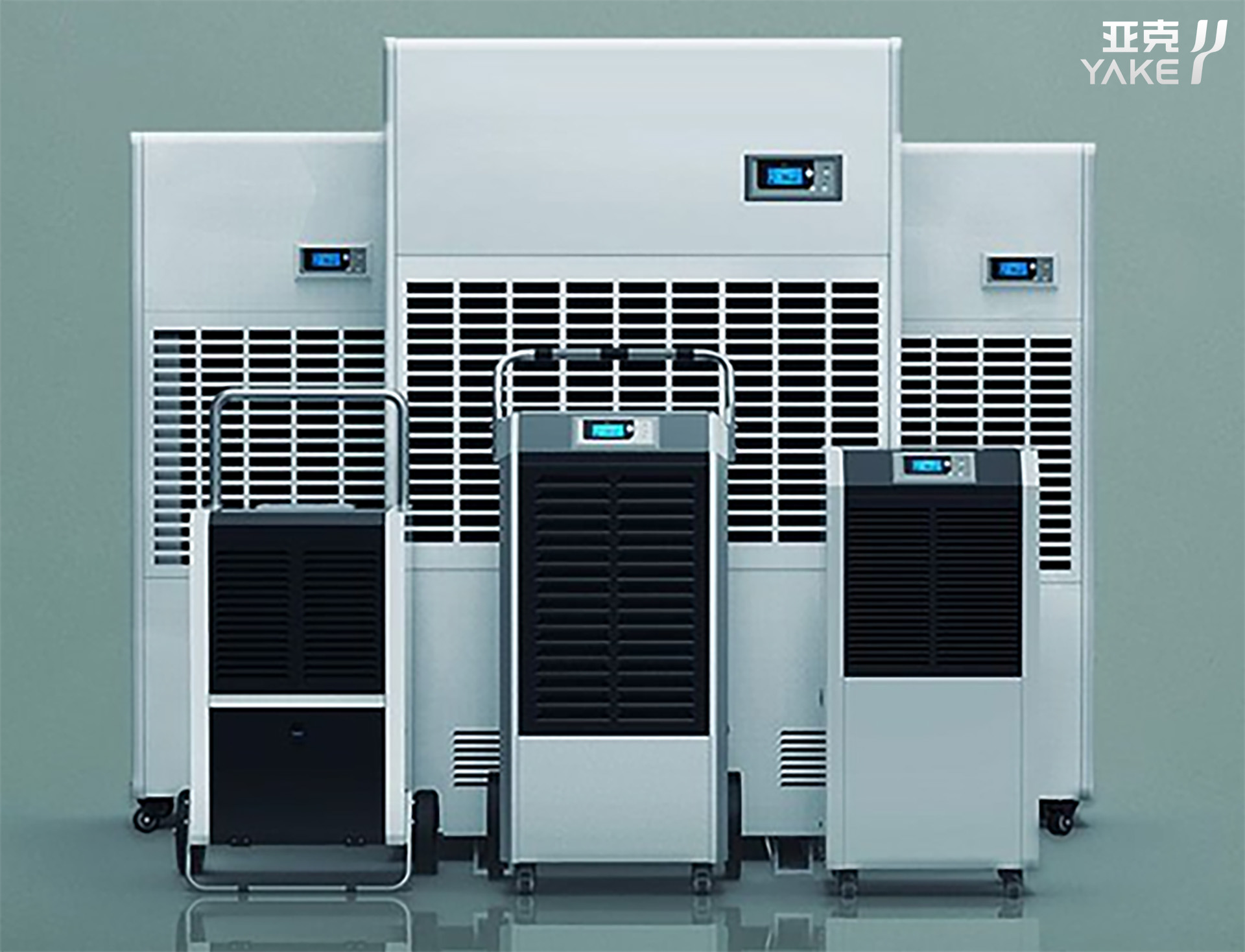
Contact us to find the best place to buy your Yakeclimate solution today!
Our experts have proven solutions to keep your humidity levels in check while keeping your energy costs low.