
Building 34, No. 535 Shunfeng Road, Hangzhou, Zhejiang, China
[email protected]
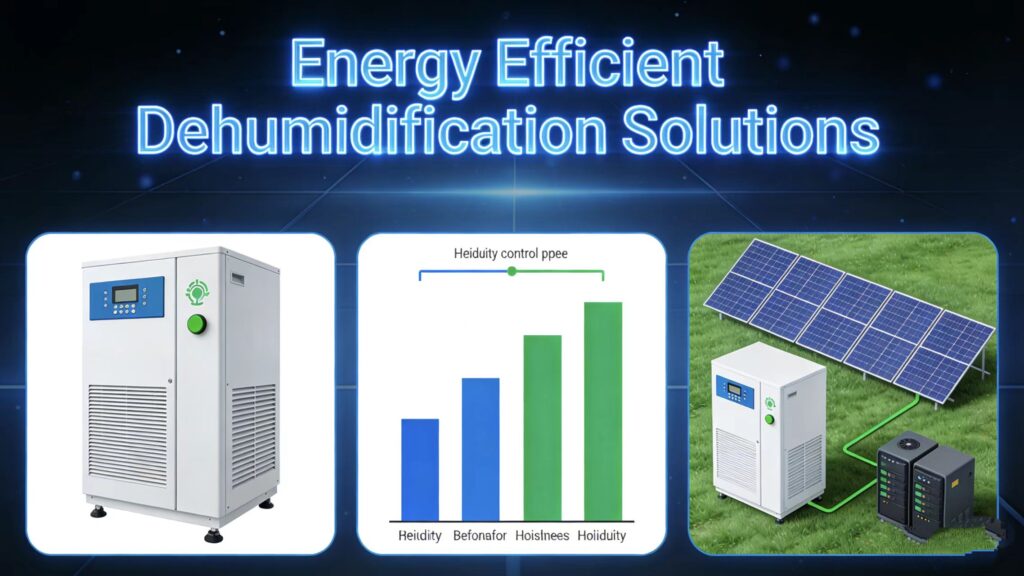

Energy-efficient dehumidification solutions address the challenge of controlling air moisture in indoor farms and other controlled spaces while minimizing energy consumption. These systems employ smart sensors and innovative compressor designs to reduce energy consumption while maintaining constant humidity for produce such as lettuce, tomatoes, and herbs. Many growers choose energy-efficient dehumidification to reduce operational expenses, reach sustainability targets, and protect yields. Certain units even have integrated monitors that display live data for employees to detect issues quickly. Less energy means less heat in your grow zone, which can reduce plant stress and cooling costs. To select a quality system, it’s helpful to understand the key characteristics and how these devices fit into an overall climate strategy.

Efficiency metrics are at the heart of smart dehumidifier selection. They assist growers and facility managers in comparing units, predicting running costs, and investing wisely. By decoding these metrics, users can balance actual energy savings with initial investment and efficiency assertions.
The European Union and Japan have defined energy efficiency standards. On the efficiency front, the trusted ENERGY STAR label, known throughout the world, recognizes dehumidifiers that are proven to meet stringent efficiency guidelines. Numerous other countries rely on similar programs, including the EU’s Energy Label or China’s Energy Conservation Certification. These standards center on fundamental metrics such as IEF, which calculates liters per kilowatt hour. For example, a unit with an efficiency of 1.80 liters per kilowatt hour (25.01-50 pints per day models) is more efficient than a unit with an efficiency of 1.57 liters per kilowatt hour. R-32 refrigerant models, which are now common in high-end systems, can provide up to 12% better efficiency than legacy refrigerants.
| Standard/Region | Metric Used | Typical Threshold | Notable Feature |
|---|---|---|---|
| ENERGY STAR (Global) | IEF (L/kWh) | 1.57–3.30 | Strict third-party tested |
| EU Energy Label | kWh per year | class dependent | explicit A to G rating scale | | China CEC | Water per liter per kWh | greater than or equal to 1.57 | Emphasis on practical usage |
Achieving these standards enhances energy efficiency and indicates a product’s durability and lifespan.
Capacity rating is key. A higher-capacity dehumidifier extracts more moisture but can consume more power, so aligning the capacity with the room’s dimensions and requirements is crucial. Humidity and temperature shift efficiency: units work harder in spaces at 80% relative humidity than at 60%, using more energy to reach a set point. R-32 models retain moisture removal and increase efficiency up to 10%. Noise levels are important too, particularly if you plan to use them in a home or office. Quieter units are more tolerable.
| Performance Factor | Effect on Efficiency | Example |
|---|---|---|
| Capacity | Higher = more energy, more removal | 50 L/day vs 25 L/day |
| Humidity Level | Higher RH = higher energy use | 80% to 50% RH is energy-heavy |
| Temperature | Lower temp = lower efficiency | Basements need robust units |
| Refrigerant Type | R-32 is more efficient | 10% energy savings |
| Noise Level | Lower noise = better for homes | 40 dB better than 60 dB |
High end systems maintain humidity within plus or minus 2% of set points. Simple ones can wander 5% or greater. Efficient models have payback periods as low as one and a half years.
Energy labels provide a glimpse into a dehumidifier’s actual influence. Watch wattage, typically 100 to 900 watts, and spot IEF or liters per kilowatt-hour to measure efficiency. Compare models by rated daily capacity and annual energy consumption. Keep in mind that real energy consumption can differ from labels. Non-ideal conditions such as room size and initial moisture content affect the results. Manufacturer-scrawled claims often hide behind perfect lab conditions, but third-party certifications help clarify the advertising. Take labels as a guide, but match specifications to your needs.
Energy-efficient dehumidification is crucial for indoor growers, plants, and commercial structures across the globe. Some technologies provide advantages in specific climates, for larger or smaller facilities, and for varying operational requirements. Both strategies have unique advantages, consumption profiles, and service requirements.
Refrigerant dehumidifiers draw air over refrigerated coils, generating condensation. These units are preferred for warmer, more humid rooms. Today’s refrigerant units can achieve a coefficient of performance ranging from 3.3 to 4.7. They extract more moisture per energy used than outdated models. ENERGY STAR® rated dehumidifiers go even further, using up to 20% less energy than standard units. In the long run, that slashes both utility bills and ecological pressure.
Cost-effectiveness relies on steady room temperature. If air falls below 18°C, coils may frost. This may cause the compressor to short cycle without dehumidifying, lowering efficiency. Certain refrigerants employ planet-friendly coolants, but many still use chemicals that must be carefully disposed of.
Desiccant dehumidifiers perform well in low temperature or humidity environments, such as cold storage or winter greenhouses. They employ a substance, typically silica gel or lithium chloride, that takes up water from air as it traverses. Most designs employ a rotating desiccant wheel, which alternates between wet and dry airstreams to provide continuous drying with minimal energy loss.
Desiccant systems tend to have lower coefficients of performance, 2.30 or less in drier climates, but they maintain consistent output in the cold when refrigerant systems falter. Maintenance is limited to inspecting and replacing the desiccant material and ensuring seals are tight. They can be more efficient than refrigerants in some industrial and specialty applications and typically have a higher initial cost.
Thermoelectric dehumidifiers are notable for being tiny, lightweight, and silent. They leverage the Peltier effect to transfer heat and extract moisture from air. This makes them ideal for compact spaces, such as closets, cabinets, or individual rooms, where conventional dehumidifiers are too cumbersome or noisy to operate.
They don’t consume too much power. Their dehumidifying capacity is less, generally ideal for space below 20 square meters. Thermoelectric units aren’t suited to high-humidity regions, where their small output can’t keep up with moisture. Their simplicity translates to fewer parts that move and require maintenance, but less efficiency in general, often resulting in an integrated energy factor under that of larger units.
Hybrid dehumidifiers combine refrigerant and desiccant or thermoelectric technology to accommodate wide ranges of temperature and moisture levels. Usual configurations can toggle mode depending on room conditions, so they remain effective throughout the year. A few sophisticated units even use sensors to select the most energy-saving mode, boosting annual average COPs to over 3.89 in humid climates.
Everything costs a little more up front with the hybrid units, but they adjust to swings in humidity and temperature, so they use less energy and have lower operating costs. Trends include smart controls and modular components, allowing users to tinker with units for their crops, storage, or industrial purposes. Most of these new systems target power consumption as well as environmental impact.
Your choice of an energy-efficient dehumidification solution comes down to pairing the right system with your space, your climate, and your particular requirements. A thoughtful evaluation at the outset saves you wasted watts, reduces operating costs, and provides greater control over your plants or environment. Here’s how to break down each step for an easy, informed selection.
Begin by taking the length, width, and height of your room. Don’t forget to add both your primary grow spaces and smaller areas such as storage or processing rooms. Look at the layout. Open-plan rooms often have fewer airflow issues than tight, partitioned spaces.
Check the baseline humidity in each room with a digital hygrometer. Areas with heavy moisture or poor airflow might require a more robust dehumidifier. Pay attention to your insulation, window placement, and any water leaks. All of these can hold moisture and delay drying.
Write down findings such as:
Your local climate plays a big part in how frequently and hard your dehumidifier has to work. In coastal or tropical climates with high humidity year round, you might require commercial grade solutions. If you’re in an area with pronounced seasons, a scalable system that can grow or shrink is crucial.
Dry regions may require as little as portable units during certain months. Review local weather data and historical trends. This allows you to anticipate peak loads and prevent over-sizing.
Bullet points for climate trends:
Choose what features you care about. Auto-defrost and programmable timers are energy savers. Smart controls can be monitored remotely. Low-noise models fit offices, while rugged units suit greenhouses.
Prioritize all of these for your environment. For example, a vertical farm might require Wi-Fi controls and data tracking, whereas a barebones storage room might only require a manual unit with a generous water tank.
Consider design. Units that are compact with wheels make it easier to move in tight spaces. Others prefer units with washable filters.
Getting the absolute most out of pretty much any dehumidification system is more than simply powering it up. Placement, maintenance, and intelligent controls all factor into the efficiency of your unit. Sometimes even little adjustments to setup or maintenance can mean a world of difference in operating costs and moisture control.
Your dehumidifier placement counts. If a unit sits in a corner or behind furniture, airflow plummets and efficiency falls by up to 30%. Always keep units off walls, away from corners or anything that blocks air. Position them close to moisture sources—imagine bathrooms, kitchens, or laundry rooms—to intercept wet air before it travels. If you have significant room, sketch out a layout that allows the dry air to circulate. That way you get the benefit into every corner of the room and prevent pockets of moisture. Resist the urge to shortcut the manufacturer’s setup guide, which helps you avoid headaches and wasted energy.
Dust and grime accumulate more quickly than anticipated. Dirty filters and coils can reduce moisture removal by up to 25 percent. Set a schedule: clean the filter every two weeks and check the drain hose each month for kinks or bends. Swap them out before they lead to more major issues. Observe how your machine operates. If you notice water accumulating, strange sounds, or performance lag, respond quickly. Logging maintenance jobs aids in detecting patterns, so you know when it is time for a deep clean or a component swap. Keeping filters and coils clean is an easy yet crucial task.
Modern dehumidifiers often integrate with smart home systems. Connect your device to a mobile app to review or adjust settings remotely. Utilize these apps to remind you when to clean the filter or check the hose. Put a 24-hour timer on it and concentrate on wet times, typically evenings or after showers. Automation can help run the machine only when needed, saving energy. Never go below 40% relative humidity because this will damage parts and consume energy. The sweet spot for most spaces is 40 to 60 percent to keep things dry without stressing the system.
A growing worldwide appetite for superior indoor air and energy savings is driving dehumidification technology to the edge. New construction, evolving HVAC, and tighter indoor controls are the reasons dehumidifiers need to be smarter and greener. From solar to smart, the next wave of dehumidification is ready to transform moisture management in homes, vehicles, and industry globally.
Tying dehumidifiers to renewables such as solar is catching on, particularly in very sunny regions. Solar-powered dehumidifiers reduce grid consumption and lower lifetime expenses, providing savings for warehouses, greenhouses and residences. Others save solar energy for nighttime use, making the units more dependable. For producers, partnering with renewable energy companies can accelerate these transformations and further address tighter environmental regulations.
Renewable energy doesn’t just reduce operating costs. It reduces emissions and increases energy independence as well. These types of moves, in the long term, help counteract the effects of air conditioning, which now consumes approximately a third of all power in U.S. Buildings.
Next-gen dehumidification: new materials are bringing dehumidifiers that are harder and better. High-performance absorbents, such as next-gen silica gels and metal-organic frameworks, seize more moisture while using less power. They are more durable and require less maintenance, reducing long-term expenses for consumers.
Innovative coatings and composites assist equipment in battling corrosion and wear. In deep-drying industries—wood, pharmaceuticals, storage—these are the difference between better product quality and fewer breakdowns. The drive for superior materials will continue to deliver ever more rapid and accurate drying everywhere.
AI is beginning to power smarter, more adaptive dehumidifiers. With AI and IoT controls, they can monitor room humidity, detect issues before you do, and adjust settings for maximum efficiency. Smart predictive tools can anticipate moisture spikes and adjust output accordingly, saving energy and avoiding service calls.
With machine learning, systems learn from previous data to discover the optimal run patterns for various spaces. In EVs and buses, smart dehumidifiers could soon extend driving range by as much as seventy-five percent by consuming less power. AI will only gain importance as the need for whole-home and precision solutions continues to grow.
Energy-conscious dehumidifiers are influencing more than indoor atmospheres. They are crucial to the global economy as demand increases with urbanization and rising humidity. With the global dehumidifier market valued at USD 6.76 billion in 2024 and set to reach USD 11.04 billion by 2032, the sector is growing rapidly. Cities across the globe have experienced an increase in humidity by as much as 10% over the last ten years, accelerating the demand for intelligent, low-energy solutions. This shift is most pronounced in Asia Pacific, which topped the market in 2024 with USD 2.97 billion and will maintain that lead. Europe is another robust market, reaching USD 1.50 billion in 2025.
Broad acceptance of energy-efficient dehumidifier technology can generate new employment opportunities. Expansion in this field sustains jobs in production, setup, development, and intelligent technology embedding. With global smart home adoption now exceeding 16%, linking dehumidifiers to home systems is growing. This trend benefits both skilled labor and tech sectors. More stringent building standards and increased attention to indoor air quality in new homes and offices results in more hands required to design, build, and service these systems.
For consumers and businesses alike, the long-term savings are obvious. Energy-efficient models consume as much as 42% less energy than conventional air-conditioning dehumidifiers. Over time, this means lower utility bills and less strain on the power grid. With 30% of new or renovated structures afflicted with mold or moisture problems, investing in quality dehumidifiers saves on repairs and makes spaces healthier. This can save households, landlords, and businesses actual money while helping shield structures and products.
Communities gain from reduced total energy consumption. When millions of homes and businesses transition to smarter dehumidifiers, the reduction in electricity demand is tangible. That’s less strain on local grids, fewer outages, and a smaller carbon footprint. In wet places like the U.S., where demand is booming thanks to the climate and new construction, they enable cities to grow in pace with demand without increasing energy footprint.
For indoor farms or large industrial facilities to perform well, powerful and intelligent dehumidifiers are essential. Good picks consume less energy, maintain ideal humidity levels and reduce energy bills every month. New units work faster and last longer. That is why many growers experience improved crops and reduced mold or pest issues. Easy controls assist crews in establishing and inspecting quickly. As tech improves, more people can apply these tools in cities, in greenhouses, or in food stores. To ensure the optimal fit, consider actual needs, area size, and the gallons of moisture you need to extract daily. For additional information and practical advice, contact. Hit the ground running by choosing tools that align with your objectives and your environment.
Energy consumption (kWh/l), moisture removal rate, and energy factor are the key metrics. These measures allow a comparison of the energy required to extract water from air.
Energy-efficient options include desiccant dehumidifiers, heat pump models, and units with integrated heat recovery. Both use innovative technology to cut power consumption without compromising function.
Think about room size, humidity, energy-efficiency ratings, and climate. By matching the system’s capacity and features to your space, you can ensure effective and efficient moisture control.
These devices are not magic, of course, which is why regular maintenance, proper installation, and using smart controls help optimize performance. By simply keeping filters clean and running the system during off-peak hours, you can reduce energy cost.
Smart controls, automation, and better refrigerants are all helping dehumidifiers become more efficient. New materials and new digital connectivity enable better performance and less energy.
Lower energy consumption trims utility bills and eases strain on power grids. It cuts greenhouse gases, aiding environmental and economic sustainability.
Energy-efficient models might cost more upfront. They typically pay for themselves in the long run through reduced energy bills and maintenance.


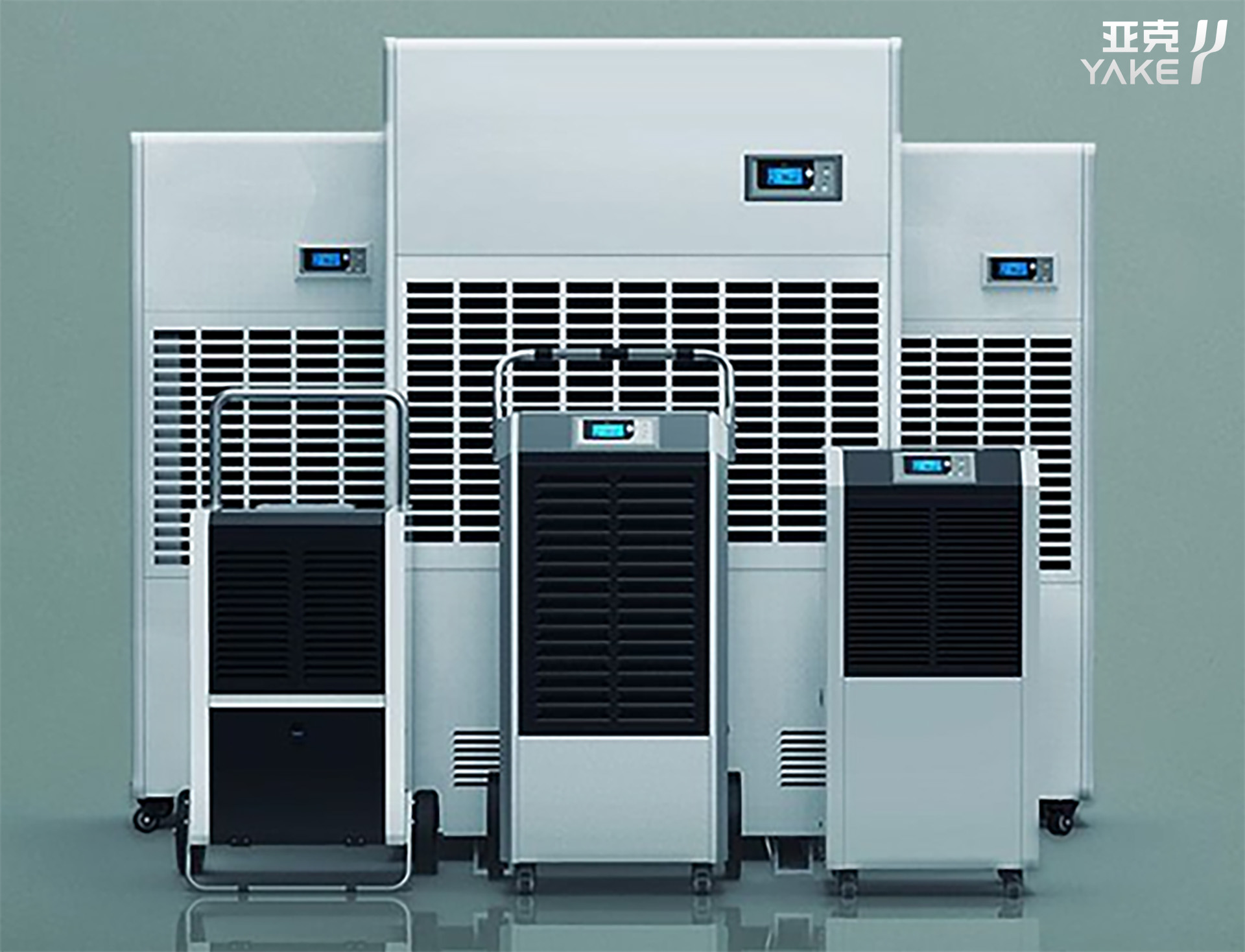
Contact us to find the best place to buy your Yakeclimate solution today!
Our experts have proven solutions to keep your humidity levels in check while keeping your energy costs low.