
Building 34, No. 535 Shunfeng Road, Hangzhou, Zhejiang, China
[email protected]
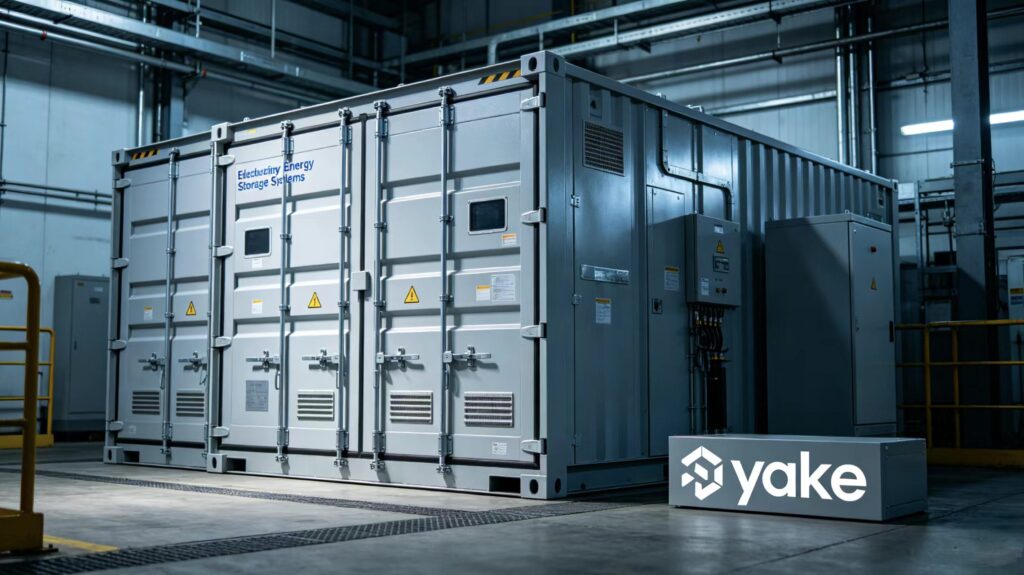


EES electrical energy storage systems are setups that store electric power for later use in grids, plants, or local systems. They reside between power sources and loads and assist in demand smoothing, peak shaving, and critical equipment backup. Key varieties encompass battery systems, thermal storage, flywheels, and occasionally hybrids that combine multiple approaches. At industrial sites, EES units bolster voltage stability, power quality, and process safety amid grid faults or load swings. Numerous projects combine EES with solar or wind to maintain a consistent output and cut down on fuel consumption. The following sections examine critical technology, design decisions, and applications that are relevant to contemporary industrial activities.
Core electrical energy storage (EES) technologies sit under five main buckets: electrochemical, mechanical, thermal, chemical, and direct electrical. Each responds to the same challenge of imbalance between fluctuating supply and instantaneous demand, but with different underlying mechanics, capacities, and economics. Across all of them, the grid use cases cluster into five areas: electricity supply, ancillary services, grid support, renewables integration, and end-user applications such as peak shaving and backup power.
Electrochemical systems store energy in chemical bonds and liberate it by pushing ions through an electrolyte. In batteries, this occurs within sealed cells. In flow cells, active materials are stored in tanks and flow through a stack. Lithium-ion rules today’s grid projects. Lead-acid still handles cheap backup. Emergent chemistries like sodium-ion, zinc-air, and iron-flow look to slash cost and curb critical material consumption.
Because these systems react in milliseconds, they’re suitable for frequency regulation, voltage support and fast ramping behind solar or wind. They scale in a modular way. Standard containers range from a few hundred kilowatts up to tens of megawatts, which helps industrial users handle peak shaving and backup at plant level.
Round-trip efficiency is approximately 85 to 95 percent for lithium-ion but entails cycle-life limits, calendar aging, and safety hazards in case of thermal management failure. This is why pack design, fire detection, and HVAC or dehumidification play a role in safe, long-term operation in harsh industrial spaces.
Mechanical storage stores energy as potential or kinetic energy. Pumped hydro shifts water between higher and lower reservoirs. Compressed air energy storage (CAES) forces air into caverns or tanks under pressure. Flywheels keep energy stored in a spinning rotor.
Pumped hydro still delivers the majority of the world’s storage. It accounts for why only around 2.5% of total electric power today actually flows through storage, and nearly all of that is pumped hydro. These can discharge for multiple hours and even support some seasonal balancing in certain locations.
The trade-off is strict siting: pumped hydro needs suitable topography and water, CAES needs stable geology or large tanks, and flywheels need robust foundations and controlled rooms. They favor central grid backup and renewables integration over building-level backup.
Core EES Technologies Thermal EES converts surplus power into either heat or cold. This includes molten-salt tanks in concentrating solar plants, chilled-water or ice storage for large buildings, and phase-change materials embedded in process streams.
When deployed within an industrial plant or a district heating or cooling network, time shifting the thermal loads can smooth electricity demand and reduce chiller and boiler peaks while minimizing grid connection costs. Round‑trip efficiency is lower than for batteries if power is converted back to electricity, but if the end use is heat or cooling, it can be very cost effective per kWh of useful energy.
Chemical storage transforms electricity into energy carriers such as hydrogen, synthetic methane, or liquid fuels. Power to hydrogen through electrolysis is the top choice, storing in tanks, caverns, or pipelines and later leveraging in fuel cells, turbines, or industrial furnaces.
These systems fit long-duration and even seasonal storage, spanning weeks of low wind or solar. They require substantial production infrastructure and compression or liquefaction, transport, and safe storage.
Their main value is cross-sector decarbonization in steel, chemicals, shipping, and heavy transport where direct electrification is hard.
Direct electrical storage stores energy in electric or magnetic fields. Supercapacitors store charge on electrodes with extremely high power density. SMES stores energy in a magnetic field in a superconducting coil.
They provide sub‑millisecond response and massive power surges. Energy density and duration are low and costs are significant. This pushes them toward niche roles: voltage and frequency stabilization, fault ride‑through, and power‑quality support for sensitive loads such as chip fabs or high‑precision manufacturing lines.
EES occupies the epicenter of a power system rapidly evolving toward renewables, tighter reliability standards and stricter carbon rules. For industrial users, it connects grid stability, energy price and process uptime into a single technical asset.
EES helps stabilize grid frequency and voltage by serving as a rapid bidirectional buffer. When load spikes or a generator trips, storage injects active power within milliseconds, holding frequency near 50 or 60 hertz and stopping cascading trips. When there is excess generation, it consumes energy and helps avoid over-frequency, which is critical as increased wind and solar displace traditional spinning reserves.
Rapid-response storage reduces the risk of blackouts and brownouts. Instead of oversizing thermal units as backup, system operators deploy batteries or other EES to deliver primary and secondary reserves, synthetic inertia and ramping support. Today, just 2.5% of electric power transits storage, largely pumped hydro, so there’s huge runway to displace conventional peaking capacity with distributed EES.
| Function | Traditional method | EES-based approach |
|---|---|---|
| Primary frequency control | Thermal/spinning reserves | Millisecond battery response |
| Voltage support | Mechanically switched capacitors | Dynamic VARs from inverters |
| Peak coverage | Gas peaker plants | Distributed batteries near load |
| Contingency recovery | Manual load shedding | Automated fast frequency response |
Wind and solar soar, yet their intermittency demolishes the planning methods of old that assumed controllable plants. EES evens out this variability by stabilizing short-term fluctuations and boosting production so the grid “experiences” a more consistent profile from a farm or large rooftop fleet.
It time-shifts energy. It charges during high solar output at mid-day and discharges into evening peaks, aligning renewable generation with demand instead of throttling surplus. That saves wasted clean energy and reduces the need to run costly and carbon intensive fossil units.
High solar and wind penetration countries now rely on storage to continue integrating more renewables without significant overbuild of transmission or backup plants. Big battery projects co-located with solar in Australia and parts of Europe already demonstrate how storage reduces curtailment and maintains frequency within narrow bounds even at high renewable shares.
Energy arbitrage is charging EES when wholesale prices are low and discharging when they’re high, leveraging market spreads to create value and flatten grid load.
Well-sited arbitrage systems increase grid efficiency by filling valleys, shaving peaks, and reducing the need for exceedingly part-loaded fossil plants that operate with poor heat rates.
EES with smart inverters assist in enhancing power quality, mitigating harmonics and tripping due to voltage sags and swells. By injecting or absorbing reactive power and active power in real time, storages keep voltage within tight bands and filter distortion that would otherwise affect sensitive loads.
Industries that sense this the most are semiconductor and electronics fabs, pharmaceutical lines, data centers, and paint/coating processes. Even brief interruptions can scrap batches, spoil finishes, or crash servers, so they employ EES as an insulating buffer between a feeble grid and their ultra-precise loads.
Proper design means stating clear specs. Response time should be below a cycle for sag support. Adequate kVA is necessary for reactive compensation. Harmonic limits must meet IEEE/IEC standards. There should be enough storage duration to ride through typical local events while meeting grid code and quality rules.
Grid integration of EES is at the heart of big solar and wind roll-out and influences how plants operate, how goods are manufactured, and how steady power remains for essential loads.
Key obstacles to EES adoption include:
Regulatory hurdles frequently begin with grid codes designed for one-way power flow from large thermal facilities. Most codes still don’t completely specify how EES should behave on faults, frequency events, or black starts. In others, third-party involvement is required to check systems meet IEC standards and national regulations. A two-stage Factory Acceptance Testing (FAT) and Site Acceptance Testing (SAT) process helps verify that this same certified performance in the lab translates to the field under local grid and climate conditions.
Technical barriers arise from interoperability and control. Different inverters, battery management systems, and plant controllers don’t necessarily “speak” the same protocols. That bogs down projects and can reduce the speed with which fleets react to frequency or voltage events. Digital twins, common communication standards, and stringent hardware in the loop tests minimize that risk and provide operators with richer data to coordinate dispatch, maintenance, and even on-site climate control like dehumidification.
Economic barriers return to the unclear value stacking. Storage may offer capacity, peak shaving, frequency regulation, voltage support and backup. Most markets compensate for one or two of those services. If EES is to scale and support a greener, more stable grid, clearer market rules, bankable testing, and multi-service contracts are worth a focus.
Grid Integration Challenges tackle updating grid codes, enforce IEC-based verification and third-party testing at FAT and SAT stages to help scale up from pilot sites to fleet-scale deployment and accelerate the transition to a sustainable power system.
Intermittency means the output from solar and wind fluctuates in a manner inconsistent with load. Clouds pass, wind drops, and storms hit, and the grid still has to keep frequency and voltage within tight bands. For plants that rely on rock-solid power for process lines, climate control, and quality-critical steps, these swings appear as flicker, trips, and increased wear on equipment.
EES smooths that profile by charging when renewables are high and discharging when they are low. On a feeder with big rooftop solar, a lithium-ion system can shave the late-afternoon ramp and keep exports within agreed limits. A flow battery at a wind farm can hold output during gusty periods to hit a firm schedule. It reduces curtailment and causes renewables to act more like conventional plants as far as the grid is concerned.
Forecasting and real-time control lurk behind that smoothing. Short-term solar and wind forecasts supply plant controllers, which decide charge and discharge setpoints minute to minute. Good models reduce reserve margins and allow operators to rely more on storage instead of spinning thermal units on idle. To back this, numerous projects today integrate energy storage systems into site SCADA, smart meters, and weather data, and they depend on robust validation services to demonstrate response times and ramp rates under IEC-based test scripts.
For intermittent renewables, it is useful to keep a short list of best-fit EES options:
Existing transmission and distribution infrastructure in many regions was developed without considering high EES penetration. Lines near good solar or wind sites are sometimes too weak for either big generation or big storage plants, while urban feeders with lots of behind‑the‑meter systems can experience reverse power flows and congestion they were never designed to handle.
Upgrades span three tiers. To address transmission, higher-capacity lines and new substations close to renewable clusters are needed. Such as distribution, voltage-control equipment, protection modifications, and feeder redesign to accommodate bi-directional power. As far as control systems, grid operators require updated energy management systems that can manage EES as flexible assets instead of static loads.
Digitalization and smart grid tools tie this together. Phasor measurement units, advanced metering, and feeder automation assist in tracking the state of cost, energy quality, and fault behavior in real time. This data feeds more precise testing plans: FAT can stress control logic with simulated grid faults, while SAT can verify that EES rides through local disturbances and meets response times in the real network.
Mapping infrastructure gaps by region or market helps set priorities. One region might require new transmission to link up vast pumped hydro. Another’s efforts might center on distribution-level batteries for softening urban peaks. Industrial centers may combine on-site storage with dehumidified, tightly controlled environments to reduce manufacturing risk during grid interruptions.
Various EES technologies scale in highly disparate manners, ranging from kilowatt-scale cabinets to multi-hundred-megawatt plants, influencing the progression of projects from pilots to complete fleets. Lithium-ion containers scale in a near-linear fashion by simply adding additional racks and inverters. Flow batteries increase tank volume and cell stacks. Pumped hydro literally leaps ahead in substantial, site-specific chunks. Knowing these patterns early means avoiding dead ends in both grid planning and plant design.
Modularity and flexibility are fundamental for scalable solutions. Standardized 20- or 40-foot container units, with established thermal and humidity boundaries, can be replicated across locations and climates. This simplifies the designing of common HVAC and dehumidification plans, spare-parts pools, and test templates. Flexible control platforms allow the same hardware to pivot from simple peak shaving to more advanced grid services as markets develop.
Utility‑scale projects’ financing and deployment is still a big challenge. Lenders and regulators want evidence that systems comply with IEC standards, local codes and safety regulations for years. This is where hard third‑party verification is crucial. A two‑stage FAT and SAT process, conducted by accredited labs or certifiers, provides banks and grid operators increased assurance that test conditions mirror real grid events such as high humidity, heat, or dust.
A step‑by‑step scale‑up path often works best:
Where to put storage, who pays, who gets paid, and how quickly things grow — this is the EES business model. It comes between technology and market rules and it determines whether storage is deployed to support renewables, reduce peaks, or monetize grid services.
Ownership can nest with a utility, third party, or end user. Utility-owned plants, such as large pumped hydro, tend to earn regulated returns and target bulk services. Third-party models, like ESaaS, emphasize flexible contracts and revenue stacking. Customer-sited systems, typically behind the meter, pursue bill savings and resilience. This portion already hit some 1.9 GW globally in 2018 and continues to expand.
Electric energy storage remains dominated by pumped hydro, which accounts for approximately 97% of global stored energy capacity, including approximately 80 GW in China, the U.S., and Japan alone. Business models are pivoting to electrochemical EES, where costs could decline 50% or more by 2030 and cycle life can surpass a million cycles. These long-life assets can underpin variable renewables, smooth the stochastic and intermittent nature of rooftop solar or small wind, and deliver demand response by peak-shaving peaks that aren’t repeated daily.
Business model decisions determine how this value is divided. A single project can be paid for capacity payments, frequency control, and congestion relief. Another may pursue nothing more than peak-shaving savings. As a point of comparison, it’s useful to map ownership and risk.
| Business model | Typical owner | Main value focus | Pros | Cons |
|---|---|---|---|---|
| Utility‑owned EES | Grid utility | System reliability, bulk shifting | Easier grid integration, stable returns | Slower rollout, limited customer‑side innovation |
| Third‑party / ESaaS | Independent firm | Service fees, revenue stacking | Low capex for users, expert operation | Contract complexity, counterparty risk |
| Customer‑sited asset | End user (plant) | Bill savings, resilience, local control | Direct control, tailored to site load profile | High upfront cost, requires in‑house or vendor expertise |
Energy Storage as a Service is a novel business model in which a third party owns and operates the EES asset, and the customer pays for outcomes, not hardware. The value is in having access to peak shaving, backup, and power quality support without any capital expenditure. For an automotive paint line or pharma cleanroom, that translates to improved power stability and reduced downtime with no battery system on the balance sheet.
ESaaS contracts span 5 to 15 years. This could be priced per kW of reserved capacity, per kWh delivered, or linked to shared savings on demand charges. Certain contracts include service-level guarantees for downtime, response time, and round-trip latency. Performance guarantees can be supported by monitoring, remote diagnostics, and well-defined degradation and end-of-life criteria.
Risk moves from the consumer to the supplier. The ESaaS operator assumes technology risk, performance risk, and some of the market risk on ancillary-service income. The end user pays attention to certain monthly fees and guaranteed savings, which suits sites with tight budgets or where energy is not a core competency.
It suits data centers, semiconductor fabs, cold-chain warehouses, food processing plants, and large commercial buildings with volatile loads. Behind-the-meter batteries in these sites can smooth random peaks and support on-site solar while the ESaaS provider optimizes charge and discharge against tariffs and grid signals.
Publicly traded ESS companies sit across the value chain: cell makers, system integrators, power electronics vendors, and project developers. Their business models span from pure hardware sales to long-term service and software layers, including ESaaS. Investors see each firm connecting declining electrochemical storage costs to consistent cash flow.
Valuation drivers comprise project pipelines, grid‑service revenue exposure, and tech position in fast‑cycle, long‑life systems that may span over one million cycles. Markets respond to policy changes, like fresh capacity markets or storage requirements.
Larger players take utility-scale projects, including hybrids with renewables. Smaller firms concentrate on control software, demand-response portfolios, or specialty chemistries. A practical step for analysis is to build a list of leading ESS stocks ranked by market capitalization and then tag them by role: battery production, integration, or long-term asset operation.
Policy frameworks and incentives frequently determine if an EES business model is bankable. Storage earns from mitigating uncertainty in variable renewables, but tariffs and market rules must let it stack services: peak-shaving, frequency control, and reserve. Clear rules make it easier to scale stationary batteries for demand response behind the meter, where lots of little systems can act like a single flexible plant.
Regulation drives timelines and costs. Permitting for large pumped hydro can be long and complex, although containerized batteries move faster and rely on interconnection rules and safety codes. Incentives like investment tax credits, capacity payments, or feed-in premiums alter the payback for each ownership model.
Stable signals are important to investors. When grid access, revenue streams or carbon pricing rules change too frequently, capital costs increase and projects stall. When they remain clear and stable, both utilities and third-party providers can schedule multi-year deployments and standardize contracts.
It’s helpful to monitor major policy initiatives in important markets, like storage obligations tied to renewable objectives, specialized grid‑service markets that enable EES to submit bids, and building‑level rules that treat behind‑the‑meter batteries as demand-response assets.
EES energy storage (EES) today stretches well beyond lithium-ion packs. For industrial users, the real work is to develop a portfolio that mixes electrochemical, mechanical, and power-electronic options, then tie that portfolio to consistent climate control and extended asset life. Batteries remain core, but are not the only lever for resilience, cost, or sustainability.
Lifecycle impact begins at raw materials and extends to decommissioning. For batteries, that includes mining, electrode manufacturing, cell and pack assembly, delivery, installation, operation under actual load profiles, and then repurposing, recycling, or disposal. The exponential rise of electric vehicle sales sharpens the question of what happens to all those EV battery packs at the end of their first life and how they move into stationary energy storage roles without adding new risks related to safety, performance drift, or waste.
Most research still targets electrode materials for increasing capacity and cycle life, and scientists have made robust advances over the past two decades in investigating reaction mechanisms and engineering novel materials. These gains reduce cost and increase energy density, and electrochemical storage now dominates the cost curve, with additional declines of 50% or more anticipated by 2030. Their chemistries frequently degrade faster than mechanical storage or power electronic systems such as supercapacitors and superconducting coils, which can last over a million cycles with minimal wear.
Operating conditions drive actual lifecycle results. Weak thermal and humidity regulation will accelerate side reactions, gas accumulation, corrosion and seal breakdowns. In comparison, good, dry air around packs, power electronics and switchgear can prolong practical lifetimes, and in certain applications nudge total system life towards 30 years. For industrial sites, a simple comparison chart helps: show batteries, supercapacitors, flywheels, pumped hydro, compressed air, and coils with cradle-to-grave energy use, typical cycle life, drift rates, and decommissioning paths. That sort of table clarifies trade-offs and facilitates technology mixes instead of one “winner.
Ethical and environmental concerns in extraction are at the beginning of every EES BOM. Open-pit mines, acid drainage, and high-carbon power for refining all increase the true footprint per kWh stored. That goes for battery cells, but for tanks, pressure vessels, rotors, and support frames in non-battery systems.
Alternative sourcing and new materials alleviate these stresses. High-manganese cathodes, sodium-ion cells, organic redox flow electrolytes, or carbon-based supercapacitors can alleviate cobalt and lithium pressure. Simultaneously, strong recycling streams for copper, aluminum, steel, and battery metals can reduce virgin mining. For engineering teams, one concrete action is to construct a rudimentary spreadsheet of critical materials for every EES alternative, then associate sourcing risks, ESG flags, and recycling maturity to every line.
Circular thinking considers EES hardware a multi-generational material bank. Design begins with modular packs, racks, and containers that are openable, cleanable, and resealable, not glued shut. Connectors, seals, and enclosures need to withstand years of humidity swings, dust, and condensate, and not fail prematurely. Targeted dehumidification inside EES rooms and containers directly enables circular use.
Reuse and refurbishment generate a second and even third life. EV packs can transition to stationary energy storage systems for demand response, with the size of the stationary battery varying based on building load and peak demand profile. Even packs in partial health can reduce individual peak loads and thus bypass grid fees. Supercapacitors and coils, with cycle life in the million-plus range, can step into high-throughput roles like power smoothing or fast industrial drives without quick replacement.
These second‑life and high‑cycle routes unlock fresh business models. Service firms can specialize in testing, grading, and repackaging used modules. Plant owners can purchase “performance‑based” storage, with a partner keeping the hardware healthy and upgrading modules over time. To make that real, supply chains need a few clear steps: standardize pack formats and data logs, build regional repair and recycling hubs, keep storage spaces dry and corrosion‑free, and ensure reverse‑logistics contracts exist from day one. Once those are in place, EES transitions from a one‑off capex item to a managed loop of materials, data, and long‑lived assets.
Future EES will be at the core of how plants purchase, store and utilize energy. It will determine how sites tackle variable renewables, process stability, and stringent environmental regulations while monitoring cost per kWh stored and delivered.
Emerging trends indicate that there won’t be one “winning” technology. Lithium-ion will remain crucial, particularly for stationary systems spanning a few hundred kWh to multi-MWh, as costs continue to decrease and supply chains have become well established. At the same time, storage mixes are widening: flow batteries (zinc-bromine, polysulfide-bromine) for long, steady discharge; supercapacitors and flywheels for high-cycle, high-power tasks like voltage support; and early work on solar fuels and other chemical carriers for seasonal or multi-day storage. For an industrial site, this means more tailored system design: fast storage for power quality and ride-through, slower long-duration storage to shave peaks, cover night hours, or back up critical climate and dehumidification loads.
AI and digital tools will run more of that stack. Smart energy management systems, using machine learning to predict load, on-site PV or wind output, and tariff changes, will dynamically optimize when to charge or discharge each asset. The same logic can link HVAC and dehumidifiers with EES: for example, pre-drying process air when renewable power is high, then riding on stored energy to keep humidity steady during grid stress or price spikes. At scale, AI will help aggregate many sites into virtual power plants, where each plant’s storage and flexible loads provide grid services without compromising product quality.
On the road to global decarbonization, EES will enable wind and solar to reach high shares by managing intermittency and providing long-duration coverage for hours or days. That allows for deeper fuel-switching in industry while maintaining grid resilience and backup in outages. Policy will keep driving this shift. Capacity markets, carbon pricing, and storage incentives already push new projects in many regions and will likely tighten performance and reporting rules.
A sketchy timeline indicates that the next five years will see rapid expansion of lithium-ion and early hybrid systems. In five to fifteen years, there will be broader adoption of long-duration solutions and extensive AI management. Beyond that, there will be complete integration of varied storage, flexible loads, and low-carbon grids into typical plant design.
EES is no longer on the periphery of power plans. EES now sits at the heart of them. Short term grid support, long term shifting, and backup all rely on storage in one way or another. Chem storage continues to dominate the lion’s share of deals, but alternative routes such as thermal, flywheels, and gravity now occupy specific usage gaps, not just laboratory slides.
For plant heads and grid teams, the game moves from tech talk to full stack design. Site limits, market rules, duty cycles, service life, and safety rules all matter in each build.
To move to the next step, map one real case: a plant, a microgrid, or one feeder. Size a blend of EES choices, operate the duty, operate the money move, and see what maintains under stress.
An EES system stores electrical energy for later use. It can incorporate batteries, pumped hydro, compressed air, flywheels, or other technologies. EES balances supply and demand, stabilizes the grid, and enables renewables such as solar and wind.
EES systems flatten the peaks and valleys of solar and wind power. They absorb energy when generation is abundant and deliver it when generation is scarce. This makes renewables more reliable, curtailment less likely, and builds a cleaner, more resilient grid.
Core ees technologies such as lithium-ion batteries, flow batteries, pumped hydro storage, compressed air energy storage, and flywheels all have various strong points in terms of cost, lifetime, response time, safety, and suitable applications. These applications range from grid-scale to behind-the-meter storage.
EES systems generate revenue by delivering grid services. They encompass energy arbitrage, peak shaving, frequency regulation, capacity services, and backup power. Business models frequently bundle services to increase project returns and decrease risk throughout the system’s life.
Major barriers include interconnection policies, regulatory uncertainty, lack of market clarity and complicated permitting. Technical issues include how to size systems, control strategies, safety standards and cybersecurity. Stable policy and transparent revenue mechanisms are essential for broader ees adoption.
Yes. Other options are pumped hydro, compressed air, hydrogen, thermal storage, and flywheels. These ‘beyond the battery’ alternatives provide longer duration, lower cost per kWh, or enhanced sustainability in certain situations. The optimal selection varies by region and application.
EES is likely to see some of the fastest growth as grids add more renewables. Trends are around less expensive batteries, extended-duration storage, hybrid configurations, and more intelligent control software. Policy support and innovation will probably broaden EES roles in resilience, electrification, and decarbonization.


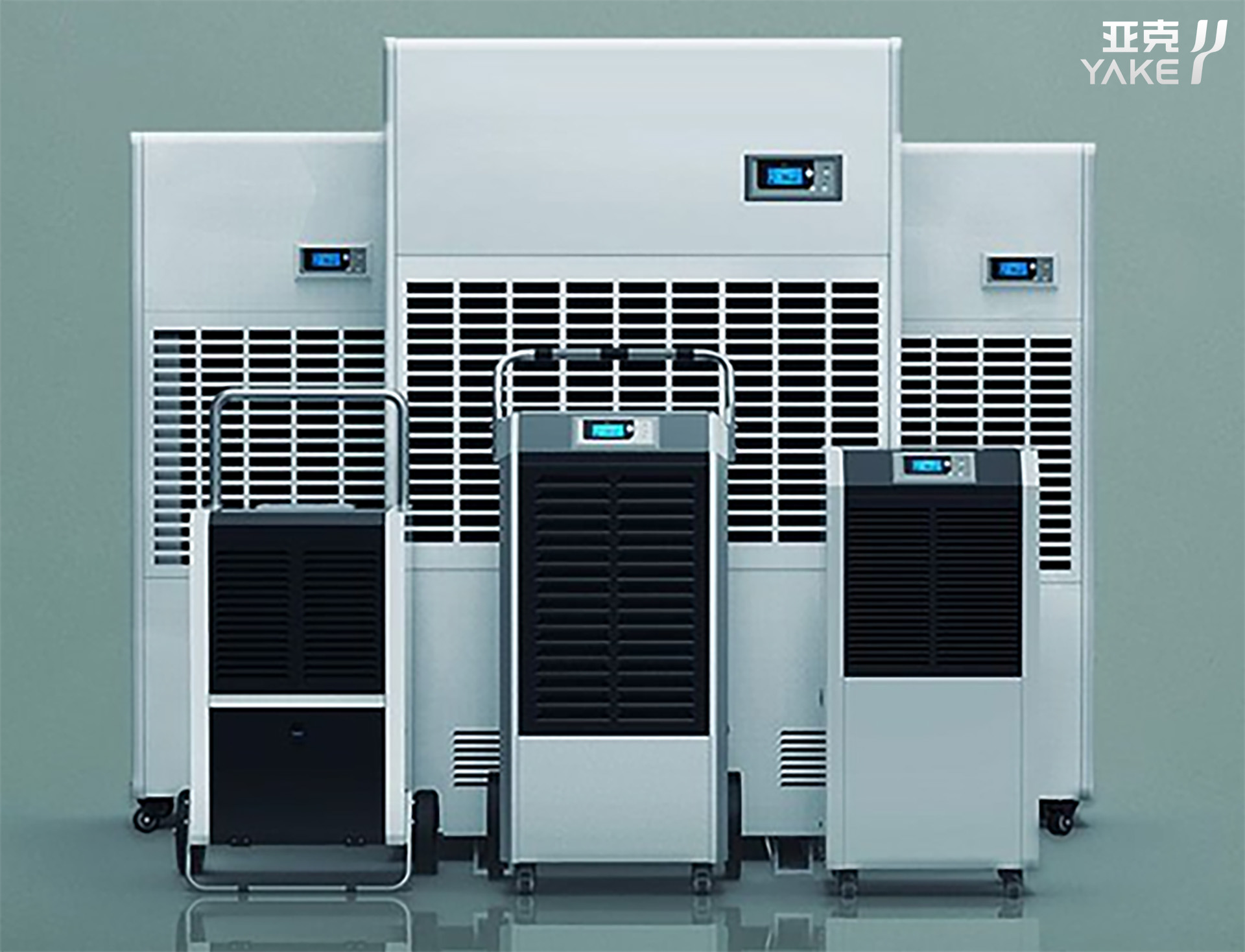
Contact us to find the best place to buy your Yakeclimate solution today!
Our experts have proven solutions to keep your humidity levels in check while keeping your energy costs low.