
Key Takeaways
- Dehumidifiers are our best friends after a post-dehumidifier water leak. They extract the extra moisture in the air, aid clean-up and drying efforts, and help stop the rise of mold and odors.
- For best results, choose the right dehumidifier capacity, keep an eye on humidity with a hygrometer, and use continuous drainage during large-scale drying.
- Increase airflow by strategically placing fans and dehumidifiers. Close off openings and employ air movers to expedite evaporation from wet surfaces.
- Inspect for hidden moisture using moisture meters and consider thermal imaging to combat pockets of dampness that standard drying methods can overlook.
- For contaminated water or deeply soaked materials, call in professionals and practice caution to avoid health hazards and structural issues.
- Validate complete recovery – Check all surfaces are dry, odors dissipated, and maintain indoor relative humidity below 60% for a safe, healthy environment.
Post-dehumidifier water leak recovery means steps to fix and clean up after water leaks from a dehumidifier. Quick response prevents further flooring, wall, and gear damage. Drains can block, tanks can get full, parts can fail, and leaks can begin. In factories, leaks could decelerate work or spoil product. Basic actions such as turning off power, extracting water, and drying damp areas all assist in maintaining safety. Inspecting the unit and pipes for issues prevents leaks from reoccurring. Good recovery plans reduce downtime and repair costs. Yakeclimate systems back up these essentials with robust, low-maintenance dehumidifiers. In the meat, you’ll find some crucial steps for quick and safe recovery after leaks, as well as tips for long-term prevention.
The Dehumidifier’s Critical Role
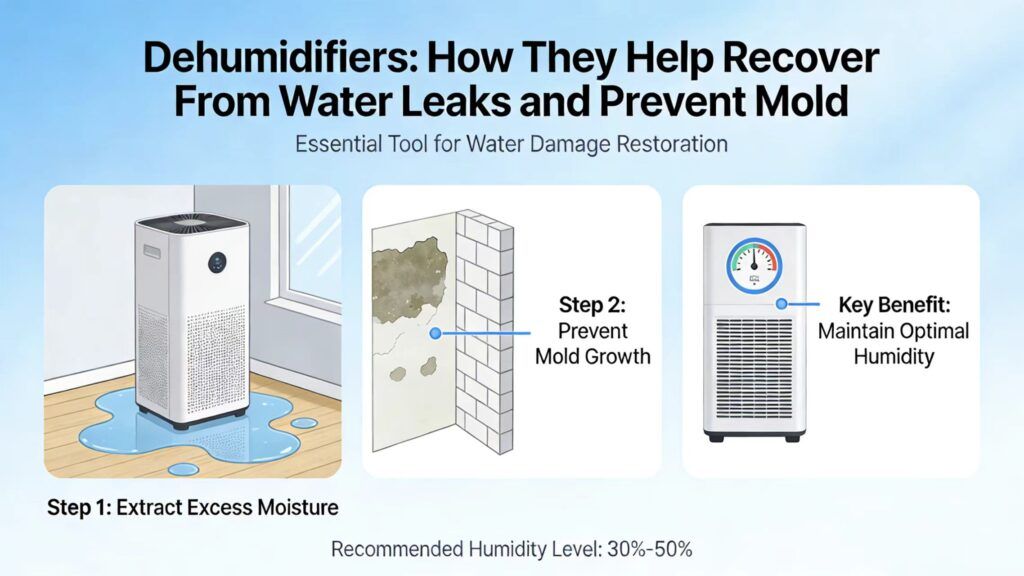
Dehumidifiers head water leak recovery. They extract leftover water from air and surfaces following leaks, accelerating drying and assisting in preventing larger issues. Their influence extends beyond drying; they assist with mold, odors, and structural integrity. A carefully selected, energy-conscious dehumidifier, properly sized to the scale of the task, is essential for effective and environmentally responsible restoration.
1. Moisture Extraction
Industrial dehumidifiers work quickly to suck moisture from walls, floors, and equipment. This keeps moisture from saturating deeper into building materials and reduces the likelihood of permanent damage. For optimal performance, the machine should operate continuously until dry, which may take several days to weeks. Keep an eye on the tank or install a hose for constant draining, particularly in large rooms. Choose the right size; if it is too small, it slows down, and if it is too big, it consumes excess energy. In snug areas, portable models make focused drying feasible.
2. Air Circulation
Proper air circulation is crucial. Position fans close to the dehumidifier to circulate dry air across damp areas. Closing doors and windows allows it to operate without exterior moisture infiltrating. Air movers dislodge water vapor from wet surfaces, allowing the dehumidifier to remove it. Fine-tune fan speeds for real movement, but not noise flooding.
3. Mold Prevention
Mold grows fast, sometimes within 24 to 48 hours after a leak when left untreated. Control humidity by keeping it under 60%, and better yet 30 to 50%, to prevent spores from gaining a foothold. Dehumidifiers are what make that possible. Check basements, crawl spaces, and bathrooms frequently. When repairing, use mold-resistant paints or wallboards. Be certain vents and fans assist circulation in rooms susceptible to dampness.
4. Odor Reduction
Damp air leads to musty odors. Turn on the dehumidifier immediately to prevent these odors from accumulating. Wash or clean all wet surfaces with appropriate products. Air purifiers can help eliminate smells and improve air quality along with the dehumidifier. About: Clean filters, consistent performance.
5. Structural Integrity
Check walls and floors for warping or weakness after water leaks. Dehumidifiers dry out the wood, drywall, and cement, halting the slow rot. Check the structure regularly for secret mischief. Document any damage for claims and fixes. This step safeguards both safety and value.
Optimal Dehumidifier Setup
Post-water leak cleanup in industrial environments requires a strategy that combines rugged equipment, strategic placement, and rigorous environmental control. Drying has to be quick and uniform, or you’re staring down the barrel of trapped damp, mold, and chronic rot. Yakeclimate’s strategy focuses on open-ended instructions, maximum air circulation, and ongoing monitoring to achieve secure, stable humidity, generally in the range of 30% to 50%.
Placement
For optimal setting, place each dehumidifier on a level, hard floor to keep it steady and prevent tipping. Choose a location near the primary water or moisture source. This reduces the drying time for the most impacted surface and prevents moisture migration. Never jam a unit into a corner or stuff it behind equipment. Airflow falls off rapidly in corners and cramped spaces, and covered vents leave moisture to accumulate inside surfaces.
Position units away from walls, shelves, and big machines. If possible, shoot for a minimum of half a meter (1.5 feet) of clearance all the way around. This allows the air to circulate without becoming trapped. For big or weird shaped spaces, deploy multiple dehumidifiers spread out to cover each region. Leave walkways unobstructed and units accessible to check filters and empty tanks.
Settings
Begin by measuring ambient humidity with a hygrometer, either hand-held or wall-mounted. For most leaks, configure the dehumidifier’s target to 40% RH. If damage is really bad, then run it in continuous mode and monitor the readings every hour. As it dries out, turn it back to 50% to avoid over-drying. Keep an eye on temperature too. Twenty to thirty degrees Celsius is the sweet spot for fast moisture removal.
If shooting for the safe range, monitor humidity on a daily basis and adjust controls if levels waiver out of range. If your unit lets you, program an auto-shutoff once 40 to 50 percent relative humidity maintains for 24 hours. Some of the luxury models even track stats over time and send alerts if conditions change.
Sealing
Seal the space off from outside air. Close up all doors and windows with weather stripping or tape. If you have open walls or floors, hang heavy plastic and tape down edges to contain the moisture. Check your seals a couple of times a day. Footfalls, equipment footings, and even just people moving can knock loose the seal and let fresh humidity in.
Inspect around pipes, vents, or floor joints for any small cracks or holes. Seal any cracks or gaps with foam or caulk. Maintaining a closed environment ensures the dehumidifier is combating moisture that’s been trapped, as opposed to fresh outside air. This accelerates drying and consumes less energy.
Determining Run Time
Knowing how long to run a dehumidifier after a water leak is crucial for quick, safe, and economical recovery. Room size, material, and how badly the area is water damaged all affect this. Keeping tabs on and recalibrating your dehumidification process for each day ensures consistent drying while preventing mold, equipment burnout, or wasted energy.
Damage Severity
Begin by examining all infected regions. Be on the lookout for sagging walls, floors, and equipment that show signs of moisture or water damage. Record these discoveries with pics and comments. Catastrophic damage, such as saturated insulation, flood water, or profound wall saturation, requires extended dehumidifier run times, sometimes days or longer. In cases of light damage, like surface dampness, a day or two might suffice.
For pervasive or structural damage, you’re best off consulting the pros. They can employ moisture meters and thermal cameras to detect concealed moisture. Stains that indicate a change in color or warping in surfaces indicate a deeper moisture issue. Monitor these indicators each day to make the decision whether to extend the run time or increase the number of units.
Room Size
| Room Size (m²) | Air Volume (m³) | Dehumidifier Capacity (L/24h) | Typical Run Time (hours) |
|---|---|---|---|
| 10 | 25 | 8–12 | 12–24 |
| 30 | 75 | 18–24 | 24–48 |
| 100 | 250 | 40+ | 48–72 |
| 200+ | 500+ | Multiple (40+ each) | 72+ |
Big open spaces require extended run times and higher-capacity dehumidifiers. Partitioning large rooms or warehouses can assist, employing multiple units for more complete coverage and faster drying. Always check air volume — not just floor space — since lofty ceilings and open floor plans reduce drying time.
Material Type
Know what got wet. Porous materials, such as carpets, drywall, and textiles, retain moisture longer than metal, glass, or tile. These require additional drying time and close supervision. Non-porous materials dry quickly but can trap water behind or underneath. Electronics, pharmaceuticals, and sensitive equipment deserve extra attention. Direct punched or jet flow gently and don’t overheat.
Check these frequently while drying. If cloth or wrapping remains wet, mildew hazards increase rapidly. For technical stuff, record humidity and temperature every few hours. The right run time is the key. Stopping too soon causes latent damage and running too long wastes energy.
The Dehumidifier’s Limitations
Industrial dehumidifiers are a must-have for water leak recovery, but they can only do so much. These units are effective for broad air drying. They tend to come up short when confronting saturated materials, dirty water, or moisture that’s out of sight. Knowing these limits is crucial for a facility manager and engineer who desires complete recovery and continued safety.
| Limitation | Consideration | Example/Impact |
|---|---|---|
| Saturated materials | May stay wet despite long dehumidifier use | Carpets, drywall, insulation |
| Contaminated water | Needs professional help | Sewage, chemical spills |
| Temperature sensitivity | Poor performance in cold spaces | Ineffective below 13°C (55°F) |
| Power consumption | High energy use, especially for large units | 800–1500 watts per unit |
| Area coverage | Single units may not cover large spaces | Multi-room or open floor plans |
| Extended drying time | Weeks for slab or high-moisture areas | Concrete floors, basements |
| Hidden moisture | Difficult to detect and dry | Behind walls, under floors |
Saturated Materials
Carpets, drywall, insulation, wood flooring and other absorbent materials can remain wet for days of dehumidifier treatment. Water can sink deep into fibers and pores, beyond where air from typical units can reach. This is typical after major flooding or extended leaks.
Air movers and heat sources assist the drying process for these saturated materials. In most cases, the only way to halt mold, odors, and damage is to tear out and replace ruined sections. Facilities need to monitor moisture with meters because where there’s persistent moisture, mold can flourish before you know it, particularly in the layers underneath.
Contaminated Water
Dehumidifiers aren’t designed for sewage water, chemical spills, or any other dangerous materials. Attempting to operate a machine in such instances disperses contamination and endangers occupants.
You’re going to need professional water damage specialists for cleanup. They employ protective equipment and quarantine procedures. Contaminated water can make you sick, so only certified crews should go in or treat these spaces.
Hidden Moisture
That hidden water is DEATH after leaks, particularly in multi-layer walls and ceilings and under floors. Moisture meters are critical in this regard. They measure moisture within materials that feel dry.
Thermal cameras detect temperature changes caused by moisture pockets. Even tiny pockets of unseen moisture can wreak havoc if ignored, such as deep-seated rot or mold. Acting fast to dry these areas prevents larger damage down the road.
Preventing Mold Invasion
Once an industrial space gets a water leak, mold can set up shop quickly. Mold invades product quality, infrastructure, and regulations headaches. Your best defense is rapid, intentional action and a measured, sustained response. Yakeclimate solutions excel at exact humidity control, energy efficiency, and operational reliability to avoid mold infestation and protect your process.
- Shut off the water source right away.
- Move wet items out of the area.
- Start dehumidifiers and fans at once.
- Open windows and doors to boost airflow if safe.
- Utilize towels or wet vacuums to absorb pooled water.
- Keep humidity under 50% to slow mold growth.
- Monitor the space for new leaks.
- Take photos or notes for insurance before cleanup.
- CALL A PRO FOR BIG SPILLS OR IF MOLD SHOWS UP!
Immediate Action
Quashing the water intrusion is the initial and most imperative measure. Cut the supply or patch the pipe immediately. This restricts the scope and size of the damage.
Once you’ve stopped the leak, bring in dehumidifiers and fans. Begin them immediately. Pull up rugs and clear away boxes and fabrics. The less clutter, the quicker air can dry the area. It keeps humidity under 50 percent, which is the magic number when it comes to preventing mold.
Write it all down. Create an insurance record, photograph everything, and document exactly what occurred. This maintains claims on schedule and provides you documentation of the condition.
Consistent Drying
- Run dehumidifiers 24–72 hours non-stop after a leak.
- Use hygrometers to check that humidity stays between 30%–50%.
- Turn fans and equipment into every nook, cranny, and secret zone.
- Check walls, under flooring, and near ducts for moisture entrapment.
Keep checking the air and surfaces for dampness. If humidity rises above 60 percent, mold risk spikes. Adjust settings on dehumidifiers as needed. Yakeclimate units offer simple controls for this. Schedule regular checks over several days, not just once. Rainy seasons or high ambient humidity can slow drying, so do not rush the process.
Final Inspection
Check each impacted area prior to initiating repairs. Watch for stains, soft spots, or smells that indicate hidden moisture or mold. Use moisture meters to check deep in walls and under floors. Humidity should read below 55 percent; anything above that means more drying is required.
Inspection log. Save the results for documentation and insurance. Do not begin repairs until you are certain the area is dry and safe.
Signs of Full Recovery
Dehumidifier water leak recovery is a matter of a few key indicators. Surfaces should be dry, odors neutral, and humidity stable. A quick inspection can save your whole batch from a moldy or equipment-damaging relapse. Here are the key places to concentrate.
Dry Surfaces
Begin with a tangible checklist. Inspect all floor areas, the base of walls, hidden corners, and equipment casings. Carpets and upholstery require additional inspection, with hands rubbed along the surface to check for heavy, cold, or damp spots.
A moisture meter is key. Test materials even if they appear dry. Concrete and wood can trap moisture that causes mold. Furniture, particularly soft padding and seams, tends to soak up water even after a leak is sealed. Check storage racks and boxes for moisture. If anything is wet in there, keep drying. For the majority, carpets and fabric surfaces dry within three to five days using a dehumidifier. Severe cases might require seven to ten days or longer.
Neutral Odor
Smell is an immediate indicator of wetness. No musty, stale smell means the drying process was effective. Air should feel fresh. If any smell prevails, use odor absorbers or air fresheners as a temporary solution and continue seeking concealed dampness.
Air out the room once a day, particularly after a recovery project. Frequently open windows and run fans to expel any lingering moisture. If smells return, it means you may have secret water leaks or not everything is dry. Mold can begin growing within 24 to 48 hours if moisture remains, so don’t delay.
Stable Humidity
The less than 60% humidity means it must be safe. For optimal results, maintain indoor relative humidity at 30% to 50%. Employ a hygrometer to monitor twice daily during the initial week after recovery.
For small leaks, a 24 to 48 hour dehumidification cycle normally does the trick. For moderate to severe leaks, schedule 3 to 10 days. After that, continual moisture management is crucial. Teach all employees about daily humidity checks. Place permanent monitors in sensitive locations, particularly production areas and storage.
By maintaining stable humidity, we keep mold and bacteria at bay and safeguard your products and electronics. In the long term, it assists facilities in reaching global compliance and quality standards.
Conclusion
When you’re drying out after a water leak, a quality dehumidifier makes a huge difference. The right size and setup keep it quick and secure. Look out for consistent drips. Dry floors, walls, and air. A lack of a moldy odor indicates you’re in the clear. Clean up well and fix the source of the leak to prevent new issues. For big leaks, use more than one dehumidifier or try fans to expedite. Some leaks require a professional, like deep water or drenched insulation. Need fresh air and dry equipment post-leak? Choose a reliable dehumidifier, monitor the area carefully, and don’t hesitate to contact the professionals if it gets rough.
Frequently Asked Questions
What is the main purpose of a dehumidifier after a water leak?
A dehumidifier aids in extracting excess moisture from the air and surfaces. This accelerates drying, inhibits mold growth, and safeguards property from additional damage.
How should I set up my dehumidifier for optimal recovery?
Center the dehumidifier in the room. Seal doors and windows. Allow free air circulation around the unit for optimum results.
How long should I run my dehumidifier after a water leak?
Run the d’fier until humidity is below 50%. This may take a few days depending on the water damage and room size.
Can a dehumidifier completely remove all moisture after a leak?
While a dehumidifier is a huge help in reducing moisture, it can’t get to the hidden places. Search for wetness under floors or behind walls and seek professional consultation if necessary.
How does a dehumidifier help prevent mold after a leak?
A dehumidifier reduces humidity so rapidly, creating an environment where mold cannot thrive. This goes a long way toward avoiding expensive, destructive mold invasions.
What are signs that my space has fully recovered from a water leak?
Dry walls, floors, and air with no musty odors and humidity under 50% are definite indicators. Check for no visible mold or water stains as well.
What should I do if mold appears even after dehumidifying?
If you spot mold, scrub small patches with appropriate cleaning agents. For bigger outbreaks, reach out to the pros for safe removal and additional inspection.