
Building 34, No. 535 Shunfeng Road, Hangzhou, Zhejiang, China
[email protected]


Air conditioner and dehumidifier at the same time, that is, one system that can cool the air and pull excess moisture from it in a controlled way. Several newer HVAC systems already desiccate the air as part of the cooling cycle, but they frequently don’t provide explicit humidity control. In a lot of plants and shops, that uncontrolled humidity can lead to corrosion, clumping, static, poor curing, and inconsistent product quality. To address this, certain sites deploy AC units for sensible cooling and separate dehumidifiers to handle the latent load. Other sites employ combined systems that manage both. The next sections walk through how each setup operates, when to use which, and what to verify in real projects.
It’s that sweet synergy of operating an air conditioner and dehumidifier simultaneously that makes a more holistic indoor climate system. Temperature and humidity are treated as separate yet related factors, which is handy in humid climates, monsoons, or compactly constructed factories and offices that hold moisture captive.
When a dehumidifier extracts water vapor from the air, the sensible cooling load on the air conditioner decreases. The coil can concentrate more on reducing dry-bulb temperature than fighting latent load, so you experience quicker pull-down and more consistent supply-air conditions. In most rooms, once relative humidity falls toward the 40 to 50 percent range, you can increase the thermostat by 1 to 2 degrees Celsius and maintain the same comfort level, as drier air feels cooler on skin and clothing.
This lighter latent load translates into less long, high-compression cycles on the AC compressor, which can reduce mechanical stress and potentially extend equipment life. The additional cooling is most beneficial during heatwaves, monsoons, or in coastal plants where outdoor air is above 30 °C with very high humidity.
A dehumidifier hits the problem head on, rather than waiting for the AC to run long enough to extract water from the air. That’s convenient when the ambient temperature is already near the set point and the AC doesn’t run that often. A lot of units will come on to dehumidify when the room is greater than 2 degrees Celsius above the cooling set point, so they cut humidity without overcooling.
Superior humidity regulation safeguards paper stock, cardboard boxes, electronics and steel components against moisture damage, corrosion and distortion. It prevents condensation on cold surfaces and curbs musty odors in storage rooms, basements and stagnant corners.
| Function | Typical Role in Moisture Control |
|---|---|
| Air conditioner | Incidental dehumidification during cooling |
| Stand‑alone dehumidifier | Targeted, higher moisture removal rate |
Lower humidity makes life harder for dust mites, mold spores, and many bacteria that like damp, stagnant air. With relative humidity maintained in the 30 to 50 percent range, you reduce the chance of mold on walls, in ducts and behind equipment, protecting occupants and stored products year-round.
Many air conditioners already filter and recirculate air, so combined with a dehumidifier, you have increased mixing and less ‘wet pockets’ where contaminants accumulate. This double operation frequently assists those with asthma or allergies who respond to mold shards, dust mite excrement, and that ‘musty’ smell.
Typical problems alleviated by this AC–dehumidifier combo are low-level mold popping up on walls or ceilings, musty odors in infrequently conditioned spaces, window or metal frame condensation, and that general “thick” air feeling during humid months.
Running both devices simultaneously will increase peak power draw in the short term. You can usually compensate to some extent by increasing the AC set point while remaining comfortable. More efficient moisture removal allows the AC to cycle off sooner and stay off longer, which can deliver net savings in very humid climates like Florida or Louisiana where latent loads reign supreme.
To maintain this configuration feasible, both units will need to be high-efficiency models sized for the space or zone. It’s typically not wise to operate both all day, every day, as that can be energy-wasteful once humidity is steady. An easy way to test the balance is to monitor electricity consumption and indoor relative humidity before and after you introduce dehumidification, then fine-tune set points and schedules.
Our body cools itself through sweat evaporation. If there is less humidity, that process is aided and a 25–26 °C room feels crisp rather than heavy. When the temperature and humidity are in equilibrium, human beings experience less sticky skin, less grumbling over “clammy” air, and more comfortable sleep.
Comfort is subjective. Some personnel feel fine at 50% relative humidity, others more like 40%, so you may need a few minor adjustments to hit the sweet spot. Some good indicators that it’s just about right are no condensation on glass or metal, no musty smell when doors remain closed, and tenants or employees not grabbing for additional fans or space heaters.
Perfect air conditioner/dehumidifier usage begins with the climate, not the equipment. The focus is simple: hit a stable band for both temperature and relative humidity, usually around 40 to 60 percent RH, with minimal energy waste and no risk to people, product, or equipment.
In climates that maintain an outdoor relative humidity above about 70% for extended durations, dual operation is not a luxury. It’s a baseline strategy. ACs do remove some moisture as they cool, but they’re sized and controlled primarily around sensible load, not latent load. As soon as the sensible demand dips, at night, during shoulder seasons, or in compact, well-insulated buildings, the AC cycles off while humidity continues to accrue. You end up with cool but clammy spaces, sweaty ductwork, and condensation on cool piping.
In those conditions, a dedicated dehumidifier carries the latent load that the AC cannot, especially in process areas, healthcare suites, and storage rooms where mold, rust, and microbial growth are unacceptable. This reduces the chance of mold outbreaks in wall cavities, under raised floors, and inside insulation. It slows long-term damage to finishes, packaging, and electronics. Monitoring with simple digital hygrometers in several zones, not just one central point, helps dial in setpoints and staging so both systems share the work instead of fighting each other.
When it’s cool outside, in the 18–24 °C range, but RH is high, a dehumidifier can keep even large spaces comfortable with very light AC or even no AC at all. This happens a lot in shoulder seasons and coastal climates where tenants moan of “heaviness” or sticky air even though the thermometer is fine.
In these periods, air conditioners short-cycle since the sensible load is low. They run a few minutes, lower the dry-bulb temperature, and shut off before extracting much moisture. A standalone or ducted dehumidifier can then run longer at low power, holding RH in the target band without over-cooling the room.
Seasonal tuning counts. Most sites raise cooling setpoints a degree or two when incorporating dehumidification, which reduces energy consumption and still enhances comfort. In some dry or cold seasons, particularly winter in cooler climates, AC may be off most of the time, with only focused dehumidifier cycles in laundry rooms or internal process spaces that still vent moisture. In extremely arid ambient conditions, a center might run only the AC or possibly neither equipment, depending on heat and ventilation while monitoring that the RH does not fall too low for static-sensitive processes.
Basements and other below-grade zones sit right where ground moisture and cool surfaces collide, so they are traditional suspects in the race to operate A/C and dehumidifier simultaneously. Upstairs may feel dry enough, but you regularly see relative humidity over 65% in basements, with condensation visible on pipes, chill on concrete walls, and a definite separation between ambient and surface temperature.
A dehumidifier here does most of the heavy lift. It reduces the moisture that fuels musty smells, efflorescence, and creep water damage in shelving, cardboard boxes, and stored fabrics. Air conditioners alone in basements typically cannot get RH under control because those spaces tend to be cooler and have a low sensible load. The AC just doesn’t run long enough to extract much water.
In bigger or divided basements, device placement counts more than capacity on paper. Locating the dehumidifier such that air can flow across the entire zone by the open center rather than in a niche and directing condensate to a drain or pump minimizes maintenance. Any basement AC or fan-coil should be located such that supply air forces dry air into remote corners, not merely across the closest aisle. This prevents pockets of stagnant, damp air lingering around archives, spares, or delicate tools.
Optimizing your simultaneous operation of an air conditioner and dehumidifier begins with the space. Room size, heat load, moisture sources, and local climate all play into what works best. In humid areas where it can get up to 75% or even more in summer, like coastal or tropical areas, the combined setup has its advantages. In the colder or drier months, for example, in winter when indoor air reaches low humidity levels, the same configuration may not be needed or may even work against you.
Running both units in tandem is handy when you require more precise control over temperature and relative humidity than the AC by itself can provide. It can decrease strain on the AC, minimize short-cycling, and over time, assist with extending unit life and minimizing repair risk. You don’t need both of these devices all the time. Aim for what the space needs that day, not a hard and fast rule.
Don’t just stick your dehumidifier in some random corner. Place it near the primary source of moisture. Close to process tanks, wash areas, or storage zones where condensation occurs is perfect. Position the air conditioner so that its supply and return air are free of racks, partitions, and tall equipment. This way, the cooling coil “sees” the room and not a clogged niche.
Avoid placing either unit in direct sun, near ovens, boilers, or other heat sources that will skew sensors and waste energy. Leave room for service access — 0.5 to 1.0 meters around panels and filters — so coil cleaning and filter swaps are quick and routine.
For multi-room or multi-bay layouts, draw a quick diagram. Diagram moisture hotspots, air flow paths, and intended locations for each device. This little addition prevents you from scrunching everything up against a single wall and creating dead pockets of still, moist air.
To maintain comfort and for general home use, aim for indoor relative humidity in the 30 to 50 percent range. For most industrial spaces, 40 to 60 percent is a safe, workable band. Use this setting on your dehumidifier rather than “max dry,” which can contribute to over-drying and wasted power.
If both run together, increase the AC setpoint by 1 to 2 °C. The dehumidifier will extract latent load, allowing you to maintain a slightly higher dry-bulb temperature while the space still feels comfortable and stable. This decreases compressor run time and can help facilitate longer equipment life.
Use energy or “eco” modes on both units where they actually hold humidity in target. Go through and adjust settings at least seasonally or more frequently in environments with extreme wet summers and dry winters.
Both devices require good airflow to function. Don’t block supply and return grilles with boxes, pallets, heavy curtains, or dense racking. Even 30 to 40 centimeters of clearance around intake and discharge really assists. Poor airflow will increase energy use and decrease cooling and dehumidification.
Utilize one or more fans to help even out the air in large rooms or odd layouts. A small ceiling or wall fan pushing air across the room can eliminate local humidity pockets near exterior walls or cold surfaces.
Inspect and clean filters on both the AC and dehumidifier on a regular basis. Dust and lint on filters and coils strangle airflow and make compressors exert extra effort. Dusty sites may require weekly checks, while cleaner homes are often enough with monthly checks.
For planning, sketch a basic airflow diagram for each common room type. Include supply, return, fans, and device locations, then tweak until you have a path that ‘sweeps’ the entire space without short-circuiting air between outlets and intakes.
The energy equation is how much power you expend controlling both sensible load (temperature) and latent load (moisture) simultaneously. On most sites, this split is about 80% sensible and 20% latent. The timing and the share vary hour to hour and process to process, so the decision to simultaneously run an AC and dehumidifier should be made based on a well-defined load profile, not conjecture.
Running both units in parallel will always increase kWh use. It may still reduce total energy per unit of production. Peak latent load often hits around 5:00 in the morning when air is cooler but near saturation. Peak sensible load shows up late in the day when outdoor temperatures spike. A comfort-biased AC with a high SHR may push over 90% of its output into sensible cooling, so it hardly pulls any water just when latent load peaks. In most humid cities, even well-constructed spaces receive only approximately 50 to 60% of the required dehumidification through the AC. If the AC can address in excess of 60% of latent demand, it is generally good. Underneath that, a dedicated dehumidifier frequently consumes less energy than oversizing or over-cooling with chillers or DX coils.
For 99% of operating hours, the actual cooling load is less than the design load. That’s the gap in which wasted energy lurks. A dehumidifier holding dew point while the AC follows a moderate supply-air setpoint allows you to keep coils, fans, and reheat out of “full fire” mode almost all year round. Even when a second unit contributes kilowatts, it can reduce fan runtime, reheat hours, and scrap rates, all of which appear on your utility bill.
ENERGY STAR–rated equipment goes a long way to capping this added kWh. High-efficiency compressors, EC fans, and smarter controls provide more litres removed per kWh. Pair that with simple tools: programmable thermostats, time-of-day schedules, and humidity-based start/stop. Then monitor monthly energy consumption and correlate it to indoor RH, dew point, and downtime. That information takes the mystery out of latent loads and sizes the dehumidifier correctly the first time.
Air conditioning and simultaneous running of a dehumidifier may help in some industrial or commercial spaces. It’s a trade-off. It’s logical to understand the tradeoffs regarding convenience, noise, and maintenance and then balance them with your workflow and energy objectives.
You have to consider energy cost. Two units extracting heat and humidity from the same air flow can drive up kWh consumption, which can be significant in locations with elevated tariffs or stringent sustainability goals. For some plants, additional energy expenditure will not be outweighed by slight advantages in product yield or less scrap, just like little platform bonuses that don’t shift the economic needle. Thoughtful consideration of your climate, process constraints and local energy costs is essential before you commit to dual operation.
Frequent inspections prevent redundant roles. If the AC is already drawing moisture down to 50 to 55 percent RH, a stand-alone dehumidifier set at 40 percent can run flat out for no real advantage. A quick monthly setpoint, run hour, and trend log review frequently exposes energy waste. Maintain a cheat sheet of typical problems and fast solutions nearby, such as frozen coils, full dehumidifier tank, clogged filters, and incorrect fan speeds, so operators can address issues quickly.
If you run both systems hard in a closed space, the relative humidity can be pushed below 40% RH. In an office, lab, or control room, that can lead to dry skin, eye irritation, sore throat, or coughing, and it might aggravate respiratory problems for some individuals. In production, extremely low humidity can increase static risk near electronics or powdered substances.
You can monitor indoor RH with wall sensors or portable meters and adjust setpoints when weather shifts. In dry or mild seasons, or in naturally arid regions, it’s frequently not feasible to run both. The AC alone may already bring RH too low.
Humidistats or smart sensors that stage the AC and dehumidifier based on RH bands work well in coastal or tropical regions, where high humidity is hard to control year-round. Watch for symptoms of over-dried air: cracked lips, static shocks, staff complaints about “dry air,” rapid drying or warping of packaging, or dust that becomes more airborne.
Two compressors, two fans, and more sound energy in the room. In most plants this merges into the overall mechanical din, but in QC labs, filling stations with extended operator exposure, or offices adjacent to the plant, the cumulative racket can damage concentration and well-being.
Select units with low sound pressure levels when they’re near workstations, and employ rubber mounts or acoustic panels if structure-borne noise is an issue. During quiet hours, such as night shifts, test runs, or office time, run both units with lower fan speeds where you can, or prioritize the more efficient device and idle the other. If you’re forced to run both, put them far away from control rooms or meeting or training spaces, and steer clear of hard corners that bounce and intensify sound.
There are potential downsides to using both units. It adds more grunt work. Filters clog faster, coils collect dust, and dehumidifier condensate tanks or drain lines have to be checked frequently to prevent overflow or leaks. In humid tropical or coastal areas, where your gear may be running nearly year-round, this additional drain can be very apparent.
Set a simple maintenance schedule: filter checks every 2 to 4 weeks in dusty zones, coil inspections each quarter, and a quick look at condensate paths during daily rounds. Avoid potential downsides. Keep spare filters, basic tools, and coil cleaner on site so operators don’t postpone service because supplies are missing.
Design a 1‑page checklist that covers visual inspection, filter status, drain condition, any abnormal noise or vibration, and simple troubleshooting. This helps avoid downtime and limits wasted energy from clogged filters or short‑cycling equipment, which can make dual operation even less cost‑effective in high‑energy‑price regions.
Dry mode on a comfort AC assists a little with humidity, but it’s not a professional moisture management instrument for an industrial or high-risk environment.
Dry mode actually works by running the cooling coil and slowing the indoor fan. Air goes over the coil longer, so some water drips off and drains away. The unit just blows less cold air at lower fan speed, which can make a room feel less “sticky” on warm, muggy days when the air feels heavy but not too hot. It can shield walls, ceilings, and ducts from light surface damp and can reduce mold risk in minor instances. For homes, one to two hours post a summer storm or on a sticky spring afternoon typically does the trick to notice a change.
That’s only slight dehumidification. The AC cycles on a thermostat set point, not a humidity set point. Once the air reaches the desired temperature, the compressor shuts off, even if relative humidity remains at 70–80%. In very humid conditions, or in buildings with persistent moisture problems, dry mode doesn’t control a fixed dew point, doesn’t control a target relative humidity, and doesn’t control latent load from processes, people, and infiltration in any exact sense. It can make a space feel cooler and less clammy without overburdening the AC, but it won’t provide the precise, repeatable control industrial workflows require.
A standalone dehumidifier is designed for moisture control primarily. It has a dedicated humidistat, higher latent capacity and air paths sized to draw more water per hour out of the air. In plants or factories, it’s what keeps coatings, packaging, electronics and hygiene safe.
| Feature | AC Dry Mode | Dedicated Dehumidifier |
|---|---|---|
| Primary control variable | Temperature | Relative humidity / dew point |
| Typical RH stability | Wide swings | Tight band (±3–5% RH) |
| Latent capacity (per kWh) | Low to moderate | Optimized for water removal |
| Suitability for chronic damp | Limited, short‑term relief | Continuous, long‑term control |
| Use in critical production | Not recommended | Standard practice |
To run an air conditioner and a dehumidifier at the same time can make good sense in the right room. Whether it’s hot, dense air in a paint booth, a damp loading zone near dock doors, or a tight cleanroom with heavy latent load, sometimes you need that extra pull on moisture. An AC alone could easily hit the temperature setpoint and leave coils wet and air sticky.
A well sized dehumidifier picks up that slack. It lowers the dew point. It reduces the risk of mold, rust, and haze on lenses or boards. It keeps specs firm so your line flows nice and easy.
To size or install both units for your plant, contact Yakeclimate for a site inspection and an action plan.
Yes, you can. Running both can cool faster and remove excess moisture faster. This is extremely useful in humid areas or soggy rooms. It generally boosts energy consumption, so it’s not necessarily the most efficient option.
It does make sense when your pad is cool but still clammy. This is a common occurrence in humid climates, basements, or even following a hard rain. Both can increase comfort, protect furniture, and aid in avoiding mold in these conditions.
It depends upon your objective. If you primarily want cooler air, AC is better. If the temperature is fine but humidity is high, a dehumidifier can use less energy. Most homes go with AC first and add a dehumidifier when necessary.
Most of the time, anyway. Each one consumes energy, so total consumption increases. The precise number varies by unit size and efficiency and the duration of their operation. Proper settings and maintenance can help reduce energy waste.
Welp, not quite. ‘Dry mode’ reduces humidity by operating the air conditioner in a unique cycle. It does get rid of some moisture, and it uses less energy than full cooling. A dedicated dehumidifier typically pulls moisture more efficiently and provides superior control.
Yes, in a lot of instances. Mold loves warm, humid air. If you cool with the AC and use a dehumidifier, you are less likely to have the right environment for mold. You still need good ventilation and regular cleaning for the best protection.
Turn your AC to a comfortable temperature, then set the dehumidifier to a target humidity around 45 to 55 percent. Closing doors and windows keeps the dehumidifier away from the AC unit so the air can circulate. Clean filters, too.


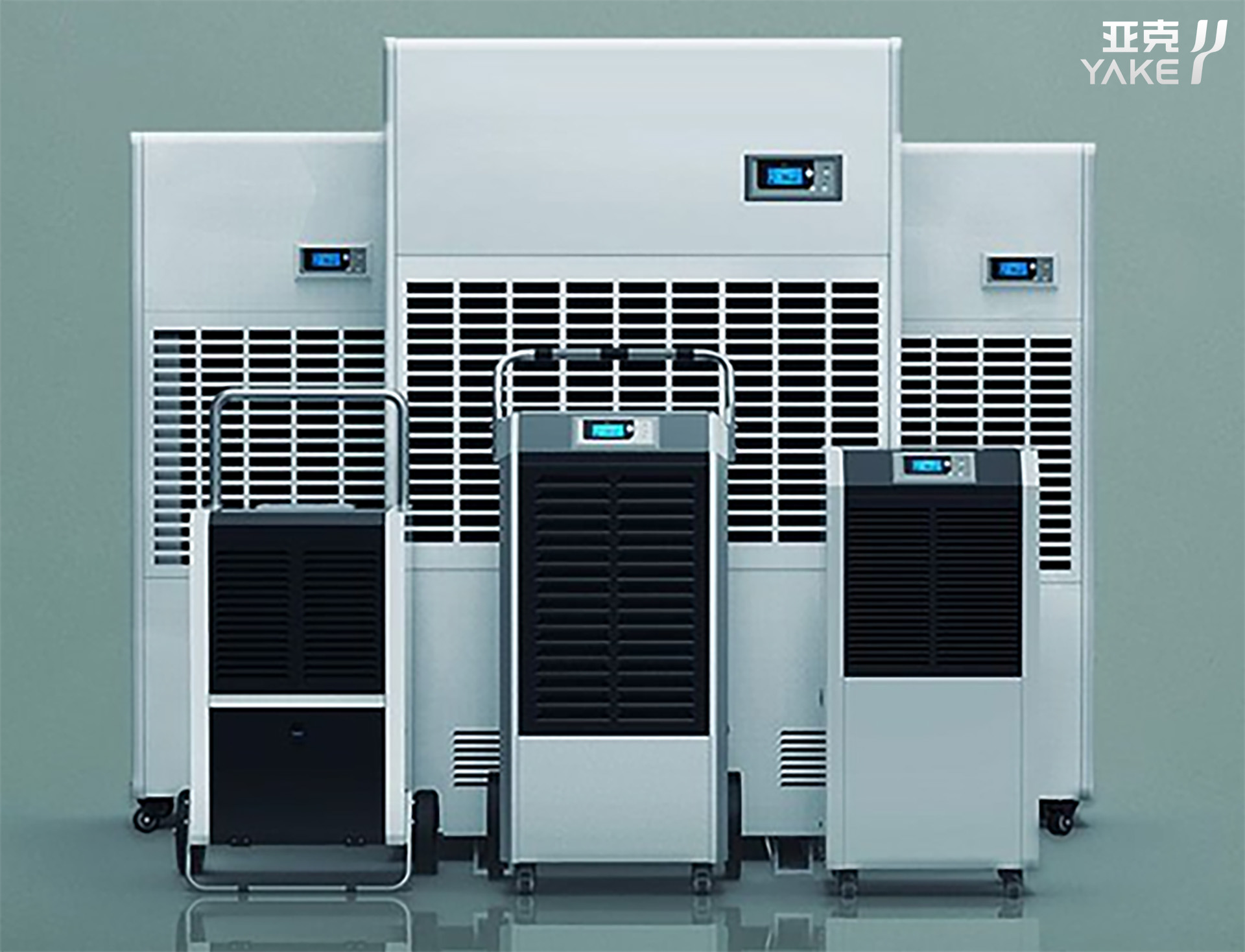
Contact us to find the best place to buy your Yakeclimate solution today!
Our experts have proven solutions to keep your humidity levels in check while keeping your energy costs low.