
Building 34, No. 535 Shunfeng Road, Hangzhou, Zhejiang, China
[email protected]


Alamitos energy storage facilities are grid-scale batteries that help shore up the local power grid. They reside in California’s Alamitos region as another portion of the transition from gas peakers to quick-reacting, grid-level storage. The locations utilize state-of-the-art lithium-ion battery racks, power conversion systems, and digital controls to manage real-time load changes in megawatt-scale increments. On a daily basis, they assist with frequency stabilization, smoothing solar and wind output, and reducing demand for aging, inefficient generation. For plant managers and engineers, these facilities provide a tangible case study of how storage can bolster grid reliability, support decarbonization goals, and redefine future industrial power planning.
Alamitos Energy Center in Long Beach, CA bridges legacy gas assets with grid-scale batteries. It occupies the location of one of the state’s largest power stations and today anchors a transition from peakers to cleaner, flexible capacity that can firm solar and wind.
Alamitos BESS utilizes utility-scale lithium-ion batteries in containerized racks. Each rack clusters cells into modules with individual battery management systems that monitor cell voltage, temperature, and state of charge in real time. This provides deterministic performance during high cycling and enables the quick ramp rates that grid operators require when solar goes down at sunset.
It’s modular in design. Capacity is aggregated in standardized blocks, so the 100 MW and 400 MWh installation can be scaled or partially isolated without rewiring the entire site. This block structure is similar to modular HVAC or dehumidifier banks in a plant. It streamlines maintenance, upgrades, and staged investment.
SCADA and plant controllers drive automated dispatch, state-of-charge limits and thermal control. Operators define charge and discharge windows that align with solar and wind profiles, while algorithms maintain round-trip efficiency high, usually surpassing typical industry benchmarks, which controls losses low when moving excess renewables into peak nighttime demand.
Alamitos delivers multiple grid services from a single footprint. It provides local capacity, displaces a natural gas peaking plant, and enables variable renewables.
It provides frequency regulation, voltage support, spinning reserve, and short-duration backup power. Since a battery can respond in milliseconds, the facility can stabilize grid frequency more quickly than a gas turbine and help keep voltage within tolerance on local circuits, which is important in dense load pockets around industrial areas.
By doing this work, the BESS reduces run time for fossil‑fuel peakers and eases the transition to retire Alamitos Generating Station Units 1–6. The newer 640 MW combined‑cycle and 400 MW simple‑cycle blocks run more efficiently and less frequently during ramps.
Alamitos BESS is a 100-MW/400-MWh system that can discharge at full power for approximately four hours. This profile aligns with late afternoon and evening peaks when solar net load increases. One of the largest battery projects in the US, it was the world’s first stand-alone storage resource contracted for local capacity with a long-term power purchase agreement.
| Metric | Value |
|---|---|
| Power capacity | 100 MW |
| Energy capacity | 400 MWh |
| Site thermal rating | 640 MW CCGT + 400 MW simple‑cycle + 100 MW BESS |
| Typical round‑trip efficiency | High, grid‑scale class |
| Annual throughput (illustr.) | Several hundred GWh range, cycling daily |
Operational targets are high uptime and dependable response, so the plant can soak up excess solar or wind and then discharge into evening peaks with little curtailment.
Safety is engineered in at cell, rack, container, and plant levels. Thermal management maintains batteries in a narrow temperature range with HVAC and heat rejection systems, reminiscent of best-practice humidity-sensitive industrial equipment. Fire suppression utilizes gas or aerosol agents and compartmentalization, so a problem in one container does not spread through the yard.
Continuous monitoring identifies problems such as abnormal temperatures, off-spec voltages or insulation faults before they become an issue. Operators have remote control, rapid emergency shutdown logic and islanding options if grid conditions become unstable, which protects both field crews and adjacent loads.
The design and operation adhere to national and local codes for energy storage facilities and large power plants. The modernization program involves complete demolition of the six legacy units in addition to retired Unit 7, making room for cleaner, more adaptable assets that more effectively align with a renewables-heavy mix.
Policy around the Alamitos batteries is very particular. It stems from California’s aim for 100% carbon-free electricity by 2045, and it sees storage as a fundamental grid resource, not an afterthought. For plant and facility teams, this same policy logic is now bleeding into procurement rules, interconnection studies, and even how large industrial loads are shaped and billed.
California established binding energy storage procurement targets for investor-owned utilities, beginning at approximately 1.3 GW and then growing through subsequent integrated resource plans. These targets stand alongside renewable portfolio standards and resource adequacy rules, so storage is valued not only as a clean add-on but as reliable capacity. Compliance requires utilities to demonstrate that storage is physically paired with renewables in real time, not just on paper, including recorded charging profiles corresponding to solar or wind generation and confirmed discharge during net-peak hours. State agencies tied these rules to clear deadlines and milestones: procurement by certain years, online dates for contracted projects, and periodic check-ins through resource filings. Alamitos falls squarely within this frame as a massive four-hour lithium-ion system certified as a capacity resource. It addresses particular state targets, satisfies resource adequacy regulations, and was selected in lieu of a new gas peaker through a competitive bid.
The policy behind the power The Alamitos facility ties directly back to California’s 100% clean energy goal for 2045 as it transforms variable solar and wind into firm, dispatchable capacity for the evening peak. Storage accelerates solar and wind adoption by absorbing midday over‑generation that would otherwise be curtailed, then returns that energy when the grid is strained. In dispatch planning studies, four‑hour batteries such as Alamitos can increase renewable penetration by a few percentage points on a system because they liberate space on the grid for additional solar and wind capacity. It limits curtailment by retaining a portion of that surplus, minimizing mid-day solar throttling and allowing operators to deploy fewer fossil units during ramp hours. This additionally decreases local air emissions proximal to load centers and industrial areas.
Alamitos energy storage wasn’t always a flagship project. It started as a local capacity need in a dense load pocket, where planners were faced with a new gas peaker or a different path. Alamitos BESS, for example, showed that a 100 MW and 400 MWh stand-alone battery plant could meet the same capacity need and do so more flexibly.
Construction began in June 2019 and concluded in early 2021, smack in the middle of worldwide supply chain stress. Shipping containers, battery racks, switchgear and thermal systems were all delayed at ports. Shipping giant transformers and inverters required not only special trucks but meticulous route planning to avoid adding additional days and expensive permits.
Training and safety proved to be huge undertakings. Crews needed to be educated on lithium-ion hazard profiles, lock-out procedures around DC and AC equipment, and fire brigade coordination plans. Site teams implemented phased commissioning, established clear work zones, and conducted recurring drills to keep schedule and safety on track. When COVID-related workforce gaps struck, work was resequenced. More off-site preassembly and remote factory acceptance tests were used to maintain the delivery date linked to the long-term PPA.
The plant operates as a local capacity unit priority number one and energy arbitrage priority number two. Charge is stacked during low-price, high-renewable hours and then discharged into evening peaks or contingency events, maximizing the four-hour duration without over-cycling cells. Control software monitors state of charge, temperatures, and throughput caps to extend battery life.
Coordination with the grid operator is close. The BESS reacts to dispatch signals for local capacity, frequency support, and occasionally ramping support when solar output shifts rapidly. Telemetry streams live, ramp rates and availability windows are negotiated so the system operator can rely on the 100 MW as if it were a conventional plant.
Maintenance operates on a combination of regular visual inspections, thermal imaging, and condition-based activities fueled by operational data. Operators monitor cell health trends, inverter performance, and HVAC loads because cooling accounts for a significant portion of total site energy consumption. Many teams from manufacturing know this same logic: treat the BESS like a large, mission-critical UPS with stringent logs and alarms.
As markets evolve, dispatch policies follow. Increasing renewable penetration, new tariffs, and more aggressive emissions targets continue to pivot the value stack. Alamitos has proven that economically viable grid-scale battery storage can displace a gas peaker, allow for “set-aside” of renewables to cover peak hours, and provide a model for what’s ahead. Its success helped spark a tsunami of storage contracts, with more than 4 GW coming online by 2023, much of it in California, and gave planners faith that stand-alone local capacity with long-term PPAs is a viable model.
Alamitos energy storage is primarily about grid reliability. It shifts local cash flow and emissions in ways that count for industrial eyes tracking energy and compliance costs.
Construction of the Alamitos facility pushed a sharp time-bound wave of work into the region: more than 1.48 million hours of construction labor, over USD 315 million in payroll, and more than USD 132 million in local purchases of steel, concrete, controls, logistics, and site services. For plant managers in the vicinity, that translated into more swollen order books for metal fabricators, electrical contractors, HVAC companies, and specialty trades that cater to industrial plants.
Once running, the facility employs a smaller but consistent group of technicians, controls engineers, asset managers, and security and maintenance personnel. Beyond these direct jobs, there is continued need for local calibration labs, crane and lifting services, cleaning, landscaping, and occasional retrofit work. Research on the project calculates that cumulatively, the storage system contributes approximately USD 12.3 to 14.6 million annually to the local economy in wages, services, and multiplier effects.
City and regional governments receive new tax revenue from property taxes, sales taxes on construction and maintenance spending, and business-related fees. That income frequently returns to roads, ports, and utility enhancements, which reduce operating risk for surrounding industrial facilities that rely on consistent access and steady energy.
Having a massive, bankable storage asset sends a powerful signal to clean-energy developers and investors as well. Co-located solar, extra storage phases, and grid-support projects view Alamitos as evidence that the market functions, which attracts additional investment and sophisticated providers, such as companies specializing in precise climate and humidity management for sensitive manufacturing.
Alamitos is zero-emission, battery-based at the point of use and uses virtually no water, unlike many thermal plants with cooling towers or once-through cooling. When charged mainly from solar and wind, each megawatt-hour discharged during peak hours displaces gas-fired peaker plants, which are among the highest emitters of both CO₂ and local pollutants.
For a large storage asset cycling daily, the avoided CO₂ can be tens of thousands of tonnes per year depending on the local grid mix and dispatch profile. The impact is greater in grids such as California’s that feature midday renewable curtailment and where peakers ramp hard in the evening. Every stored megawatt-hour relocates that “set-aside” renewable power into the peak and displaces fossil units down the merit order.
Relative to conventional gas peakers, the battery system circumvents NOx, SOx, and PM₂.₅, which are pollutants that have direct connections to asthma, cardiovascular disease, and other health burdens in surrounding communities. That decrease bolsters state greenhouse gas and air-quality goals while reducing future compliance risk for energy-intensive consumers connected to those grids.
In aggregate, the project has become a proving ground that helped transform the storage industry in California, demonstrating to the regulators and utilities that large-scale batteries can support renewables at scale and with great reliability. This achievement is part of why storage is now recognized as a foundational tool for long-term decarbonization at the state, national, and even global scale power systems.
Cumulative Carbon Savings Since Launch (Illustrative)
| Year of operation | Estimated CO₂ avoided (tonnes/year) |
|---|---|
| Year 1 | 25,000 |
| Year 2 | 27,500 |
| Year 3 | 30,000 |
| Year 4 | 32,000 |
AES places grid-scale batteries at the heart of a more resilient, cleaner electricity system. The company approaches utility-scale storage locations, such as the Alamitos campuses, as fundamental grid resources, not attachments, with configurations that attempt to cater to both variable renewables and conventional stations.
AES is all about the battery platforms that inject genuine flexibility into the grid. Storage can time-shift solar and wind output, flatten short demand spikes, and reserve local capacity in congested grid hot spots with limited capacity and heavy load. That very same system can provide fast frequency response and spinning reserve, which makes the grid more efficient and reduces waste from part-loaded thermal units.
AES connects its storage vision to sustainability aspirations. In many places, solar is already the lowest-cost source on a per kilowatt-hour basis, so timing and reliability, not raw price, are the next frontier. By coupling batteries with solar and wind, AES seeks to ‘set aside’ renewable energy for peak hours, cut gas peaker run-time, and inch toward a 100% carbon-free mix. For industrial users, cleaner power profiles, less curtailment, and better alignment to corporate emissions goals.
Our R&D is concentrated on full life-cycle performance. That includes cell chemistry selection, long-duration cycling, thermal engineering, fire safety, and digital control systems that layer numerous services onto the very asset. Engineers monitor battery degradation, state-of-health and real-time dispatch so they can maintain high round-trip efficiency while fulfilling capacity commitments through a 15 to 20 year contract.
Partnerships are at the core of this vision. AES partners with cell producers, inverter providers and controls companies to advance industry safety standards and integrate batteries with solar and gas fleets. The world’s first grid-scale battery energy storage system to secure a long-term PPA backed by a utility was an important proof point. Deals such as this one demonstrate to banks and regulators that storage can be considered equivalent to firm capacity, which accelerates broader adoption and helps transform electricity and storage markets.
Grid-scale batteries such as those deployed at Alamitos facilities are transitioning from pilot position to essential grid resource. For plant and facility teams, they redefine how power quality, reliability, and sustainability goals are achieved 24/7.
Future battery chemistry will likely remain lithium-ion dominant in the near term, with higher nickel or LFP variants optimized for 10 to 20 year duty cycles. Beyond that, sodium-ion, zinc-based, and flow batteries will thrive where long duration and high cycle life matter more than energy density. Systems in the 400 MWh class have already proven effective at Alamitos-like sites, scaling toward multi-gigawatt-hour hubs that can shift large solar and wind blocks across multiple hours. That scale will be essential for grids pursuing 100 percent carbon-free supply, while still needing to cover evening peaks and industrial load.
Costs are coming down as production scales and standardization. Pack and balance-of-plant designs are more modular, with standardized power conversion skids and container formats. This fuels reduced capital expenditure per kilowatt-hour and easier operations and maintenance. Accordingly, grid-scale batteries are emerging as a direct replacement for new gas peaker plants for local capacity needs, particularly in dense load pockets near ports and industrial corridors. Long-term power purchase agreements are locking in predictable revenue and supporting more projects at the state, national, and global levels.
Integration with smart grids and EVs will push value further. Fast-response battery systems can dispatch energy to tens of thousands of homes in milliseconds, stabilizing frequency and voltage whenever renewable output varies. As EV fleets scale, they introduce flexible demand which can absorb excess renewable power, then serve as mobile storage via vehicle-to-grid programs. Industrial users can combine on-site batteries with targeted humidity control, UPS and process automation to keep critical lines stable during grid events while load-shifting to cheaper or cleaner hours.
Policy and infrastructure will need to catch up. Clear rules for storage in capacity markets, streamlined interconnection, and updated grid codes are necessary. Grid operators will require new forecasting and dispatch tools that treat storage as a first-class resource, not a fringe add-on.
Alamitos demonstrates how grid-scale batteries are now doing actual work, not pilot work. The location supports local load, mitigates rapid solar ramps and reduces gas plant runtime. Policy helps shape that role, from capacity bids to clean energy mandates. Engineers then pair that policy frame with actual equipment in the field.
The project sends strong signals to plant teams and grid planners. Batteries that can stack work. It can clear peak, provide instant response and relieve local line stress. That combination protects uptime and can reduce long-term cost.
To chart your own path, poke at your load curve, your local regs, your risk points and then sketch how a system like Alamitos might fit your site.
Alamitos Energy Storage is a massive grid-scale battery project located in Long Beach, California. It employs lithium-ion batteries to hold energy and assist the regional energy grid. It stabilizes supply and demand and enhances grid resilience.
It was constructed to replace aging gas-fired peaker plants and satisfy clean energy policies. The facility backs California’s renewable energy targets and air quality regulations. It provides quick and adaptable energy without continuous fossil fuel burning.
The system charges when electricity is inexpensive or renewable supply is abundant. It outputs stored power to the grid during high demand or stress. Sophisticated controls direct battery stacks, inverters, and grid interaction in real time.
It can reduce peak power costs by displacing peaker plants. It defers certain grid upgrades by congestion management. It backs local employment during construction and operation and integrates additional inexpensive renewable energy.
It generates no on-site air pollution when it’s running. By displacing fossil-peaker plants, it has the potential to reduce greenhouse gas emissions in the long run. Alamitos energy storage facilities have a primary impact that stems from battery manufacturing and end-of-life recycling, which is handled under rigorous regulations.
The facility is built and operated by AES, a global energy company. AES is no stranger to grid-scale storage. We collaborate with regional grid operators and regulators to help guarantee safe and reliable performance.
About: Alamitos energy storage facilities provide a blueprint for other areas deploying renewables. Its performance data drives battery design, policy, and investment decisions globally.


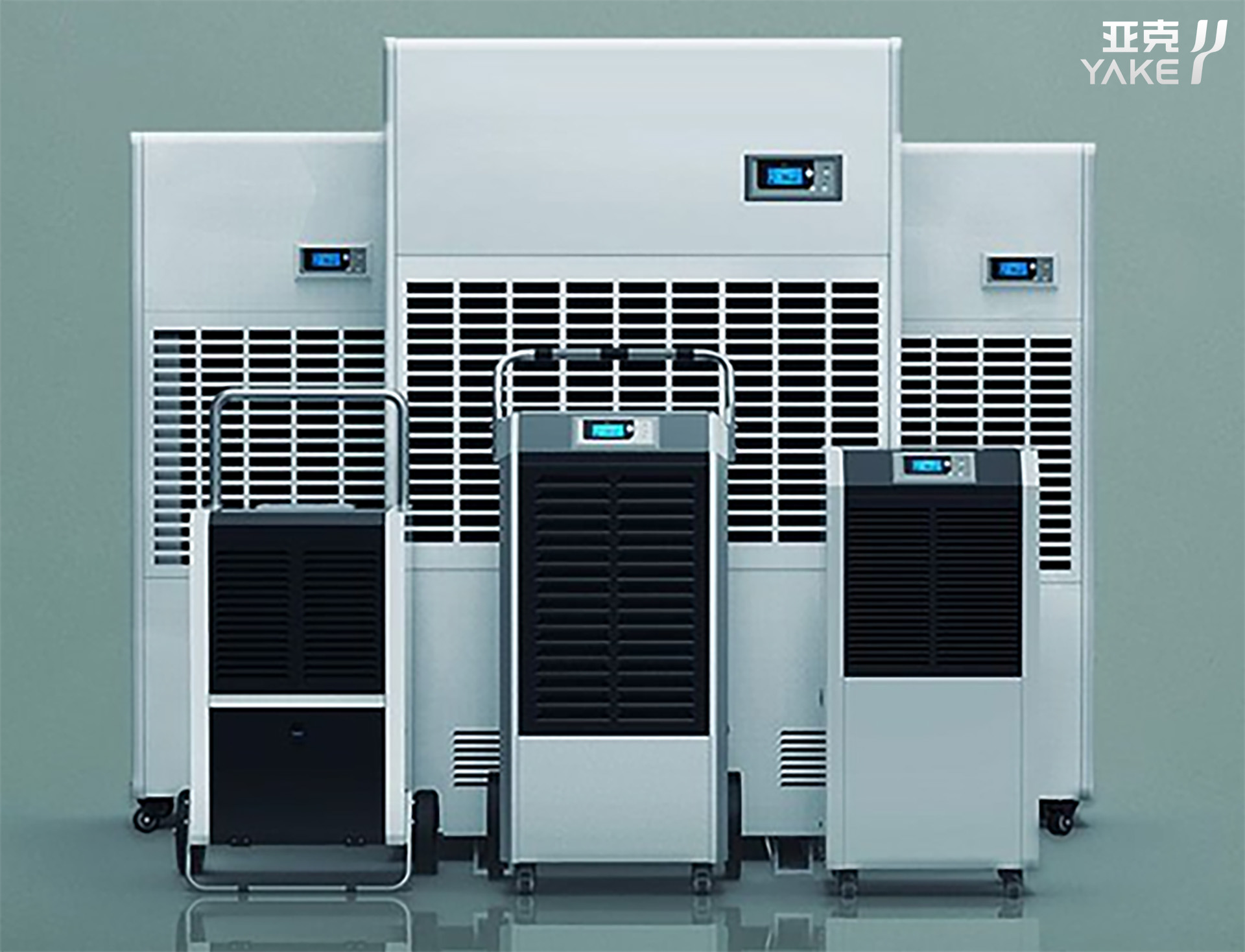
Contact us to find the best place to buy your Yakeclimate solution today!
Our experts have proven solutions to keep your humidity levels in check while keeping your energy costs low.