
Building 34, No. 535 Shunfeng Road, Hangzhou, Zhejiang, China
[email protected]


Temperature control systems for industrial applications utilize machinery and equipment to maintain temperature, humidity, and air quality in expansive areas. They assist factories, laboratories, and indoor farms in maintaining a safe environment for both humans and equipment. Smart temperature control reduces waste, prevents machines from jamming, and saves energy. Many systems include digital screens, remote checks, and smart sensors to detect minor shifts. Others employ water pumps, air fans, or special coolants, so every configuration suits the location and task. Selecting the appropriate system depends on factors such as room size, type of work, and local climate. Read on to discover how these systems operate, what different types are available, and advice to choose the optimal option.

These are incredibly useful tools used to regulate temperatures in many processes. They assist factories, labs, and farms to get the perfect heat or coolness for each job. Such systems incorporate components such as sensors, controllers, and actuators to monitor, adjust, and maintain optimal temperature levels. They typically operate over a range between -95 °C and 200 °C or above. Their mission is simple: to keep things running smoothly, safely, and energy-smart, no matter the industry, whether it is making food, chemicals, or controlling indoor air quality in HVAC systems.
Temperature sensors are where it begins. The most common types are thermocouples and RTDs (resistance temperature detectors). They have their own advantages. Thermocouples are rugged and perform nicely at extreme temperatures, being suitable for steelmaking or freezer labs. RTDs are accurate and are often employed when close control matters, as in pharmaceuticals.
A sensor’s precision counts for a great deal. If it is off, the entire system can wander from the desired temperature, causing either ruin to inventory or excess energy usage. Location counts as well. If a sensor lies too near a heat source or distant from where the process is occurring, readings may fail to reflect actuality.
Sensors monitor changes quickly. When temperatures spike or plummet, sensors detect it and relay the signal to the next section.
Controllers receive what the sensor detects and determine if adjustments are necessary. Some are basic, with only on/off adjustments. Others, such as proportional or PID controllers, provide more precise control. PID (proportional-integral-derivative) controllers are favorites in large plants because they maintain temperature stability even under challenging operational conditions.
Calibration is a must. If your controller isn’t configured properly, the best sensors in the world won’t do you any good. These newer controllers connect to other systems, such as factory automation or the IoT, allowing users to monitor and adjust settings remotely.
Control devices do the actual heating or cooling. These can be valves, heaters, coolers, and actuators. When the controller signals to respond, these devices open or shut, accelerate or decelerate to adjust the temperature.
Selecting an appropriate device impacts both the speed and quality of a system. Dependable control devices prevent concerns such as overheating or freezing, which can ruin machinery or goods.
A control loop connects sensors, controllers, and devices in a feedback cycle. Closed-loop systems monitor temperature continuously and make constant adjustments to remain on target. Open-loop systems do not receive feedback, so they are most effective when things remain pretty stable.
Control loop tuning keeps things steady and makes a system respond faster. Bad tuning leads to lag or huge temperature swings.
Control logic is the system’s brain. It applies mathematics and logic, frequently algorithmic such as proportional, integral, or PID, to determine the next action. Software allows those systems to make difficult decisions and respond to evolving requirements.
Others need to adjust their operations as process requirements evolve or external conditions, such as weather, fluctuate. Flexible logic assists in satisfying these new requirements without an entire system revamp.
Temperature control is fundamental to a large number of industries, ranging from food processing and chemicals to electronics and pharmaceuticals. The proper temperature maintains product stability, prevents spoilage and ensures consistency from batch to batch. Take semiconductor manufacturing, where even minor temperature fluctuations can ruin the final product. In food plants, heat swings ruin taste or cause safety issues. That’s why many firms deploy state-of-the-art control systems that can regulate heat delicately to a fraction of a degree.
Maintaining optimal temperatures is much more than a quality concern. It makes the office safer. We control temperature because some chemical reactions are only safe within a narrow temperature window. If you get too hot or too cold, you get leaks, fumes, or fires. In battery and electronics experiments, components including inverters, converters, and battery cells are subjected to varying temperature conditions to test their safety and durability. Good control minimizes these hazards by maintaining equilibrium and allows businesses to prevent downtime or damage.
Operating a plant is very power-intensive, so energy conservation is important. When you establish good temperature control, you employ just a tad of heat or cold right at the moment it’s needed. This reduces waste, saves on bills and results in less wear on the equipment. It’s simple: better control leads to fewer mistakes, less spoiled product, and less downtime. New systems are designed to make this easy, with intuitive controls and convenient displays. They can take on hard tasks, maintaining temperatures from minus 95 degrees Celsius to plus 200 degrees Celsius. This broad spectrum allows you to deploy a single system for multiple tasks, from chilling to frying.
Compliance is mandatory in the majority of areas. Laws will frequently state what temperature you are required to have for safety or quality, or both. With a quality system, you can demonstrate evidence-based compliance and audit with confidence. These systems provide better precision than those ancient manual methods, so you get into the “just right” zone every time. Essential characteristics, such as rapid adaptation to external fluctuations and robust construction, maintain momentum in the face of a changing environment.
Industrial temperature control systems fall into two main groups: open-loop and closed-loop. These control heat or cold in critical processes for paper, glass, or petrochemical plants. Their task is to maintain temperature, increase precision, and operate on a wide scale from -200°C to +600°C. Control systems come in all shapes, from calibration baths to recirculating coolers or cryo-compact circulators. They are all types of control systems, each one suited for a specific task, from melting glass to operating chemical reactions. Four things matter when picking the right system: heat capacity, static behavior, how it reacts to changes, and how it handles outside shocks.
| System Type | Feedback Used | Main Use Case | Complexity |
|---|---|---|---|
| Open-loop | No | Simple heating/cooling | Low |
| Closed-loop | Yes | Precise control | Medium-High |
On/off control is the simplest form of temperature regulation. The controller turns the heater or chiller completely on or off. This is simple to organize and inexpensive to operate. It is perfect for applications where tight control is not required, like basic water baths or little ovens. On/off control works best if your system does not swing much in temperature or if a small overshoot is no big deal.
On/off control only goes so far. The system can overshoot or cycle on and off frequently, wearing out equipment. It doesn’t respond to fast changes. It’s ideal for calm, low-risk work.
Proportional control adjusts the system output in proportion to how far the set point is off. If the temperature is way out, the system drives hard. As it approaches, it relaxes. This reduces overshoot and keeps things stable. It is an improvement over on/off control for systems that require a bit more finesse.
| Tuning Factor | Role |
|---|---|
| Proportional gain | Sets response speed |
| Set point | Desired temperature |
| Response time | How fast system reacts |
Ideal for recirculating chillers or lab incubators, proportional control keeps things humming along without a lot of overhead.
PID control mixes three actions: proportional, integral, and derivative. This combo provides close, steady control for hard work. PID is adaptable; it will work in a lab, in a glass plant, or in a chemical reactor. It even smooths out response time, avoids big swings, and can be tuned for each task. Tuning is the search for a suitable mix for each process, which may require some time but rewards one with staying in control and safe.
VFD control adjusts motor speed to subtly adjust temperature. By matching speed to the load, VFDs save power and reduce wear on pumps and fans. They are a good fit in large HVAC systems or chillers where the load fluctuates heavily. When you have VFDs, you experience less noise, smooth starts, and longer part life. They’re a clever choice for tasks requiring minute tuning and deep savings.
Industrial Control Units – These are designed to monitor and control temperature in factories, laboratories, and similar large scale venues. They serve as the brain for heating and cooling HVAC systems, ensuring that every stage in the process operates at the correct temperature. They can manage anywhere from maintaining a constant temperature of 20 degrees Celsius to 300 degrees Celsius. That renders them well-suited for roles in food, chemicals, and electronics, where even a minor change in temperature can result in major losses.
Today’s control units include screens and touch panels that allow for easy setup and reading. Many now use IoT, so you can monitor and modify settings from your phone or computer, even if you’re not on location. This remote access is convenient if your system spans a big factory floor or you need a rapid tweak to prevent downtime. Even a few allow you to monitor trends and history, so you can identify problems before they start to escalate.
Scalability is the name of the game in these units. As factories expand or transition to production of new products, control units must adapt. A good system allows workers to add additional controllers or sensors without having to start over. This economizes and keeps work from bogging down in lengthy cessations. For instance, a plant may begin with a handful of units driving one section and then increase that number as new lines open.
Control units increase automation, reducing human mistakes and accelerating work. They can operate heating, cooling, and even humidity controls autonomously. This is because they can monitor tiny fluctuations, such as a 0.15°C shift, and respond rapidly. Their construction allows them to operate in harsh environments, such as under high pressure or with corrosive chemicals, and to heat or cool rapidly when required.
They will be smaller and more energy smart in the future. The manufacturers themselves are incorporating better digital components, stronger IoT connections and tools to be more power-efficient. This is in line with the green tech push elsewhere.
Temperature control systems serve as the backbone for a multitude of industrial processes. Maintaining optimal temperature is crucial, be it for chemical reactions, electronics testing, or food production. Every process has its own needs, but the aim is the same: hit a target temperature and hold it. Optimizing performance involves considering the system’s speed and stability, its resilience to external modifications, and the efficiency of energy and cost savings.
Reducing power consumption is a priority for all sites. In part by optimizing the operation of temperature regulation systems, firms can conserve energy and reduce expenses. Investments in energy-efficient gear such as variable speed drives or well-insulated tanks deliver returns over time. Real-time monitoring with SCADA systems can detect inefficiencies and identify opportunities for optimization. Easy things such as turning down setpoints when lines are idle or employing heat recovery make a difference. Keeping an eye on power consumption, recording trends and responding to data can nudge a plant toward its efficiency goals.
Dependable systems keep them humming along with reduced non-scheduled down-time. For lines where even brief stops sting, backup or redundancy is clever. Routine inspections and maintenance, such as valve checks, line flushes, and sensor cleanings, extend the system’s life. Even minor temperature miscalculations can spoil an entire batch, so consistent and accurate control is essential. Quality parts and tried-and-true designs that do not break down, with people around who understand the system and can repair small glitches before they become big, contribute to good reliability. Good reliability leads to good yield, less scrap, and more faith in the process.
Regular calibration keeps sensors accurate, so the system strikes at its targets. Maintaining proper records, such as logbooks or electronic reports, demonstrates what has been repaired and at what time. This simplifies trend-spotting and allows you to think in advance. These kinds of preemptive efforts, such as replacing worn components before they fail, prevent major issues from beginning.
Temperature control systems are advancing quickly toward intelligent, interconnected, eco-friendly solutions. Today, pretty much every factory, lab, and refrigerator farm uses sophisticated configurations combining accurate sensors, rugged controls, and cloud monitoring. Newer designs utilize PLCs and SCADA for more sophisticated supervision. This next wave is all about tighter integration, sharper efficiency, and even less energy. Smart devices, cloud analytics, and the Internet of Things (IoT) are all connecting everything together, making it easier to maintain temperatures just right. This trend reduces waste, assists the environment, and reduces expenses. Another major effort is employing materials and equipment that perform more efficiently and last longer. Propane turbo compressors, for instance, are increasingly being utilized to enhance performance and reduce energy consumption in refrigeration units.
Smart integration refers to how we’ll combine IoT and AI in temperature control. These tools enable sensors, controllers, and software to communicate with each other in real time.
Smart integration makes systems respond more quickly to changes in temperature or demand. Machines can adjust themselves based on current or anticipated events. Predictive maintenance is an additional benefit. With smart sensors and cloud analysis, systems can detect issues early and arrange repairs before a failure.
Predictive AI assists by reading trends, then adjusting settings before an issue kicks off. This translates into fewer temperature swings and less wear on equipment. Machine learning continues to improve these systems by discovering new patterns in the data, and settings continue to improve long term. Good predictive models require a wealth of clean data from sensors and historical records to make the proper decisions. These models power food plants, chemical factories, and even test labs, where minor temperature variations matter.
With more connected devices, safeguarding systems from cyberattacks is more important than ever. Hackers can hijack smart controls, jeopardizing system shutdowns or exposing private data. The best steps are strong passwords, blocking unused ports, and training staff to spot phishing. Frequent software updates and security scans work to assist in keeping the system protected from emerging threats. Security audits indicate where gaps may be, so they can be addressed promptly.
Nice temperature control designs influence how efficiently factories and farms operate. Consistent weather allows equipment to endure and plants to flourish. Easy systems operate in small rooms, while large areas require intelligent technology that conserves energy and eliminates overuse. For instance, a sensor-equipped greenhouse can maintain the ideal heat for tomatoes or lettuce. New tools consume less power and provide immediate feedback. With improved controls, teams solve issues early and maintain smooth operations. Our turnkey solution can satisfy a variety of needs, from food plants to large labs. To locate the correct system, consider space size, crop or product type, and cost to operate. Looking to increase your yield or save on bills? Consult a local professional or explore fresh climate innovations here.
Industrial temperature control means controlling the temperature of equipment and processes, which ensures safety, efficiency, and quality of products in manufacturing settings.
Accurate temperature regulation avoids equipment overheating and damage, enhances product quality, and promotes sustainability through energy efficiency.
Popular varieties are open-loop, closed-loop, and programmable. Each type fits different process requirements and control needs.
Its industrial control units are temperature sensors that automatically trigger heating or cooling units to maintain a set point.
You can optimize performance through routine maintenance, calibrating sensors and implementing sophisticated monitoring software for on-the-fly adjustments.
Automation, AI, and remote monitoring are transforming industrial temperature control to be more precise, efficient, and convenient.
Indeed, today’s sophisticated temperature control systems employ all sorts of sensors and controls to use the minimum necessary energy needed to keep your temperature stable, reducing your overhead.


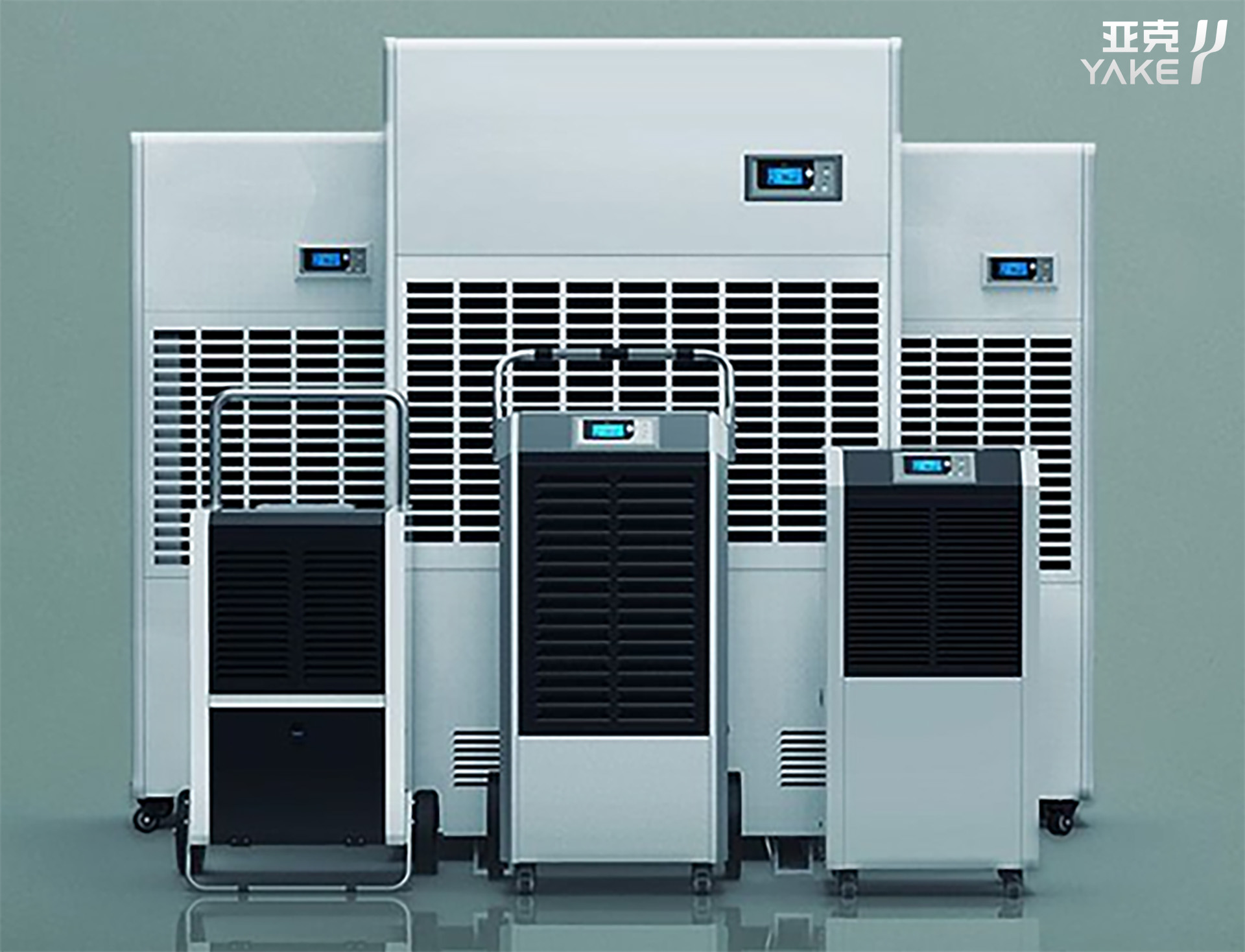
Contact us to find the best place to buy your Yakeclimate solution today!
Our experts have proven solutions to keep your humidity levels in check while keeping your energy costs low.