
Building 34, No. 535 Shunfeng Road, Hangzhou, Zhejiang, China
[email protected]
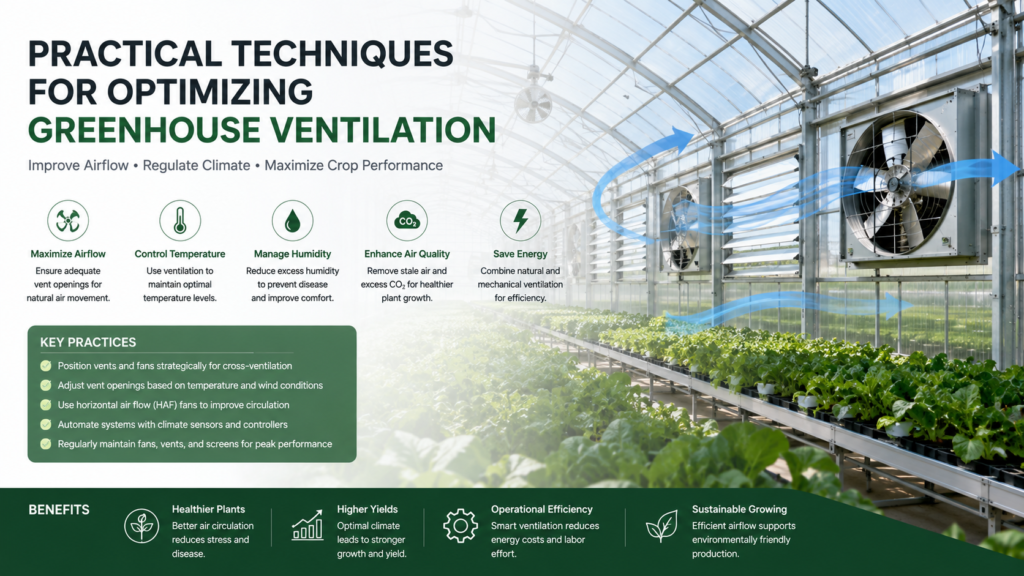


Greenhouse ventilation optimization techniques are methods that assist circulation air in an intelligent manner to maintain crops stable and healthy. Growers employ a combination of natural vents, fans, air ducts, and controls to regulate heat, humidity, and CO₂ within the space. Proper ventilation reduces disease risk, prevents heat stress, and maintains leaf temperature and transpiration within safe limits. In actual projects, designs are dependent on crop species, plant density, layout, and local climate data. Certain farms optimize for low-energy air paths, while others focus on tight climate zones for high-value crops. The following sections break down these key techniques, with explicit steps and trade-offs, so growers can adjust systems to their specific greenhouse.
Ventilation of your greenhouse is about more than opening a window. It is the primary mechanism to manage heat, humidity, gases, and airflow so plants will grow in a consistent, expected manner.
Without constant air exchange, solar gain can raise air temperature above 35 to 40 °C even on moderate days. A lot of crops stall growth or close their photosynthesis under this stress. Leaves wilt, flowers drop, and fruit set falls. Ventilation keeps temperature closer to the target band, for example, 20 to 26 °C for many leafy greens, by moving hot air out and drawing cooler air in. This allows roots to keep up with water demand and prevents unexpected stress events that can harm delicate tissue. For warm regions, growers will typically pair ridge vents with side vents or exhaust fans so hot air has a defined path out of the structure, which decreases the need for severe shading.
When warm air comes into contact with cooler surfaces, like glazing or metal frames, water condenses and runs or drips on plants. This, along with high relative humidity in excess of about 85 to 90 percent, provides a perfect environment for mildew, botrytis, and other fungal infections that plague indoor growers. Ventilation pulls out moist air and pushes in drier outside air that reduces humidity and evaporates leaf surfaces at a quicker rate after watering or fogging. This cuts leaf wetness time, reducing disease pressure, and it reduces algae growth on floors and walls. In practice, short, frequent ventilation pulses after watering work better than one long purge because they follow real moisture spikes.
During the day, plants consume CO2 and generate oxygen as a byproduct of photosynthesis. At night, they breathe oxygen and exhale CO2. In a closed greenhouse, this cycle can drive CO2 and oxygen well out of range. As plants consume CO2 by the canopy, photosynthesis slows and growth declines. It replaces stale air with fresh, restoring CO2 to near ambient levels or supplementing your CO2 dosing if you use it. It prevents oxygen depletion that can damage root and microbial activity. This gas balance is crucial to firm stems, compact leaves, and short internodes instead of wispy, spindly plants.
Good ventilation determines how the air circulates in the house, not just what volume comes in and goes out. Mild, uniform air movement maintains a slight temperature and humidity gradient between crop level and roof. It prevents pockets of stagnant, warm, and humid air where pests and diseases flourish. With fans and vents collaborating, plants experience a gentle, consistent breeze, which encourages them to develop more robust stems and root systems instead of reaching out in stagnant air and limited light. This balanced setup maintains consistent production, improved fruit quality, and harvest timing uniformity across the greenhouse.
Greenhouse ventilation systems fall into three broad groups: passive, active, and hybrid. Each group circulates air differently, consumes different levels of energy, and suits different crops, climates, and building sizes.
Passive (natural) systems employ pressure, wind, and buoyancy rather than motors. Roof vents, side vents, and louvres open to allow warm, moist air to rise while cooler air flows in at the lower level. In most designs, roof vent openings totaling approximately 15 to 20 percent of floor area generate a powerful natural ‘chimney’ effect, which can be effective in moderate and windy locations.
They depend on wind direction and speed and the temperature difference between inside and outside. When the warm air inside is a few degrees warmer than outside, it lifts and escapes through high vents, and outside air is sucked in through low vents. On calm days or in very hot and stagnant climates, these effects may become weak, restricting heat and humidity removal.
The design of vents significantly affects efficiency. Long continuous ridge vents frequently provide more even airflow than small, separated vents. On tall greenhouses, combining roof vents with tall sidewalls assists in pulling air through the crop canopy, which can be beneficial for air-averse crops like tomatoes, cucumbers, and many ornamentals.
Total vent area and location become more important as the house increases in size. Tall, wide houses with insufficient vent area develop hot spots and humidity pockets. Passive systems generally serve cooler or temperate climates, basic hoop houses, and operations that prioritize low energy consumption and cost over strict climate control.
Active (mechanical) systems employ fans and ducts to suck and blow air. Common configurations employ exhaust fans via one end wall and intake shutters at the opposing end, frequently with internal horizontal airflow fans to balance air velocity throughout the crop. This type of air exchange system can push a continuous air stream from one end of the greenhouse to the other, even when it’s calm.
Fan selection and layout requires a bit of attention. Sizing on one-tenth inch static pressure is a convenient and practical rule, and a fan with an exterior cone is typically about 10 to 15 percent more efficient than the identical fan without a cone. If shutters are placed on the intake side, they can increase airflow by approximately 10 percent compared with shutters on the exhaust side. If dust and dirt accumulate on fan blades, grills or shutters, airflow can decline by up to 30 percent, so scheduled cleaning is part of climate control, not an add-on.
Control is important too. Dual-speed motors tied to a two-stage thermostat or controller provide smoother temperature control than on/off fans, and they tend to keep away strong drafts that stress sensitive leafy crops. Active systems consume more energy, but they provide precise control of temperature, humidity, and CO₂, which many high-value fruiting crops and nurseries require, particularly in hot or damp climates.
Hybrid systems combine both to achieve versatility. The concept is to capture free airflow from vents when outdoor conditions are conducive and then utilize fans as a backup or intensifier when heat, cold, or humidity gets extreme. Many growers in variable climates operate passive roof and side vents most of the year. They then bring in exhaust and HAF fans on the hottest days or during still, muggy nights.
Automation keeps this balance stable. Automatic vent openers respond to internal temperature, and programmable controls determine when to introduce additional fan stages, adjust fan speeds, or close vents to prevent CO2 levels from falling too low. This mix typically reduces energy consumption compared to operating full mechanical ventilation all day long and still shields delicate crops like lettuce, herbs, or young seedlings that require more stable conditions.
Hybrid layouts suit both ends of the structure spectrum, from small tunnels with basic roof vents and one fan to large glasshouses with motorized vents connected to vari-speed fans. They are typically selected in locations where weather varies drastically between seasons or where energy is expensive but crop pricing still demands trustworthy climate control.
| System type | Main driver of airflow | Energy use | Best fit (climate / crops / size) | Key pros | Key cons |
|---|---|---|---|---|---|
| Passive | Wind, buoyancy, temperature gap | Very low | Cool–mild climates; low‑tech houses; hardy crops; small–medium | Low cost, simple, no fans to maintain | Weak in hot–still weather; less precise control |
| Active | Fans, ducts, shutters | Moderate–high | Hot or humid zones; high‑value crops; medium–large houses | Precise and reliable, works in still air | Higher energy and maintenance needs |
| Hybrid | Mix of natural and fans | Low–moderate | Variable climates; mixed crops; most sizes | Good balance of control and energy savings | More complex design and control logic |
Ventilation optimization is the art of configuring structure, hardware, and controls such that air goes where and when you need it with minimal waste of energy and water. One greenhouse frame can act very differently in a cool coastal climate than in a hot, arid inland site, so each choice must fit the site, crop, and budget.
Taller greenhouses allow warmer air space to rise and exit, so natural convection is more effective and plant canopies remain closer to desired temperature and humidity. A roof pitch of about 25 to 35 degrees commonly aids in driving this stack effect, particularly when combined with ridge vents. In many climates, natural ventilation can maintain summer ranges around 24 to 29 degrees Celsius (75 to 85 degrees Fahrenheit) during the day and 16 to 21 degrees Celsius (60 to 70 degrees Fahrenheit) at night, if the structure promotes unhindered air flow.
Cladding choice influences both how the air warms and its flow. Twin-wall polycarbonate diffuses light and insulates, evening out hot spots and cold corners. Glass provides greater light, but may give you sharper temperature peaks unless you combine it with shade and clever vent placement. In both, the frame should support continuous ridge vents, sidewall vents and other adjustable openings so you can sculpt airflow rather than depending on a handful of small doors.
Direction is more important than many growers realize. For most locations, an east-west or northeast-southwest orientation aligns well with sun movement and local winds, optimizing natural ventilation and lighting. In hot, dry places, this fundamental design still may not extract sufficient summer heat, so you frequently couple the structure with fans or evaporative pads. For natural ventilation in mild seasons, as a rule of thumb, you should plan for a total roof vent opening of around 15 to 20 percent of floor area.
Vents should be positioned to push fresh air through the crop, not just across the roof. Roof, side, and end-wall vents work best when they establish a defined intake and exhaust course and disrupt stagnant hold-ups over dense canopies or benches. Most growers map typical “dead zones” by walking the house on warm days and taking readings with inexpensive handheld thermometers or smoke tests.
Sizing and layout are directly tied to air change requirements. Total ridge and sidewall vent area should be sufficient to achieve target temperatures and control humidity without having to open vents full every day. Different opening patterns matter: using both sidewalls and roof vents often improves exchange, while opening only roof vents can sometimes weaken buoyancy-driven flow if outside air slides in without crossing the crop. In insect-screened houses, CFD studies can direct the optimal trade-off between mesh resistance and vent area such that air still circulates well and pests stay out.
Vent openings have to accommodate practical tasks. If staff cannot safely access louvres, linkages and motors to clean and repair them, performance declines over time. Corrosion-resistant hinges, unobstructed access to vents, and easy-to-operate locking mechanisms all help keep vents working to spec for years on end.
Automation maintains stability when weather changes more quickly than manual control can cope with. A simple configuration connects temperature, humidity, and occasionally CO₂ sensors to an environmental controller that controls vents, fans, and occasionally shading in real time. You can then monitor how frequently each element operates and set points to coincide with stages of growth.
Automatic vent openers and staged fan cycles help hold tight bands, like 24 to 29 °C on summer days or 16 to 21 °C on winter days and not let it swing wildly. Installing humidity sensors and stage thermostats allows you to trigger short, effective ventilation events whenever relative humidity reaches the critical levels that risk disease, even during cool days. For instance, a short vent and fan pulse that dries the canopy can be preferable to a long, gentle opening that overcools the crop. Easy logic can synchronize vents with shade screens and evaporative pads so equipment does not compete.
HAF fans circulate air in slow, continuous circuits down the length of the house, which aids in the removal of temperature layers, distributes CO₂ more uniformly, and dries leaf surfaces. All of these factors decrease disease pressure and help heat and cool more evenly. Fans should run sufficiently to maintain gentle leaf movement through the majority of the crop.
Vertical circulation fans or perforated convection tubes can extract warm air from the ridge and circulate it down through the canopy and walkways. This “top-to-bottom” mixing is useful in tall or multi-span houses where hot air pools at the roof while plant level remains cool and humid. Simple smoke tests help tune directions and speeds so you don’t cause drafts on sensitive crops.
Shading and screening are silent but strong modifiers. Outside shade cloth, insect-proof screens or movable thermal curtains reduce radiant load and glare, which reduces the amount of ventilation or evaporative cooling you need to keep leaves within a safe temperature. For hot areas, this optimizes microclimate, saves energy and can reduce water consumption by decreasing plant stress. That way, evaporative cooling pads, high-pressure fog or fine mist lines can act as backup tools when natural and forced air alone can no longer hold the house under roughly 29 °C in peak summer.
Ventilation setstands need to vary throughout the year and even multiple times per day. In mild spring or autumn weather, natural ventilation can be a low-cost, sustainable baseline strategy that maintains conditions good enough for many crops without intensive fan use. At that point, you can leave vents slightly open and employ HAF fans to homogenize interior air instead of pursuing narrow temperature ranges.
Summer requires increased air changes to maintain the building at around 24 to 29 °C by day and 16 to 21 °C at night, depending on the crop, especially if they’re cool-loving. This typically translates to greater vent openings, increased fan speeds, and more shade or evaporative cooling in hotter or drier locales where the air is desiccating and incoming air warms rapidly. In these climates, natural ventilation alone is often unable to dissipate heat quickly enough during the middle of the day, so supplemental systems are a necessity, rather than a choice.
Winter strategies flip the problem: you need to shed humidity without dumping all your heat. Short, timed ventilation bursts expel moist air as heaters or thermal screens contribute to maintaining a temperature of roughly 16 to 21 degrees Celsius by day and close to 7 degrees Celsius (around 45 degrees Fahrenheit) at night, depending on crop. Innovative tools such as moisture balance calculations or tracer gas techniques can assist in verifying actual ventilation rates and connecting them with greenhouse gas or ammonia emissions from mixed systems or systems linked to livestock. Through every season, minor adjustments to controller setpoints, fan run times, and vent offsets according to measured climate and crop response typically generate the greatest improvements.
With smart ventilation integration, the greenhouse is not running fans and vents on guesswork. It operates on data, connected systems, and defined goals for climate, energy, and crop quality. Design always starts from local climate and site. Orientation, vent layout, and the choice between natural, mechanical, or hybrid ventilation depend on wind patterns, summer highs, and humidity levels. Hot arid summers typically cause natural ventilation alone to fail, so smart control must combine forced airflow, shading, and tight humidity control in order to prevent plant stress and water loss.
Sensor networks provide the raw information any intelligent scheme requires. Growers deploy temperature, relative humidity, and CO2 sensors throughout the greenhouse, often complemented by additional nodes for light and air speed. The concept is to sense the microclimate that plants experience, not just the air at a wall or in a hallway.
Sensor height and position are very important. A typical arrangement is to deploy sensors at canopy level, 0.5 to 1.0 meters above it, and near the floor, then duplicate this along the length of the house. Here is what it illustrates: air mixes from vents, fans, and pad systems, and how varying vent opening configurations alter the microclimate and dehumidification. For example, in case III or case V vent layouts, airflow is more stable.
Have all sensors feed into a central climate controller. That controller then modulates fan speed, vent angle, and even CO₂ dosing in short cycles, so the system maintains setpoints, not daily averages. Ventilation rate can be estimated in real time by integrating sensor data with aerodynamic or energy balance models applied to greenhouse air, which helps calibrate how much air exchange is actually occurring.
Sensor drift is a silent but deadly threat. A basic routine of cleanings, calibration checks, and cross-checks between sensors keeps the system honest and prevents junk data from causing misguided vent or fan actions.
Predictive analytics leverages live readings and history to see what’s coming next, not just react after the fact. The system can learn how internal temperature and humidity react to sun, wind, and outside climate and how requirements change with crop phase, canopy density, and spacing.
With that foundation, models can predict probable temperature spikes before clouds dissipate, anticipate humidity accumulation at night after heavy watering, or anticipate CO₂ decreases after vent openings during a sunny morning. In desert areas, models can detect when natural ventilation will draw in air that is overheated and dry, and therefore activate an alternative combination of mechanical ventilation and shading.
When these patterns become clear, growers can connect them to rules so the controller pops open leeward vents sooner, steps up fan stages, or throttles air exchange to retain CO₂ when outside air is bad. This sort of automated response is crucial to extend the growing season, maintain stable leaf temperature, and achieve higher yields with more consistent quality.
Human-friendly reports and charts close the loop. Trend lines for temperature, humidity deficit, and CO₂ against fan run time and vent positions indicate whether strategies actually work and where vent layouts or setpoints should change.
Energy management links comfort with cost. Smart systems schedule fans, vents and heaters so they maintain target climate with minimum energy instead of flooding with all equipment as soon as limits are crossed. This is where greenhouse orientation and vent design become more than just lines on a page; they become real life tools.
Various vent opening patterns are either energy-wasting or contribute to moving air with reduced fan energy. Certain arrangements, like case-III and case-V ridge and side vents, typically provide more consistent airflow, so fans and heaters can cycle less. Insect-proof screens add drag and can reduce natural airflow dramatically, so we used CFD in the design process to select mesh size and vent geometry so that air exchange remains sufficient without excessively increasing fan run hours.
Great renewable energy ties in well here. Many growers are now powering ventilation fans, control systems, and even small circulation pumps on rooftop solar, sized to meet peak daytime loads. When ventilation rate is inferred by models and sensors, the system can deflect timing of energy-intensive activities to times with more solar or lower grid tariffs.
A simple dashboard that shows energy use alongside savings keeps everyone aligned.
| Metric | Value (example) | Notes |
|---|---|---|
| Fan energy use per day (kWh) | 220 | After smart scheduling |
| Baseline fan use per day (kWh) | 300 | Before smart control |
| Daily energy saving (kWh) | 80 | About 27% reduction |
| Estimated monthly cost saving (€) | 360 | At 0,15 €/kWh, 30‑day month |
Good ventilation doesn’t just displace hot air from a greenhouse. It forms plant vigor, resource consumption, and day-to-day resilience in ways subtle but season-stretching.
Steady wind and moisture encourage plants to create their own protection. When relative humidity remains in a moderate range and air circulates mildly through the canopy, leaf surfaces dry more quickly, stomata operate more stably, and plants are less susceptible to stress that compromises immunity. In many houses, you still get 6 to 8 degrees Celsius (10 to 15 degrees Fahrenheit) temperature swings from one end to the other. A nice circulation system will drag that down to 1 to 1.5 degrees Celsius (about 2 degrees Fahrenheit), and every plant basks in approximately the same microclimate instead of a few ‘lucky’ rows flourishing while the edges fight.
Balanced climate reduces stress‑related disorders, such as tip burn in lettuce or blossom end rot in tomato, which often begin when temperature and humidity fluctuate widely during the day. Beyond the obvious, better mixing and vent control means young plants harden off more evenly and recover faster from pruning or transplant.
Air circulating among blossoms is important. For crops such as tomato, pepper, and many berries, light and constant movement of air aids pollen shed and delivery to the stigma, resulting in more even fruit set. If bumble bees or other pollinators are used, stable temperature and humidity sustain their period of activity.
Leaf wetness is among the silent levers. When vents open early enough and fans for horizontal airflow push air through a tight canopy, condensation on leaves and structures falls, reducing the risk of Botrytis, downy mildew, and stem rots. This can frequently translate into fewer fungicide sprays and fewer cosmetic losses at harvest.
Here’s the unseen benefit: good ventilation design ties directly to water and energy usage. When humidity is managed, plants transpire at a more constant rate, so you resist over-watering to “cool” plants and can reduce irrigation volumes without losing yield. You waste less water to evaporation from hot, stagnant pockets.
Ventilation is among the largest electrical loads, so small changes add up. Air systems follow a cube law: even a 20% cut in fan speed can drop power use by almost 50%. This is when variable-speed fans and smart setpoints pay for themselves, rather than using fans flat-out all afternoon for an incremental cooling advantage. A grimy fan or simple ‘on/off only’ controller can reduce efficiency by 30 to 50%, which translates to thousands in energy expense across a year.
Maintenance plays right into this. Just a couple of pounds of dust on fan blades can unbalance the rotor and reduce efficiency by as much as 30%. Just cleaning guard screens and adjusting fan belts to the proper tension can increase efficiency by 30% and reduce power consumption by about 20%. Clean evaporative pads and sealed air leaks maintain the engineered airflow route, so you’re not sending purchased-for cool air out through cracks.
Social-integrated strategies help you avoid waste. Start with natural ventilation when outdoor conditions are favorable, utilize shading screens that intercept 30 to 60 percent of solar gain before the air warms, then pull in active cooling only when necessary. Don’t fall into typical ‘shortcuts’ like too small roof vents, bad fan placement, or too dependent on a single cooling source if humidity is unchecked. Stable CO₂ and oxygen levels that accompany well-designed air exchange encourage more robust photosynthesis and nutrient uptake, so you achieve more grams of yield per kilowatt-hour and liter of water.
Steady climate makes almost every decision in a greenhouse easy. When temperature, humidity, and airflow behave in a consistent fashion day in and day out, crop timing is more predictable, which simplifies harvest and labor planning. You become less of a firefighter of hot spots, cold corners, and condensation bands.
Ventilation optimization safeguards equipment. Poor airflow typically causes growers to operate fans, heaters, or pad systems harder and longer to chase setpoints they can never quite hit. That reduces motor life and inflates repair costs. Instead, strategically positioned fans and vents, clean parts, and effective controls distribute the demand so no one piece churns at full throttle continuously.
Automation weaves these strands together. A simple and well-tuned system that ties vents, fans, shading, and occasionally irrigation to the same climate logic can react more quickly and accurately than manual adjustments. With that, growers become confident because the greenhouse acts according to what the screen says and every setpoint change results in a reproducible outcome.
Robust greenhouse circulation isn’t permanent by design. System integrity requires frequent, straightforward tasks that keep airways clean, controls precise, and parts maintained year-round.
It helps prevent your system from breaking down or performing below specifications. Schedule visual checks at a minimum of once a month and weekly during hot spells. Keep an eye out for dust on fan blades, algae or salt on louvers, and plastic film that sags and chokes roof vents. Clean intake screens and insect nets so air can flow with less resistance. In most greenhouses, dirty nets are the primary enemy of summer air flow.
Sensors require attention. Wipe temperature and humidity sensors with a soft cloth and protect them from direct sun and drip. When sensors read incorrectly, fans and vents operate unnecessarily even if the hardware is perfectly fine.
Worn belts, noisy fan bearings, cracked shutters, and torn vent seals are trouble early warning indicators. If you disregard them, you stand the chance of sudden failure on a sweltering day when air circulation is most needed. Change fan belts before they slip, and exchange motors that overheat or trip breakers.
Make sure the total fan capacity still coincides with your design requirements. A rule many growers follow is to size fans so you can exchange the full air volume in a few minutes, supported by openings that total at least 15 to 20 percent of floor area. If you increase the crop footprint or benches, improve fans and vents so the system can accommodate summer loads.
Climate computers, standalone thermostats and humidistats drift over time. At least once or twice a year, check each device against a reliable reference thermometer or hygrometer. Change setpoints or rejigger calibrations until the numbers match up. This keeps climate actions near your goals, protecting both productivity and energy consumption.
One simple, yet powerful, move is to install thermostats that connect directly to your fans and vents. They toggle equipment on and off according to actual air temperature. You eliminate long delays and reduce human error. In winter, you can back down to a lower stage that just cracks vents, so you banish moisture without wasting too much heat.
A brief, explicit checklist prevents system integrity from eroding over time. Add tasks by frequency and by season. For example, every week: check fan operation, listen for odd sounds, and confirm all vents open and close fully. Every month: clean louvers, tighten fixings, and test backup power for forced-vent systems. Twice a year: calibrate sensors, inspect seals around vents and doors, and review whether your fan capacity and opening area still match crop density.
Tweak it for summer and winter. In warm months, focus on air flow: clean all intakes, test every fan under full load, and confirm that high-temperature setpoints trigger a strong response. In colder months, be more mindful of tightly closing off vents to trap warmth while still scheduling brief purge cycles to moderate humidity. As time goes by, observe what faults you encounter most frequently and add checks that catch them sooner.
Greenhouse air functions most effectively with transparent objectives and straightforward regulations. Now you saw why vents, fans, and smart tools all belong. You witnessed how minor adjustments, such as a more optimal vent arrangement or a clean fan, can reduce strain on crops and reduce energy consumption.
Proper air circulation benefits roots, leaves, and flowers. It reduces mold, decelerates pests, and maintains temperature fluctuations under control. That translates to more consistent harvests and fewer nasty surprises.
To go forward, begin with a step. Check airflow. Record a week of temperature and humidity. Tweak vent times or fan speed. Observe plant reaction. From there, attach smart controls or better gear as your needs expand.
Open whenever temperature, humidity, or CO2 are pushed out of the optimal range for your plants. In the majority of climates, this equates to at least some ventilation on every sunny day. Use thermostats, hygrometers, and CO₂ sensors to automate and optimize the schedule.
For small greenhouses, a combination of roof vents, side vents, and one exhaust fan is often ideal. Passive vents exhaust hot air, and the fan provides reliability on still days. Select an easy, manageable system you can keep up with.
Use automated controls with temperature and humidity setpoints. Pair natural ventilation with shading and thermal screens to minimize fan runtime. Seal leaks, maintain fans and louvers for higher efficiency and lower energy costs.
Smart controls aren’t necessary, but they do assist. They control vents and fans in response to real time data and weather predictions. This enhances climate stability, minimizes labor, and can decrease energy and water consumption.
Ventilation that’s too low increases heat and humidity and decreases CO2. This can induce stress, flaccid growth, blossom drop, fungal diseases, and pests. Yields, shelf life, and product quality generally decrease as time passes.
Critical sensors are temperature, relative humidity, and CO₂. Optional but useful are light (PAR), outside weather, and differential pressure. These inputs allow control systems to respond accurately and maintain a steady and efficient environment.
Check vents, fans, and controls a minimum of once per season and once a month in intensive systems. Inspect for dust, worn belts, loose fasteners, and damaged seals. Regular cleaning and prompt repairs maintain airflow and safeguard your investment.


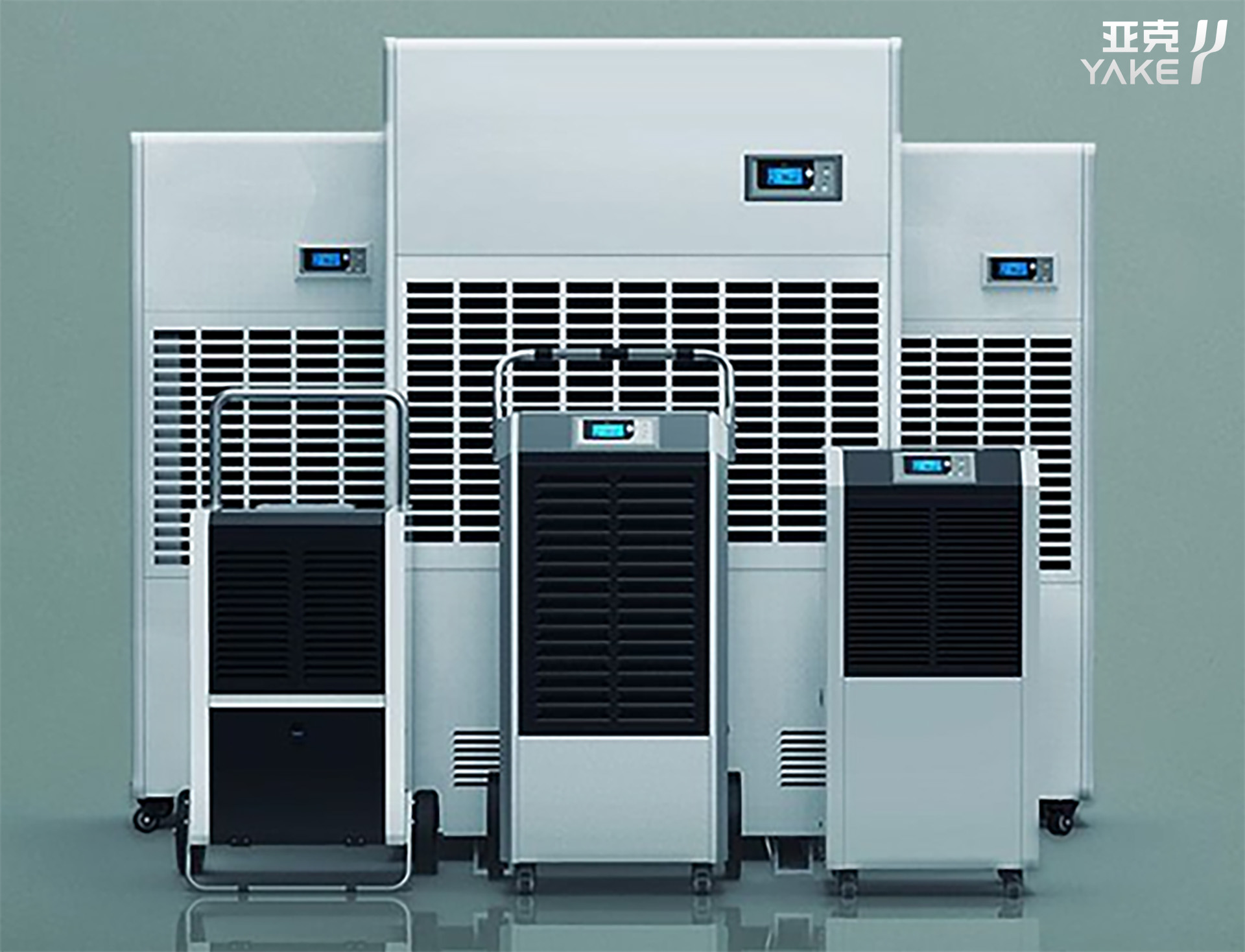
Contact us to find the best place to buy your Yakeclimate solution today!
Our experts have proven solutions to keep your humidity levels in check while keeping your energy costs low.