
Building 34, No. 535 Shunfeng Road, Hangzhou, Zhejiang, China
[email protected]


Power energy storage inverters serve as the connection point between battery systems and the grid or local loads, converting DC energy in storage into reliable AC power for industrial sites and commercial buildings. In today’s plants, they assist in shaving peak demand, backing up crucial lines, and smoothing power from solar or wind. Good inverters keep voltage and frequency in tight limits, handle fast lod swings, and support grid codes for safety and power quality. Many units now run bidirectional flow, support demand response, and connect into plant SCADA or EMS. The next sections discuss important specs, control modes, and design considerations that are relevant when sizing and selecting inverters for actual projects.

Power energy storage inverters sit between batteries, on-site loads, and the grid. They convert stored DC power into grid-ready AC, optimize battery management, and function as the command center so your entire system operates safely, stably, and economically.
A power energy storage inverter converts DC from batteries or DC buses to AC at local supply standards, so it can feed plant loads or the utility grid. It employs power semiconductors, switching at high frequency, and sophisticated drive circuitry to mold the DC into a clean AC waveform. That waveform needs to mirror voltage, frequency, and phase so motors, drives, and sensitive electronics operate as expected.
High conversion efficiency is a fundamental design objective. Every percentage of loss manifests as heat, adding cooling requirements and operating expense. Contemporary units frequently achieve top efficiencies in the 96-98% range across practical load ranges. For industrial sites that cycle tens or hundreds of kWh per day, this difference becomes a tangible line item on the energy bill.
Most systems now use pure sine wave output with low total harmonic distortion. This safeguards VFDs, PLCs, and lab instruments from nuisance trips and early demise. That DC/AC bridge is what allows a DC-heavy asset stack—battery racks, DC-coupled solar or DC fast chargers—to integrate seamlessly with current AC switchgear and distribution.
The same inverter functions as a battery manager that monitors state of charge, depth of discharge, and temperature to maintain the storage fleet in safe and long-life operating ranges. It protects against overcharge, deep discharge, and high C-rate events that can reduce lifespan or induce safety hazards.
Smart control shifts charge and discharge according to demand, tariff windows and grid signals. It can flatten peaks from HVAC or process loads and charge when prices are low and discharge when they spike. Most platforms support multiple chemistries, including lithium-ion, lead-acid, and even flow batteries by loading the appropriate charge profiles and protection limits.
As a grid gatekeeper, the inverter controls live power exchange between storage and the grid. It can export excess solar, store for backup, or run in island mode during outages with transitions often less than 20 milliseconds keeping many industrial controls online without reset.
The unit should remain locked to grid voltage, frequency, and phase and comply with standards like IEEE 1547‑2018. Advanced devices go beyond basic compliance and add volt watt and frequency watt functions. They help with local voltage control and frequency response instead of adding stress to weak feeders. That makes them valuable assets in demand response or VPP programs.
At system level, the inverter acts as the primary controller that manages batteries, PV inverters, loads, and occasionally diesel or gas gensets. It operates real-time monitoring, fault diagnosis, and automated dispatch logic, typically surfaced via web dashboards or SCADA interfaces.
Built-in communication gateways tie into plant networks, building management systems or smart-home style platforms so operators can view performance, alarms and state-of-charge trends anywhere. With smart control logic, a site can achieve 70 to 90 percent on-site self-consumption of on-site solar by charging midday excess and discharging across peaks or night shifts.
The “system brain” responds to changing load, variable solar and wind, and grid constraints in seconds or less. The storage asset acts like a stable, predictable source of power instead of a standalone battery bank.
Energy-storage inverters are the middleware between batteries, solar PV and the grid. Architecture selection impacts battery compatibility, grid response, safety, and suitability to plant loads or building profiles. Choosing the right type defines the upper limit for conversion efficiency, future expansion and service complexity.
| Inverter type | Main role | Typical phase / scale | Common use cases |
|---|---|---|---|
| Hybrid | One unit for PV + battery + grid | Single / split / three‑phase, 3–100 kW+ | Flexible sites, C&I rooftops, microgrids, backup power |
| Off‑grid | Islanded supply from battery + renewables + genset | Single / three‑phase, few kW to MW | Remote plants, rural sites, mine camps, weak‑grid backup |
| Grid‑tied | Export / import with grid, may or may not use ESS | String, central, multi‑MPPT, kW to 100+ MW | Behind‑the‑meter C&I, utility PV, VPP assets |
Hybrid, off-grid, and grid-tied inverters all interface with solar hardware families such as string inverters, power optimizers, and microinverters, and can be transformer-based or transformerless, single-phase, split-phase, or three-phase. Top units now push greater than 95% efficiency, so small design differences in architecture have a real impact on lifetime energy yield and operating cost.
Hybrid inverters combine solar PV and battery control in a single chassis. One DC bus is for PV strings, one is for battery stacks, and the AC side couples to the grid or a local bus. Most are three-phase for commercial customers, while split-phase single-phase models are typical for smaller structures.
They switch seamlessly between grid import, PV self-consumption and battery charge or discharge, depending on setpoints or tariffs. In an outage, they create an islanded microgrid, select critical loads and maintain battery constraints. Multi-MPPT designs matter where PV arrays sit on multiple roof faces or experience partial shading, as each MPPT channel optimizes its own string.
For installations that prefer a single device rather than separate PV and battery inverts, hybrids reduce hardware quantity, wiring, and commissioning time. They ease integration with panel-level electronics such as power optimizers, which ‘condition’ DC prior to the hybrid input.
Off-grid inverters operate sites without a stable utility connection. They pull direct current from photovoltaic, wind, or small hydro-charged batteries and generate a steady alternating current bus that acts like a mini utility.
They typically power three-phase outputs for motors, pumps, and compressors, and they traditionally employ sturdy transformer-based architectures to provide galvanic isolation between DC and AC. That isolation aids with fault tolerance and noise control in harsh environments.
A number of off-grid platforms include generator start logic, load shedding and peak-load support. They can power up a diesel generator when battery SOC dips, then ramp it down once PV rebounds. This combination enables remote plants to trim fuel consumption while maintaining process lines steady.
In mines, remote telecom stations, rural agro-processing and island microgrids, this architecture is core to energy independence and resilience where outages or fuel logistics are a daily concern.
Grid-tied inverters connect both energy storage and PV arrays directly to the utility grid. They have to adhere to rigorous grid codes for anti-islanding, power factor, fault ride-through, and harmonic limits. In reality, they act like quick, dispatchable power plants on the customer side of the meter.
This category includes string inverters, central inverters, and panel-level systems. String units connect multiple modules in series and supply a single DC input. Central inverters scale that concept up for more than 100 kW to multi-MW solar farms. Microinverters are behind each module and output AC right on the rail, whereas power optimizers are behind each panel but continue to feed a central inverter with conditioned DC.
For shaded, chopped roofs, multi-MPPT grid-tied inverters or panel-level electronics keep each string or each module on its own power curve, which increases yield and stabilizes plant loads relying on predictable on-site generation.
On the business side, grid-tied architectures open up net metering, time-of-use shifting with batteries, virtual power plant schemes and ancillary services like reactive support or frequency response. They tend to be the neatest method to reduce grid imports and yet remain able to utilize the grid as a flexible fallback.
High-efficiency power energy storage inverters are front ends to system performance and cost. Every percentage lost in DC/AC conversion is energy you buy and never use, whether that’s from lithium-ion racks, flow batteries, or a rooftop PV array feeding power into a DC bus.
Reducing conversion loss increases usable output from the same battery bank. It reduces upstream capacity requirements, reduces thermal load on HVAC and helps maintain long-term capacity because the batteries don’t have to cycle as hard to deliver the equivalent net kilowatt-hours. The efficiency question is larger than RTE alone; it encompasses charging and discharging efficiency, inverter-stage losses, and how much capacity the system really retains available over time.
European efficiency, CEC efficiency, and other efficiency ratings are more important than the headline peak numbers. They demonstrate how the inverter operates throughout actual part-load conditions, where most industrial sites operate. At the same time, engineers need to track loss mechanisms inside the inverter: switching losses during on/off transitions, dead-time losses around commutation, conduction losses in power devices, and standby and auxiliary loads from fans, control boards, and communications hardware.
For a lot of industrial projects, a simple design choice, like optimizing the number of inverters, can gain a lot more than chasing a new cell chemistry. Letting inverters idle when they could be running fewer, more tightly loaded units lessens overall system efficiency. DC coupling between PV, batteries, and the inverter can contribute about a 5% efficiency gain by eliminating additional conversion stages, which adds up to substantial lifetime savings on big microgrids or behind-the-meter peak shaving systems.
Best performing grid-tied storage inverters exceed verified 97 to 99 percent efficiency. Example models and representative metrics include:
These are the levels plant managers should strive for when combining storage with humidity-sensitive processing and precision climate control loads that already strain facility energy budgets.
Even a small gain, say 97% to 98%, looks minor on paper but becomes huge in a 10 MWh system cycling daily for 15 years. That 1% turns into a lot of megawatt-hours not wasted as heat, leading to fewer battery replacements, lower grid imports, or more energy sold back via a power purchase or ancillary services contract.
High-efficiency inverters generate less heat, which aids reliability. Power devices run cooler, solder joints experience less thermal fatigue, and capacitors age slower. You can right-size the HVAC or liquid-cooling system for the inverter room, and for data centers that already battle latent load and condensation, that reduction in waste heat and airflow is significant. It lines up with what humidity control engineers see: lower parasitic heat means more stable environments and smaller dehumidification loads over time.
On the sustainability side, every watt that’s not lost in conversion is another watt that makes renewable energy more useful. When storage inverters operate at full efficiency in charge and discharge, more PV or wind generation really does get to process equipment, cleanrooms, and paint lines. It backs corporate emissions targets without requiring sprawling oversized renewable fields. For grid-scale projects, lower loss increases the asset’s entire effective round trip efficiency which increases revenue per installed kilowatt and strengthens the investment case for large battery energy storage systems.
Current efficiency gains come from several layers: device physics, circuit design, controls, and system integration. Silicon carbide (SiC) semiconductors are one of the largest steps forward. SiC switches to higher frequencies with lower switching and conduction losses than standard silicon, so designers can shrink magnetics, raise power density, and still increase efficiency. For standalone multi-megawatt battery PCS, this shift is altering the size and configuration of inverter containers, creating new space for safety, monitoring, or HVAC equipment.
Circuit and thermal design matter. Smart cooling systems with variable-speed fans or liquid loops regulated by real-time junction temperature feedback maintain devices in an efficient operating window without squandering auxiliary power. Dead-time is calibrated meticulously to trim switching overlap and prevent undue distortion. Layout is streamlined to minimize the stray inductance that would otherwise push switching losses higher. Modular PCS designs utilize standardized sub-racks or 50–250 kW power blocks, managing large-capacity cells. They maintain each module running close to its optimal load point, which translates into improved system-level efficiency and simpler field servicing when modules have to be swapped out or upgraded.
Control and software complete the image. Advanced MPPT for DC-coupled PV enhances charge efficiency, especially in partial shading or rapid irradiance transients. Adaptive control firmware can adjust switching frequency, modulation strategy, or current limits on the fly depending on load, ambient conditions, or grid code requirements. In time, firmware updates can increase European or CEC efficiency by a few tenths of a percent without touching hardware, which is important for those industrial assets that live a long time. Building on this, IoT sensors and cloud-based monitoring extract granular performance information, identify efficiency drift, and fuel predictive maintenance algorithms. Engineers can identify increasing idle or ancillary losses or a cooling system that’s laboring too hard and fix problems before they eat away at the storage system’s business case.
Smart energy management for power energy storage inverters uses control logic, metering, and software to optimize how energy is stored, consumed, and shared with the grid. The goal is simple: cut losses, cut costs, and keep power available when users need it most, whether in a home, a plant, or a mixed-use site.
Smart systems use intelligent control to:
They can send excess rooftop solar to an EV, hot-water tank or process load instead of pushing it back to the grid for a low feed-in rate. For a ton of users, this fuels quicker return and reduced trash.
Whole-home backup is yet another featured role. It can maintain a reserve in the battery and sustain critical loads like lights, control panels, servers, and key HVAC during outages. IEEE 1547-2018-compliant smart inverters also add grid support functions, including volt/VAR control, frequency ride-through, and export limits, so every site acts as a well-behaved distributed energy resource, not a nuisance.
Predictive control leverages information from weather services, historical load curves and tariff schedules to infer what is going to happen in the next minutes and hours. It can pre-charge storage prior to a predicted peak or probable storm, then discharge when prices or local demand escalate.
With Time-of-Use tariffs, the controller plans charge in off-peak windows and reserves discharge for peak bands, so peak shaving occurs automatically. These algorithms monitor depth of discharge, battery temperature, and cycle counts and then behave suboptimally to extend battery life and keep round-trip efficiency high. Beyond that, predictive logic enables the site to participate in demand response or VPP pools, delivering rapid ramp or curtailment and contributing to grid stabilization in real time.
System-level performance relies on how effectively the inverter, PV array, storage, and grid connection “communicate” with one another. Good designs accommodate multiple battery chemistries, third-party inverters, and external energy management systems, so plants and buildings aren’t locked into one vendor trajectory. Short DC runs, right-sized conductors, and clear isolation points minimize losses and downtime.
Standards-based protocols such as Modbus TCP, SunSpec, or IEC 61850 make this feasible. They allow PV inverters, storage inverters, smart meters, building automation, and utility interfaces to share a single data backbone. That streamlines commissioning, fault finding, and upgrades over the system life and makes it simpler to integrate dehumidifiers, HVAC, and other major loads under a single control logic.
The user interface is where your control strategy becomes manifest. They’re supported by good systems with a sleek mobile app and web dashboard that show production, battery state of charge, and grid import or export in real time. They send alerts for faults, abnormal grid events, and low backup reserves, enabling operators to respond quickly.
Configurable modes are what count. Users can prioritize key loads for backup, select “bill saver” or “backup first” strategies, and adjust thresholds for EV charging or hot-water heating. Easy-to-understand graphs of your daily and monthly flows allow you to track how much solar is self-used, exported, and how much your battery is shaving peaks. This feedback loop raises engagement and keeps systems attuned to real-world needs, whether in a home or a factory.
Today’s power energy storage inverters are at the heart of grid stability. They connect batteries, PV, and other assets with the utility grid and now behave more like active grid devices than passive converters.
Grid services are the portfolio of utility functions an inverter supplies to maintain grid frequency near 50 or 60 Hertz, voltage levels within tolerance, and power quality within harmonic limits. With battery energy storage systems, these inverters can run in grid-following or grid-forming modes, shape output waveforms, and respond to control signals from grid operators in a few hundred milliseconds or less.
Key services from advanced inverters include:
| Service type | What it does | How inverters help |
|---|---|---|
| Frequency regulation | Keeps system frequency within tight bands | Fast active power changes based on droop and control setpoints |
| Voltage support | Holds bus voltages within limits | Reactive power injection/absorption at specific nodes |
| Reactive power comp. | Manages power factor and reduces network losses | Dynamic Q control, often with Volt/VAR curves |
| Spinning reserve | Provides fast backup when a unit trips | BESS in standby, ready to ramp active power in seconds |
| Black start | Restores a dead grid without external supply | Grid-forming mode with voltage and frequency reference |
In practice, these services manifest themselves as demand response programs, contingency reserves, and fast frequency response products. Inverters inject or absorb real and reactive power, smoothing ramps from wind and PV, riding through faults, and limiting total harmonic distortion which can exceed 6.27% THD in stressed feeders without BESS support.
Grid-forming controls are now crucial in systems with high renewable shares. They contribute “virtual inertia,” which dampens frequency swings and curtails oscillations, as evidenced in an analysis of the 2021 Kauaʻi grid instability event. Tuning droop constants and PLL gains at the inverter level helps avoid control-driven instability, especially on weak grids and long radial lines.
Across markets, BESS coupled with smart inverters has already averted rolling blackouts and stabilized wind and solar output in places like California and Texas. The market for grid-connected BESS that generate revenue from these grid services is expanding rapidly and now sits alongside traditional generation in numerous planning studies.
VPPs aggregate numerous small or medium-size storage, PV, and flexible loads and operate them as if they were a single plant from the grid’s perspective. Smart inverters, local controllers, and cloud-based platforms communicate quickly to coordinate setpoints, exchange state of charge information, and determine each unit’s response to grid services needs.
Most VPPs employ advanced grid-following and grid-forming logic to coordinate energy dispatch, frequency support, and voltage control across a broad area. With aggregated systems acting as one dispatchable block, operators have additional agility to ramp output, absorb deficits from clouds passing over PV fleets, and maintain feeder voltages in the face of midday reverse flows.
This arrangement benefits grid stability. BESS units inside a VPP can island a site or a microgrid, maintain local frequency, and then resync with the main grid when it is safe. PV with grid-forming controls inside VPPs increases stability, replacing lost inertia and damping oscillations when big generators trip.
For asset owners, VPP participation can open stacked revenue streams: capacity payments, frequency regulation, demand response, and sometimes black start or local reliability contracts. Each storage site can still handle its own load or process requirements, while the VPP operator optimizes aggregated behavior against market signals and grid constraints.
Power energy storage inverters that appear robust on spec sheets can still crash in real plants. Real performance is about how they handle heat, abuse, and hard standards, not just kW and peak efficiency numbers. For facilities that already fight humidity, corrosion, and tight process windows, the selection mindset is similar to choosing industrial dehumidifiers: focus on reliability in bad conditions, lifecycle cost, and compliance first, then on headline specs.
Efficient thermal management ensures silicon, capacitors, and busbars remain within safe parameters, meaning the inverter and batteries have extended lifespans and maintain stability. As soon as junction or cabinet temperatures drift too high, you experience derating, nuisance trips, and in worst cases, thermal runaway on the DC side.
Modern inverters rely on a stack of tools: forced-air or liquid cooling, large surface heat sinks, thermal interface materials, and dense arrays of temperature sensors on IGBTs or MOSFETs, DC link capacitors, and sometimes even terminal lugs. The control board monitors these points in real time and scales back power or increases fan speed before harm.
Heat control connects directly to efficiency and safety under intense charge and discharge cycles. If the cooling path is limp, the unit runs hot, internal resistance skyrockets and efficiency stalls precisely when you push the system the hardest — peak shaving at a stamping plant, fast recharge at a logistics hub.
Ambient conditions matter more than most data sheets acknowledge. A 250 kW inverter inside a hot, damp compressor room at 38 °C with lousy airflow acts very different than the same unit in a clean, cooled electrical room at 25 °C. Humid air and heat mean you need to consider condensation, PCB corrosion and maybe even have to couple the inverter room with consistent dehumidification and directional airflow.
Inverters of the highest quality are designed for long life and low downtime, which counts when they’re supporting cleanrooms, curing ovens, or paint lines that just can’t stop. That translates into conservative component selection, transparent derating curves, and mechanical layouts that can withstand dust, vibration, and high humidity.
Key reliability features are surge and transient protection on both AC and DC sides, rugged metal or composite enclosures with a minimum IP54, often higher in harsh plants, and sometimes redundant fans, control power supplies, or parallel power stages. If a fan or module goes down, the system should limp, not hard fail.
Digital dependability counts too. Remote diagnostics, detailed event logs, and secure firmware updates enable you to resolve issues and enhance control without site visits. Plants that already have SCADA dehumidifiers or chillers can fold inverter alarms and thermal data into the same dashboards.
Warranty terms and the manufacturer’s field track record often predict real lifespan better than the spec sheet. When it comes to critical loads, for instance, a lot of teams today prefer vendors that publish MTBF data, maintain global parts stock and have proven performance in corrosive, damp or dusty environments akin to their own sites.
UL, IEC, and CE certifications indicate the inverter has undergone standardized tests for electrical safety, EMC, and grid behavior. In most areas, grid-tie and storage incentives are not available without evidence of such compliance.
Grid codes and incentive programs tend to talk about pieces of standards, such as anti‑islanding, ride‑through behavior or power quality. A compliant inverter will have test reports for more than electrical limits, covering thermal stability and environmental stress including humidity, salt mist or vibration where applicable.
Each of these products is subjected to type tests, routine tests, and sometimes long-term reliability runs. It tests insulation breakdown, temperature rise, overload behavior, and performance after heat, cold, and moisture cycling.
Always make sure certificates are up to date, correspond to the precise model and firmware, and comply with local regulations for the country where the plant operates. This prevents last minute surprises at grid approval or safety inspections.
Power energy storage inverters are now at the heart of modern grids. They determine how plants consume, store, and provide power in real time.
Today’s inverters do more than just flip DC to AC. They monitor load, peak shift, back up critical equipment and maintain line quality. A 10 MWh site combined with a smart inverter means you can pair sharp control with a smart inverter to reduce peak draw and avoid trips. A paint line runs straight. A clean room has tight bounds.
Real value appears in uptime, power quality, and transparent reporting, not just in spec sheets. For your next project, chat with a vendor who can talk site data, duty cycles, and grid events, not just quote kW and kWh.
A power energy storage inverter converts battery DC into AC used by homes, businesses, and the grid. It is vital for utilizing stored energy, enhancing reliability, and integrating renewables like solar and wind.
Various architectures, including string, central, and modular inverters, impact efficiency, scalability, and reliability. The right design minimizes energy losses, simplifies maintenance, and optimizes performance for residential, commercial, or utility-scale storage projects.
Higher inverter efficiency means that less energy is lost when converting between DC and AC. This directly boosts available stored energy, reduces operating expenses, and enhances solar-plus-storage or standalone battery system ROI.
Contemporary inverters are far more than mere power conversion devices. They incorporate software, sensors and communication capabilities. They can load shift, battery charge, respond to tariffs and connect with smart meters or building systems. This assists in lowering energy bills while optimizing consumption of stored clean energy.
Storage inverters can offer fast frequency response, voltage support, and reactive power. They can smooth renewable output, support black-start capabilities, and help manage peak demand. These grid services enhance reliability and enable greater renewable integration.
Beyond power rating and efficiency, look at reliability data, warranty terms, software ability, cybersecurity and after-sales support. Think about grid code compliance, seamless integration with your battery system, and long-term maintenance requirements.
Most advanced inverters accommodate multiple battery chemistries, such as lithium-ion and lead-acid, via configurable settings and certified communication protocols. Always double-check compatibility, certifications, and recommended setups with both your inverter and battery manufacturers.


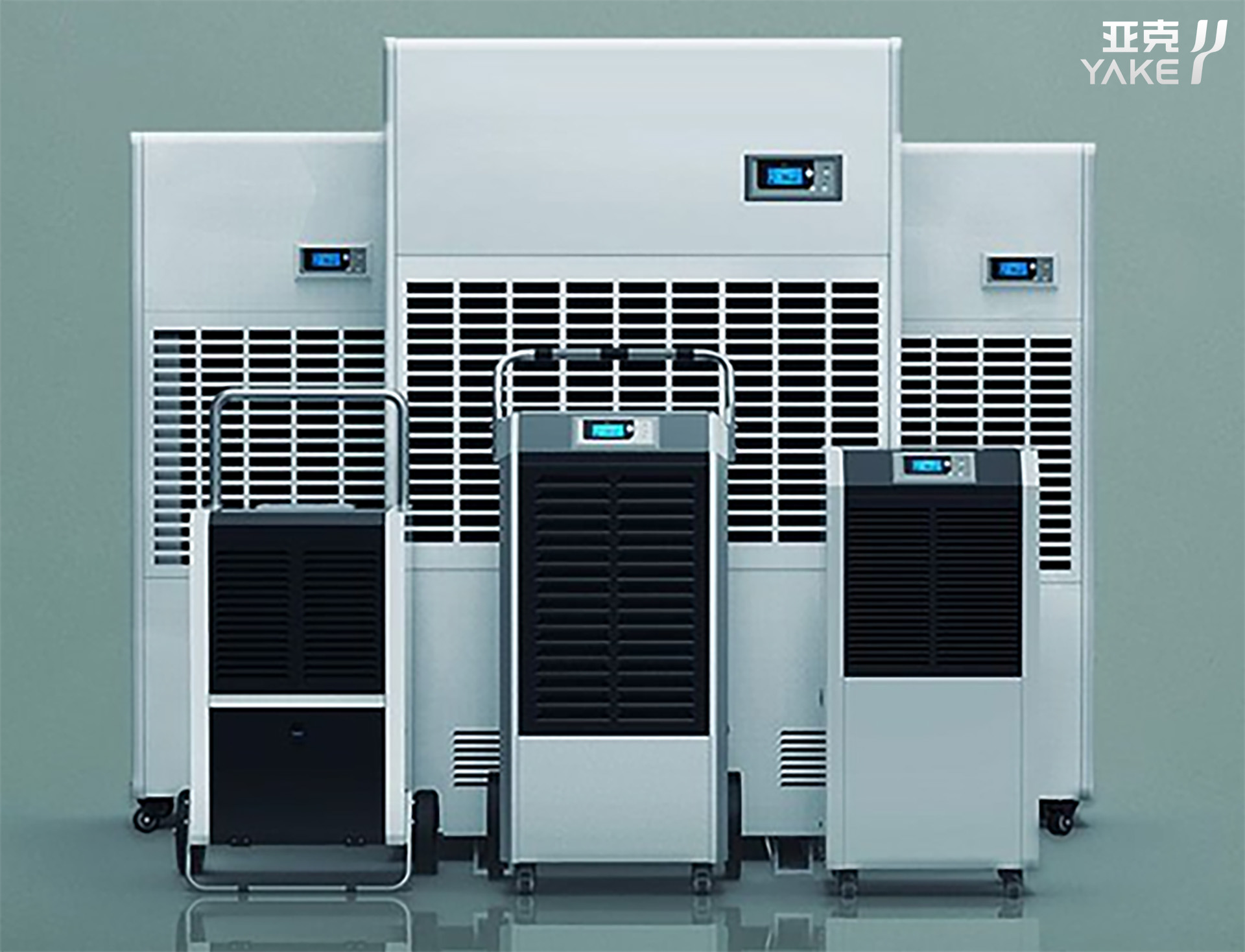
Contact us to find the best place to buy your Yakeclimate solution today!
Our experts have proven solutions to keep your humidity levels in check while keeping your energy costs low.