
Building 34, No. 535 Shunfeng Road, Hangzhou, Zhejiang, China
[email protected]


Battery room ventilation involves ventilating spaces where batteries are charged or stored to maintain safe hydrogen gas levels and dissipate heat. Proper ventilation keeps air fresh, prevents gas accumulation and reduces fire and explosion hazards. At large plants, backup power rooms and other industrial sites, constant air circulation protects equipment and maintains systems in tight safety regulations. Smart vent systems are code-compliant, downtime-reducing, and battery-life-extending. For lithium-ion and lead-acid battery rooms, appropriate airflow configuration protects against heat damage and maintains sensor and panel functionality. The body describes important design stages, principles and optimal methods to configure battery room ventilation for secure workplaces.

Battery rooms are danger zones. Proper ventilation isn’t an option; it’s the security blanket of safe, sustainable, efficient facility operation. Lacking a proper ventilation system can cause anything from hazardous gas accumulation to heat spikes to premature battery failure. Reliable, well-engineered airflow solutions are non-negotiable for the safety of people, protection of assets, and meeting regulatory standards.
Hydrogen gas accumulates during charging. If it accumulates, even at 1-2% of air volume, a single spark can trigger a major explosion. Hydrogen sulfide can develop if batteries are not watered regularly, posing an additional hazard. OSHA has very strict limits on explosive gases in any confined spaces, including battery rooms. Therefore, monitoring hydrogen levels is key. Many plants employ fixed hydrogen detectors as a minimum. The optimal solution includes constant gas monitoring and alarms tied to active ventilation that moves air multiple times per hour, with the recommended ideal being four times. Not just overhead fume hoods. A separate, dedicated supply and exhaust system is the industry standard.
Heat accumulates quickly in charging or discharging batteries. Ventilation must circulate sufficient air to maintain temperature around 25⁰ C. If your system can’t manage high discharge cycles, thermal runaway will begin, which damages your batteries or causes a fire. Emergency ventilation options are a must for modern rooms, particularly where high-capacity batteries run. You need uniform airflow, not just open windows or fans. Without good airflow, you’ve got hotspots, uneven cooling, and more breakdowns.
Proper ventilation regulates both heat and humidity. High humidity or poor ventilation causes corrosion, internal shorts, and premature battery failure. Adequate ventilation cleanses toxic gases and airborne dust. Air needs to flow across all battery racks, not just one location. Expert research reveals battery rooms with neutralized air and humidity produce batteries that last for years longer. That translates to reduced downtime and less expensive replacements.
Ventilation checks must be part of safety procedures. Employees must be adequately trained in gas hazards and emergency procedures. Back-up fans or vent systems are necessary in case of power loss or leaks. Safety rules need to be reviewed regularly as standards evolve and new hazards are uncovered. Routine drills and gas testing keep personnel safe and prepared.
Good ventilation is no longer optional. It saves money on insurance, avoids expensive repairs, and protects your warranty. Bad airflow can nullify product coverage and lead to expensive shutdowns. Regulations demand to see evidence of adherence, so skimping invites fines and asset loss. Facilities that utilize modern, efficient systems shield their technology and their bottom line.
Battery room ventilation standards aren’t universal. They vary from country to country and even city to city. Anywhere else, it’s probably a blend of codes from the NFPA, OSHA, IEC and local regulations. This patchwork can make it difficult for facility managers or engineers to understand what qualifies as compliant. The standard across the board is safety, particularly around hydrogen. Hydrogen is dangerous since it can ignite or explode at low concentrations. Fire codes indicate that the lower explosive limit for hydrogen is around 4 percent. If gas reaches this level, the danger accelerates. The smart move is to operate before the gas is near.
All battery rooms must maintain hydrogen below 10% LEL prior to entry. This is a federal regulation. Most locations add a 50% safety margin on top, so it’s best practice to keep it at 2% or lower. Some engineers apply an even more stringent 1% cap when the room’s air flow is not known. These margins matter because small changes in room layout or battery load can alter gas concentrations.
IEC standards, such as IEC 62485-2 and EN 50604, detail the configuration and operation of battery rooms. They specify how much air to circulate and how to identify leaks. For global companies, adhering to these standards is savvy. It handles the bulk of your compliance requirements. ASHRAE 62.1 is another important standard. It states that battery rooms require continuous ventilation at one cubic foot per minute per square foot or keep hydrogen less than 25% of the lower flammability limit. This provides engineers a specific figure to guide the design or repair of a system.
Local regulations might be more stringent. Other cities require better airflow, sensors, or alarms. Local codes come first, then international best practices for global plants. Fire marshals, safety officers, and inspectors may all weigh in. If a company skips a step, it can result in shutdown or fines.
Rules are different now. Hydrogen hazards receive increased attention as battery technology proliferates. Engineers must look annually for updates. Being up to date prevents trouble and saves lives.
Battery room ventilation is important for safety, equipment life, and compliance. Selecting your ventilation strategy entails considering air flow requirements, energy consumption, and room layout. You have three real options: active, passive, or hybrid systems. Each has its compromises.
1. Active Ventilation Systems
Active systems rely on powered fans and HVAC units. They circulate air on command, quickly. Start with a CFM calculation: CFM equals the room volume in cubic feet multiplied by air changes per hour divided by 60. For battery rooms, plan on four to six air changes per hour. Fans remove heat and fumes that safeguard batteries and humans. Smart controls allow you to adjust fan speed according to real-time gas readings. That reduces operating expenses and increases security. The big advantage is dependability. Even under varying battery load, the air quality remains consistent. Negatives are increased energy and cost. You need to watch energy draw, particularly in large rooms. Maintenance is another factor; clean vents twice a year at minimum.
2. Passive Ventilation Systems
Passive systems rely on natural airflow. Design is key; vents should be positioned up high and down low. Air circulates because hot air and gases ascend and exit via exhausts. No moving parts equals virtually no energy consumption and reduced maintenance. In mild climates or small rooms, passive does just fine. If the outside air is still or the battery load is high, passive may not keep up. It’s difficult to control gas buildup when things are in flux. With new battery chemistries, gas types and volumes shift, so you have to verify if passive suffices. Other times, passive systems are tacked on as a backup to active fans.
3. Hybrid Approaches
Hybrid systems blend both. Our fans in concert with our vents accelerate airflow when it is needed, during load peaks, but fall back when load peaks are over. This translates to lower energy bills than going fully active. Intelligent sensors toggle modes, adapting to power consumption or environment. Installation costs are higher, but the long-term savings and flexibility typically make up for it. Hybrid setups suit sites with fluctuating loads, future battery upgrades, or where codes could change. This depends on your ventilation strategy.
Ventilation is key for battery rooms. Proper airflow keeps hydrogen below 2%, well under the LEL of 4%. It maintains relative humidity at 45-65%, shielding from corrosion and extending battery life. Designing for optimal battery room airflows involves computational fluid dynamics (CFD) and other modern tools that aid in designing optimal battery room airflows for safety and efficiency.
Begin by understanding the required minimum air changes per hour. For most battery rooms, four complete air changes per hour is the norm. This can change with high-density storage or rapid charging arrangements, so consult battery manufacturer recommendations.
Constant monitoring counts. We use sensors to monitor hydrogen and humidity. We monitor air quality for assurance that the system remains in target rates. If rates drop or conditions shift, adjust the system immediately.
Recording air exchange rates isn’t just safety. It’s proof of compliance. Add these records to your monthly walkthroughs and audits.
Best practice locates intake vents low with exhaust vents high. Hydrogen is lighter than air, so it rises. This arrangement sweeps gas before it accumulates at the top.
Exhaust vents shouldn’t face work areas. This protects workers from any vented fumes. Design for minimum airflow resistance. Ductwork should be straight and wide to reduce airflow resistance. Sharp bends or long runs of air slow air and can leave pockets of gas.
Check vents frequently. Dust and debris clog airflow. Ensure no crowds or obstructions near vents, particularly after room layout changes.
CFD lets you see how air will flow prior to construction. Use it to test vent layouts, duct sizes, and fan options. Experiment with various configurations and choose the one that clears gases quickly and uniformly.
CFD models reveal eddy points where airflow decelerates or swirls. Correct these prior to system turn on. Once you’re up and running, benchmark your CFD outputs against actual sensor data. Adjust vent speeds or angles accordingly for optimal results.
Continue refining your battery room airflow CFD models as you change batteries or room layouts. This maintains design acuity and safety levels.
Battery room climate counts for safety and battery performance. Well managed air and humidity minimizes dangers, extends battery life and maintains stable voltage. Many battery chemistries, such as lead-acid or lithium-ion, release hydrogen while charging. If hydrogen accumulates, it can reach the lower explosive limit, which is around 4% by volume. Fire codes and standards such as NFPA 70 and ASHRAE 62.1 require the hydrogen to be less than 1% to maintain a safe environment. OSHA says to beware of explosive gases in confined spaces.
Ventilation ensures that hydrogen levels are safe and stable. Most codes concur battery rooms require constant air changes. ASHRAE recommends no less than 1 cubic foot per minute or 4 room air exchanges per hour. These measures assist with maintaining hydrogen below 25 percent of the lower flammable level. Proper ventilation does not just circulate air; it controls heat and moisture as well. Excessive heat or humidity can cause the batteries to deteriorate, and moisture can lead to corrosion or short circuits.
Monitoring the air and humidity in the room has to be a habit. Sensors can indicate whether air is circulating adequately or hydrogen is accumulating. Temperature and humidity sensors help maintain the room in the proper range, according to the battery manufacturer, often 20 to 25 degrees Celsius and 30 to 50 percent relative humidity. If levels go out of whack, the system can alert personnel or activate fans to correct it.
A good battery room accounts for local climate, power loads, and the kind of batteries used. Rooms sometimes require sealed lighting, spark-proof fans, and acid-leak-resistant floors. The design must allow air to circulate with no stagnation where pockets of heat or gas can build up. Yakeclimate’s systems utilize smart controls to adapt air flow to demand and maintain low power consumption. This gets you closer to compliance and energy savings.
Battery room ventilation is not just about air movement. It’s an essential security and reliability factor. It begins with a plan that spans the whole system, from sensors to maintenance crews. The aim is to maintain hydrogen at safe levels, comply with codes and standards such as OSHA and NFPA 70, and prevent expensive downtime or danger.
Sensors should monitor hydrogen gas, temperature, and humidity levels at all times. Hydrogen buildup can be explosive, so real-time data matters. Alarms should sound when any reading strays beyond safe limits. This preemptive notice enables teams to address problems before they lead to damage or system downtime.
It’s not just alarm data. A good trend analysis of sensor readings reveals whether ventilation is keeping up with demand or if the system should be tweaked. Increased moisture during battery charging cycles might necessitate ramping up airflow. Checking up on and refreshing your protocols helps monitoring keep step with modern best practices and safety guidelines.
Contemporary battery rooms operate most efficiently when vents are interconnected with the building’s other systems. By integrating with HVAC, you allow smooth coordination. For example, if the battery system starts charging, you can have automated controls increase exhaust. This keeps gases diluted and temperatures stable.
It’s all about compatibility. Ventilation systems need to integrate with your equipment to provide effective and dependable system management. Automation eliminates human steps and human error and allows for faster reaction to fluctuating room conditions. Looking at the system as a whole, not just the components, can identify new opportunities to conserve or make your home safer. For example, energy recovery ventilators recycle the heat in the exhaust air to warm incoming fresh air.
Everyday examinations are the heart and soul of dependability. For each vent, fan, and filter, schedule inspection and cleaning. Neglect leads to blocked airflow, overheating, or even code violations. Maintenance logs ensure compliance with local and international regulations and assist in identifying patterns that indicate wear or potential failure.
Staff training is equally important. Teams require not just the ‘what’ but the ‘why’ for every task. Skilled staff maintain systems properly and detect issues early, saving equipment life and reducing long-term expenses.
Good battery room ventilation protects people, stabilizes batteries and preserves equipment. Vigorous fans and intelligent design reduce gas accumulation and heat. Standards such as IEC 62485-2 provide the benchmark. Every facility has its unique combination of heat, vapors and layout. A quality system prevents corrosion and minimizes down time. In large data centers or cramped telecom huts, aggressive air flow halts hazards in their tracks. Ongoing checks and intelligent enhancements maintain every installation razor-sharp. For working plants or greenfield projects, consult a specialist. Receive a personalized plan that suits your actual needs. Need a safer, smoother battery room? Contact us for a quick consultation and discover how intelligent air flow can make a difference.
Good ventilation avoids the buildup of dangerous gases, keeps temperature in check, and lowers fire hazards. It safeguards personnel and equipment and provides secure and dependable battery function.
Lead-acid and other batteries can emit hydrogen and oxygen. Hydrogen can be very flammable, so its removal with ventilation helps us avoid explosions and health risks.
Yeah, IEC, local safety codes, and others. These standards dictate safe air quality and ventilation rates in battery rooms around the globe.
Airflow needs vary by battery type, size, and the rate of charge. Manufacturers will typically provide guidelines. You can consult international standards for exact calculation methodology.
Yes, heat and humidity can reduce battery longevity and pose a safety hazard. Battery room ventilation
There are natural (passive) and mechanical (active) systems. Mechanical systems, such as exhaust fans, are typically preferred for more constant airflow and safer operation, particularly in larger battery rooms.
Frequent check-ups, sensor monitoring, and preventative maintenance keep ventilation systems in top shape. This minimizes hazards and maintains battery health.


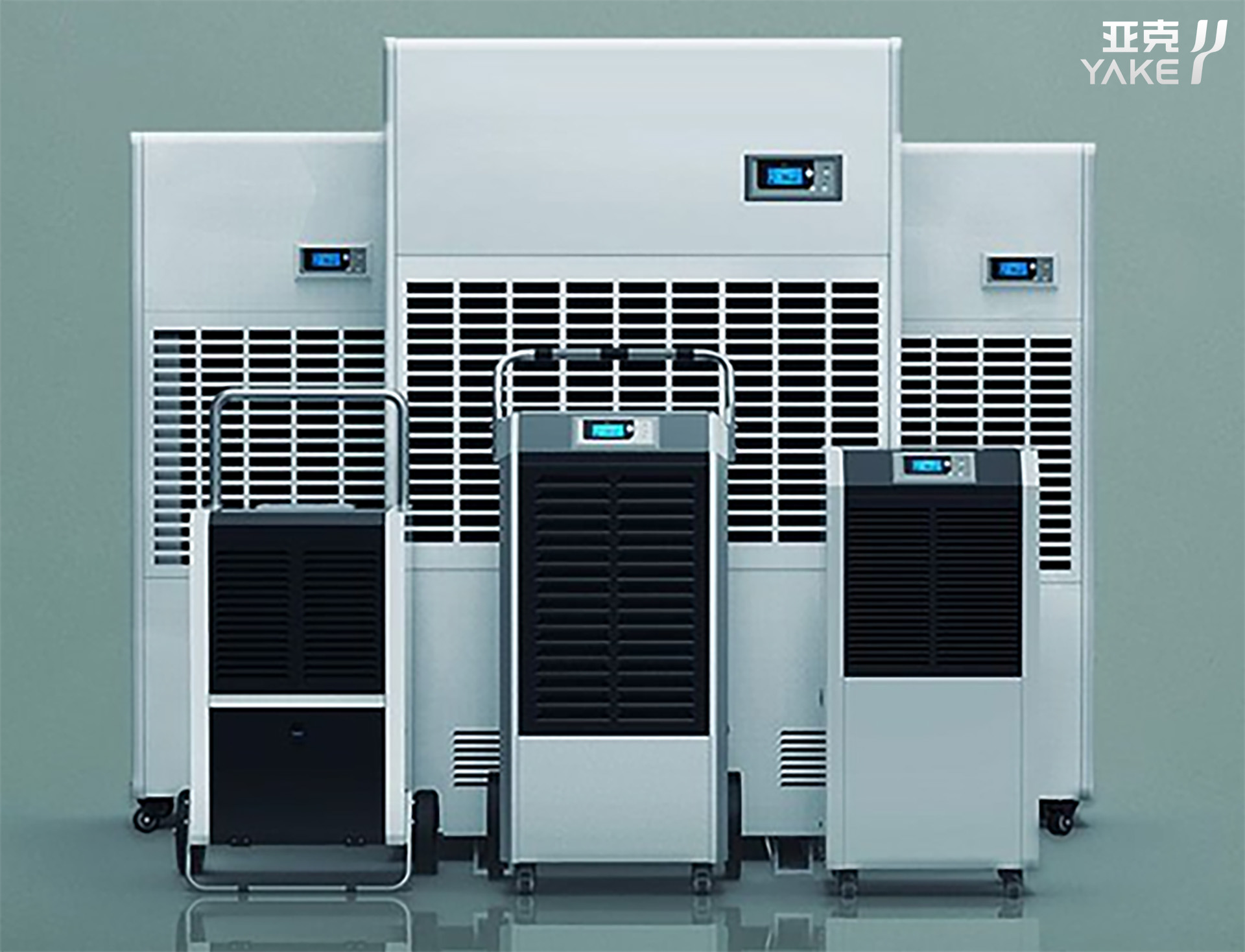
Contact us to find the best place to buy your Yakeclimate solution today!
Our experts have proven solutions to keep your humidity levels in check while keeping your energy costs low.