
Building 34, No. 535 Shunfeng Road, Hangzhou, Zhejiang, China
[email protected]
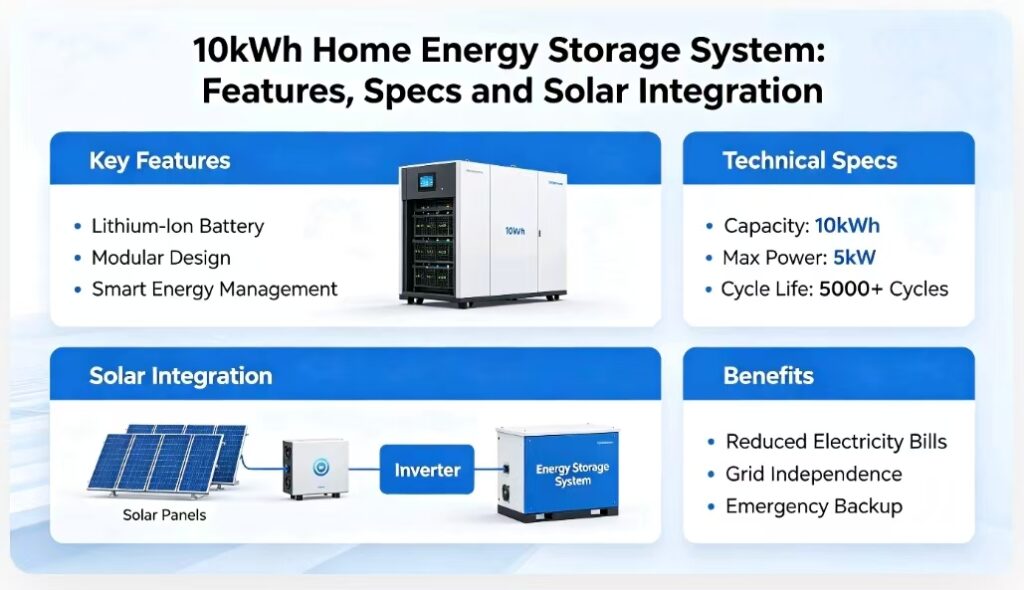


10kWh energy storage systems are small battery packs that can store approximately 10 kilowatt hours of electricity for later use in homes, small sites or SUP zones within larger plants. In numerous deployments, they couple with solar PV, backup generators, or EV chargers to even load, reduce peak demand, and keep critical loads online. A 10kWh bank typically employs lithium-ion chemistry with a battery management system, inverter, and rudimentary safety controls in one integrated cabinet. On industrial sites, multiple 10kWh units stack in parallel for higher capacity or redundancy. To appropriately size or spec these systems, engineers balance cycle life, charge rate, depth of discharge, and thermal management. The following paragraphs unpack these points.
A 10kWh energy storage system is a home battery that stores up to 10 kilowatt-hours of electricity, typically from the grid or rooftop solar, and then feeds it back to the house as necessary. It smooths daily demand, covers short blackouts, and shifts usage away from peak tariffs. All of this is important in markets with time of use pricing or fragile grids. Several systems couple with solar so owners can consume more of their own power, reduce grid draw in the evening, and in certain markets participate in virtual power plant or demand-response initiatives that help stabilize the grid while receiving bill credits.
10kWh indicates the battery’s potential to provide 10 kilowatt-hours of energy. For example, it will power a 1kW load for approximately 10 hours. That aligns closely with the average UK home’s daily consumption of 8 to 10kWh, so a 10kWh unit can frequently meet the bulk of a day’s needs for an average, well-insulated, mid-size house.
Homeowners need to first examine previous bills, translate monthly usage into kWh per day, and then determine how a 10kWh system would match their consumption pattern. A small apartment consuming 4 to 6 kWh daily might find 10 kWh more than sufficient, whereas a big house with electric heating or EV charging might require 15 to 20 kWh or more.
Compared to 5kWh units, a 10kWh system provides superior backup for fridges, lights, and network gear during an extended outage. Compared with 15 to 20kWh systems, it is cheaper and frequently ideal for homes that desire resilience and self-consumption, not complete off-grid independence. A simple table of common loads is useful: LED lighting, which uses about 0.1kW, can run for roughly 100 hours on 10kWh, a fridge can run for around 25 to 67 hours, and a small air conditioner can run for about 6.7 hours, assuming typical duty cycles and efficiency.
Capacity answers ‘how much’, but power rating in kW answers ‘how fast’. A 10kWh battery with a 5kW inverter, for example, can provide up to 5kW simultaneously. If loads are higher than that, Honeywell will either draw assistance from the grid or drop noncritical circuits.
Most systems quote two numbers: continuous power and peak power. Continuous power supports consistent loads such as fridges, circulation pumps, or IT equipment. Peak power accounts for short bursts when motors turn on, like compressors or certain power tools. Both values count when the grid isn’t there to share the load during outages.
Plant‑style thinking helps at home: list the maximum power draw of key appliances, then add them for a worst‑case snapshot. The fridge runs at 0.1 to 0.3 kW, higher at start. Lighting uses 0.1 to 0.5 kW, a small AC unit uses 1 to 1.5 kW, and electronics use 0.1 to 0.3 kW. All of these tend to stay below 3 to 4 kW, so a 5 kW continuous rating should generally cover essential loads with some headroom.
Battery chemistry is a huge driver of safety, life, and cost. A lot of 10kWh systems use lithium iron phosphate cells today because they’re thermally stable, low fire risk, and offer long cycle life at moderate cost. This is a key factor when the system cycles every day with solar.
Other lithium-ion flavors with nickel, manganese, or cobalt provide more energy density, so they are more compact. However, they run hotter and can have shorter cycle life with deep daily cycling. Lead-acid batteries are still cheaper initially, but they require more upkeep, have less usable depth of discharge, and frequently do not last as many years in solar storage service.
Cell format counts, too. Prismatic cells, which are typical for stationary storage, enable more compact packing, less internal resistance, and more easily controlled thermals. For the majority of homes, chemistry selection ought to balance safety, lifespan (typically 10 to 15 years for premium lithium solutions), and end-of-life processing. A well-managed LiFePO4 pack can still hold 70 to 80 percent capacity after well over a decade of daily charge and discharge.
A 10kWh home system is more than a cell box. Critical components include battery modules, a battery management system (BMS), an inverter, a charge controller typically integrated in hybrid units, and a monitoring interface or gateway.
Battery modules contain the cells and bus bars. The BMS maintains each cell within safe voltage and temperature windows, balances cells, and disconnects when unsafe. The inverter is central. It turns DC from the battery into AC for home circuits and handles grid-tie rules, anti-islanding, and fault response.
The charge controller and inverter together sculpt the battery charge from solar or grid, respecting caps that preserve cycle life. A straightforward schematic or block diagram lets owners visualize how PV strings, meter, main panel, critical-load subpanel, and battery system all connect. This visualization makes design discussions with installers far more tangible.
Contemporary 10kWh solar batteries, particularly lithium-ion, typically remain viable for 10 to 12 years in typical residential applications. A few LiFePO4 setups hit the 15-year mark with diligent maintenance. Your actual life depends on depth of discharge, cycles, ambient temperature, and frequency of peak power usage.
Every cycle of charge/discharge ages the cells a bit. Shallow cycles, between 30 and 80% state of charge, cause less wear than full 0 to 100% swings. Daily cycling is common in solar homes, so a few thousand cycle system may still have most of its capacity after a decade or more of service.
Temperature management is key. Generally, most manufacturers design for optimum operation between roughly 10 to 25°C (50 to 77°F). Consistent operation well above this can accelerate degradation. Indoor, shaded and ventilated spaces often enable extended life compared to hot garages or outside boxes exposed to direct sun.
They should monitor firmware updates, perform regular checks through the app or web portal, and record alarms. Tracking install date, warranty end date, and an anticipated replacement window facilitates long-term budgeting and assists in planning upgrades as tariffs, EV charging, or rooftop PV capacity evolve.
10 kWh storage solutions occupy a nice middle ground. Powerwalls are big enough to really trim your bills, power through outages, and optimize onsite solar, yet still compact for a normal household or small business.
A 10 kWh battery enables a home to bank unused solar from mid‑day and use it during the evening peak. Instead of exporting low‑value kilowatt-hours at noon and buying high‑priced power at 18:00 to 22:00, the system shifts that energy. In lots of markets, this ‘time‑of‑use arbitrage’ can offset a significant portion of evening demand and reduce monthly bills in a consistent, reliable fashion.
Smart energy management software takes this a step further. It monitors tariffs, solar forecasts and load profiles, and then makes decisions to charge from solar, from the grid during off-peak times, or hold energy for peak windows. With proper configuration, it can operate daily charge and discharge cycles that match the optimal price spread and still have some capacity held in reserve for outages if the owner desires.
They stack policy benefits in many areas. Systems can be eligible for tax credits, hardware rebates, and feed-in or net-metering schemes that compensate for excess export. Owners who analyze their interval data or even just simple utility bills and then adjust setpoints every few months typically achieve payback more quickly than those who “set it and forget it.
A 10 kWh unit can keep a core backup panel live through most short outages and some extended ones as well, depending on how carefully the loads are selected. Common priorities include the refrigerator, essential LED lighting, Wi-Fi router, phone charging, critical medical devices, and occasionally a small circulation pump or gas boiler control board.
Sizing is about daily watt-hour requirements, not peak watts. Trimming non-essential loads during an outage, like electric ovens, clothes dryers, or EV charging, stretches that 10 kWh across many more hours. Automatic transfer switches take care of the switchover in seconds or less, allowing crucial appliances to power through without human intervention.
A simple, written priority list for the backup circuit helps:
Combined with a properly sized solar array, a 10 kWh battery enables high self-consumption. Daytime solar powers active loads first, then recharges the battery, which supplies evening and early-morning consumption. This reduces reliance on grid power and mutes sensitivity to upcoming rate increases.
In certain areas, residences submit into local microgrids or community power plans. A microgrid of solar-plus-storage homes can weather local grid outages and still connect to the utility when lines are intact. The same hardware that serves one house on normal days can provide frequency and voltage support to the broader grid when pooled under a VPP contract.
Using stored sun or wind versus fossil-based grid power reduces greenhouse gases per kilowatt hour consumed. Even light daily cycling of a 10 kilowatt hour system has the potential to shift thousands of kilowatt hours annually from fossil-heavy peak periods to clean on-site generation, contributing to overall decarbonization goals.
This is where modern LiFePO₄ batteries come in. They sidestep cobalt, provide extended cycle life, and deliver stable thermal characteristics, reducing replacement frequency and associated material consumption. At system scale, this facilitates a cleaner, more stable grid by smoothing renewable output and alleviating demand peaks.
To keep lifecycle impacts lower, owners should:
Pairing 10 kWh with solar transforms a simple PV array into a managed on-site power plant that teams can schedule around — not respond to. The battery shifts when using the solar, not how much you make, which is what counts for real loads like dehumidifiers, compressors, and process lines.
Coupling a 10 kWh battery with solar allows you to capture mid-day overproduction and shift it into the highest cost evening peak. Rather than export excess PV at cheap feed-in tariffs, you fill the battery and draw on that energy during tariff peaks or demand charge spikes. For a small industrial park office, control room, or nearby humidity-control pod, 10 kWh might support lighting, controls, BMS, and a handful of high-efficiency dehumidifiers during critical hours.
The storage is easy in reality. During sunlit hours, PV output first feeds live loads. Any excess is used to charge the battery up to its state of charge limit. Later in the evening or during cloudy spells, the battery discharges to support loads, so you pull less from the grid. One of the best tricks for getting higher performance from any battery system is to run it in this solar charge, evening discharge pattern instead of short, random cycles.
Topology of connection counts. In AC-coupled systems, panels supply a grid-tie inverter that converts DC to AC for the location, and the battery rests on the AC side with its own inverter. This is usually the cleanest retrofit route. With a battery, you bank the excess solar rather than sending it all back to the grid, and you can maintain a backup reserve specifically for essential humidity-control systems. DC-coupled systems feed PV power directly into the battery via a charge controller, reduce conversion losses, and work well for new constructions when you can size equipment from scratch.
Pairing with Solar Power Roof area and array size need to fit the manner in which you intend to charge 10 kWh per day. Look at usable roof area, tilt, and shading and then size the array so it can bring the battery from low to full on a typical day while still feeding live loads. For extended backup during high-demand windows or multiple shifts, increase your storage capacity or combine the system with a more powerful solar array. Well sized and paired with solar, a 10 kWh unit provides backup during grid outages, reduces peak grid draw, and increases energy independence for sensitive climate-control spaces.
Testing a 10 kWh energy storage system begins with well-defined benchmarks. For industrial and commercial users, round-trip efficiency, usable capacity, and charge/discharge rates convey the majority of the information. Round-trip efficiency indicates how much energy you recoup after storage. A range in the 90% is solid for lithium systems. Usable capacity is what you can actually pull, not the nameplate 10 kWh. See where the battery’s depth of discharge constrains this on a daily basis, particularly for backup of vital humidity control, fans, and control panels. Charge and discharge rates, usually in kW or C-rate, indicate how quickly the system can react to load steps from dehumidifiers, air handlers, or process equipment without reaching current limits or thermal cutback.
Evaluate system performance Use built-in monitoring tools or smart energy apps to monitor real-time performance and energy flow. A nice configuration displays state of charge, charge and discharge power, daily throughput, and key alarms on temperature and voltage. Tie this data to your building management system where you already monitor chiller loads, air-handling units, and cleanroom conditions. This assists you in determining whether the battery is genuinely shaving peaks when multiple large dehumidifiers ramp up or if it merely offsets minor loads.
Regular system checks keep the numbers honest. Propose visual inspections, clean terminals, check ventilation paths and exercise backup transfer once or twice a year. Track cell or module temperature, string voltages and current to detect imbalance ahead of time. Capacity retention is a core metric: 80% remaining capacity after 10 years is a solid benchmark for long-term backup of climate-critical systems. A 6,000+ cycle life warranty provides peace of mind for facilities that cycle on a daily basis with solar charging.
Compare your logged data with manufacturer specs: round‑trip efficiency, power rating, capacity retention, and allowed ambient temperature. If real‑world values drift too far, bring in the supplier. Validate installation against code, ventilation guidelines, and UL1973 or IEC62619 certifications. Review the warranty terms closely, including pro‑rated coverage based on capacity retention and cycle count. Ensure that sizing still aligns with actual loads as your operation expands.
A 10 kwh storage system looks straightforward on paper, yet its true economics lurk beneath the surface. You have to see the full cost picture over 10 to 15 years, not just the price tag on the quote.
First, TCO or total cost of ownership. That’s not to mention the upfront hardware, power electronics, installation, and integration with loads or microgrids. Then you stack on yearly maintenance, battery testing, firmware updates, HVAC or dehumidification of the battery room, and insurance. You factor in peak-shaving, time-of-use shifting, backup coverage, and reduced downtime in sensitive lines such as paint shops or cleanrooms. In humid plants, price in how a stable, dry space prolongs battery and switchgear life. Bad humidity control shortens service life and changes your economics quickly.
Then incentives. Many states have tax credits, kWh rebates, or grants for storage coupled with solar or for mission critical industrial loads. These can reduce the net up-front cost by 20 to 40 percent in some markets, which alters the payback period more than small design tweaks. The local economic environment, cycle count per year, and technology choice all matter significantly. Short-term high-cycle systems tend to be more expensive per kWh cycle. Long-life pumped hydro remains the cheapest in pure euros per kWh terms with practically zero replacement cost, as water and gravity do not wear out. Pumped hydro requires particular geography, so it is off the table for most factories.
The key metric for comparing different options is levelized cost of energy storage (LCOS). LCOS incorporates capex, opex, replacements, disposal, and total energy cycled. For batteries, end-of-life, disposal, and recycling are front and center, especially as electric vehicle growth propels demand for metals and recycling services. On the benefit side, storage pays its way by purchasing power when day-ahead prices are low and discharging when prices are high, preserving surplus daytime energy for evening peaks, and making the grid steadier, more flexible, and more secure.
| Cost factor | Initial (year 0) | Annual Ongoing | Annual Savings |
|———————|——————|———————|——————————| | Hardware and installation | High | Low | Nil | | Maintenance | Medium | Medium | Prevented failures and downtime | | Energy arbitrage | Zero | Zero | Moderate to high | | Humidity control | Medium | Low to medium | Longer asset life and fewer faults.
Future-proofing with a 10 kWh energy storage system is about sizing, wiring, and integrating your system so it can grow with your needs, not locking you into today’s load profile.
A 10 kWh battery will typically support critical loads for approximately 8 to 10 hours, or provide partial backup throughout an entire day. That accommodates things like lights, a fridge, internet, some outlets, and a gas-fired boiler controller. It’s not designed to power an entire electric home with large HVAC and cooking all day, so the first step is load mapping. Enumerate essential circuits, record their kW draw, and accumulate daily kWh consumption. This is where the kW versus kWh gap matters: kW is power (instant demand) and kWh is energy (over time). A 10 kWh pack with just 3 kW output probably can’t start a heat pump or well pump regardless of how many kWh it has on paper.
Choose modular or stackable batteries to future proof your home’s energy needs. When you add more solar, upgrade to a heat pump, or plug in an EV, you can add capacity. A lot of systems allow you to transition from 10 kWh to 20 to 30 kWh by simply adding additional modules and, if necessary, a second inverter. Make sure the inverter’s DC bus and breaker panel have spare capacity so expansion doesn’t mean a complete redesign.
Smart-home and grid-service support are significant for long-term value. Future-Proof Your Home Choose hardware that speaks common protocols, has a clear API and is on your local grid operator’s approved list for demand response or virtual power plant programs. That simplifies time-shifting use, lowers bills, and joins future grid services as tariffs evolve. Robust warranties, transparent cycle counts and assured energy throughput matter. Lots of lithium-ion cells live 10 to 15 years with minimal maintenance if operated in spec.
Compliance is not optional. Assure that the system complies with existing safety standards, local building and fire codes, and utility interconnection requirements. Indoor versus outdoor rating, clearances, and ventilation rules all dictate where the battery can reside. Total cost can vary from under USD 1,000 for very basic kits to more than USD 15,000 for a fully installed, code-compliant 10 kWh system with solar and EV-ready wiring. This spread comes down to equipment grade, labor, and upgrade pathways.
We can get on with actual everyday life with a 10 kWh storage system, not just laboratory sketches. It can power key loads through an extended outage, shave peak rates, and absorb mid-day solar that would otherwise go to waste. It changes with your grid, your roof, and your habits.
Smart picks trump big specs. When you’re clear on your target loads, your rate plan, and your panel output, you arrive at a system that just pulls its weight year after year. Thick steel, great BMS, transparent data, and hard true cycle ratings matter far more than shiny marketing claims.
For your next step, talk with a vendor or engineer who can map a 10 kWh stack to your panel size, tariff and backup needs. Then show payback in plain numbers.
A 10kWh system can power an efficient home for roughly 6 to 10 hours during an outage, usage dependent. Heavy loads, such as air conditioners or electric ovens, reduce backup duration. Smart load management extends runtime.
For a lot of small to medium homes, 10 kWh is a good starting size. It just stores daytime solar excess and powers evening use. High consumption homes or electric vehicles may require larger or multiple batteries for improved coverage.
The most important are usable capacity, round‑trip efficiency, power output (kW), and warranty cycles. Verify operating temperature range, safety certifications, and real‑world performance data from installers or manufacturers. These specifications indicate how the system will behave with use.
Total installed cost typically ends up between USD 7,000 and USD 15,000, varying based on brand, inverter, labor, and permits. Incentives, tax credits, and utility rebates will bring the price even lower. A detailed quote from a certified installer provides the most precision.
It can reduce electricity costs by storing cheap or solar energy for use at peak rates. It saves on outage costs and enables sustainable energy autonomy. In a few places, you actually make money by exporting stored power back to the grid.
Opt for a system with modular expansion, open communications standards and software upgradability. Ensure it plays well with solar, EV chargers and smart homes. A robust warranty and local technical support further safeguard long-term value.
State-of-the-art systems with tried and true chemistries, sophisticated battery management, and certified enclosures. If they are installed by professionals and maintained correctly, they’re extremely safe. Always check local electrical codes and international safety standards.


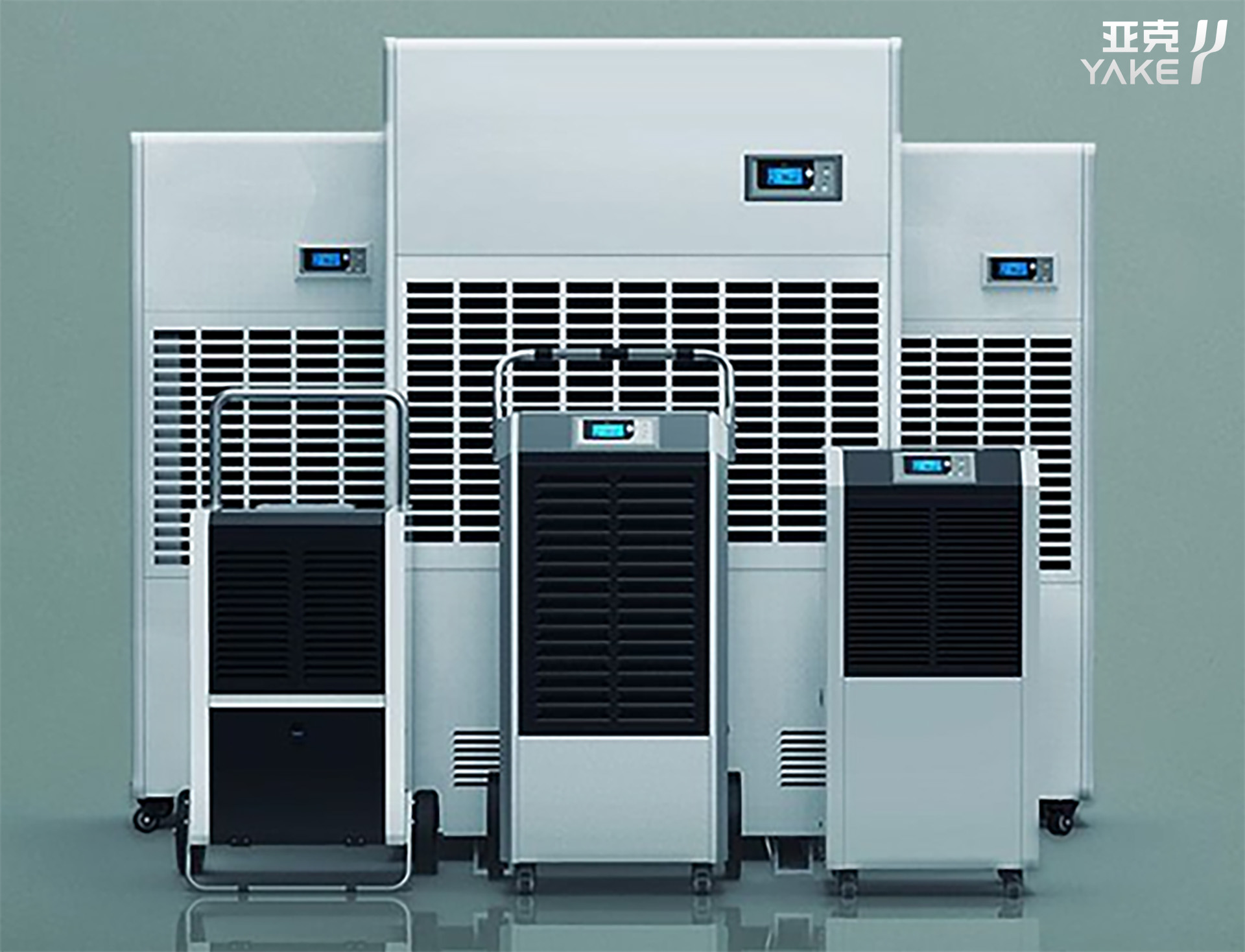
Contact us to find the best place to buy your Yakeclimate solution today!
Our experts have proven solutions to keep your humidity levels in check while keeping your energy costs low.