
Building 34, No. 535 Shunfeng Road, Hangzhou, Zhejiang, China
[email protected]
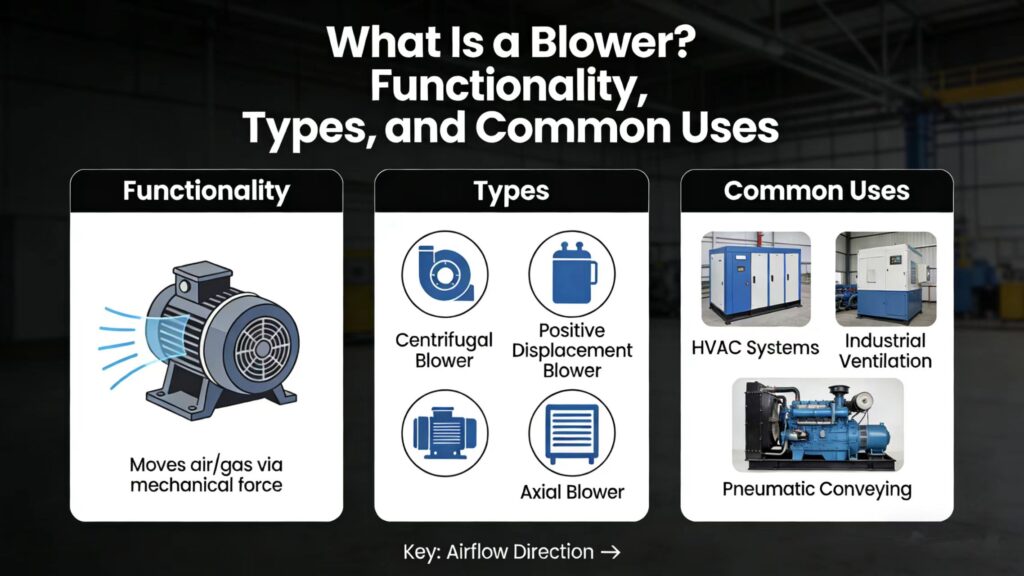

Blower functionality refers to the ability of a blower to circulate air for purposes of temperature control, moisture control, or fresh air in a room or space. On farms or in grow rooms, blowers circulate air so plants receive uniform warmth and no moisture collects. Good airflow assists plants in absorbing carbon dioxide and prevents mold or mildew from accumulating. Blowers with dehumidifiers or air filters work together to keep air clean and dry. In massive indoor farms, blowers pump huge quantities of air and maintain stability 24/7. Blower size, shape, and speed all influence how efficient the system is. To select the right blower, cultivators typically refer to room size, crop variety, and cubic feet per minute of air that must be moved per hour. Next come the key features.

Blowers, known as centrifugal fans in some industries, are devices designed to transport air or other gases from one location to another. They use mechanical energy to push air at moderate pressure, with a pressure ratio that falls between 1.1 and 1.2. This distinguishes them from normal fans, which have lower pressure ratios, and compressors which have higher ratios. In actuality, a blower can be as tiny as your hand or as massive as 2 meters wide and tall, depending on what task it’s designed for.
There are two general types of blowers, classified by how they move air. The most common is the centrifugal blower, which accounts for approximately 99% of all blowers manufactured today. These blow air out by force using a spinning wheel called an impeller. This design is great for blowing large volumes of air at a constant pressure. The other primary type is the positive displacement blower, such as lobe, screw, liquid ring, scroll, and vane designs. Rather than spinning to fling air, they trap air and shove it forward in little pockets. This technique is preferable when you require a consistent throughput with increased pressure, albeit typically at reduced velocity.
Blowers are everywhere. In HVAC systems, they assist in circulating air through filters and ducts, ensuring indoor air remains fresh and healthy. In industry, they dry blast air to accelerate evaporation of products or blow off dust and bits to clean. They assist us in leaf blowers for cleaning your patio and even in boosting fire in forges or grills. Special dust collection systems use blowers to pull in dust and keep workspaces safe. How big a blower you use and what kind really depends on how much air you need to move, how clean it needs to be, and how high the pressure should be.
Blowers keep indoor air fresh! They bring in fresh air and exhaust staleness. This is crucial for comfort and health in homes, greenhouses, and factories. Improved airflow leads to reduced dust, decreased germs, and more uniform temperature. Blowers play a silent yet significant role in creating safer, more welcoming spaces.
About: The heart of blower operation. Blowers are central to numerous applications that require rapid but consistent movement of air or gases. They convert mechanical energy, typically from an electric motor, into air flow by rotating impellers. This is the secret of how they blow air to cool, clean, or pressurize spaces. Blowers are engineered to address specific requirements such as cooling electronics, dust removal in industrial settings, or facilitating plant growth in indoor farms.
Blowers generate air flow by rotating a series of blades or impellers. This rotation pulls in and forces air outward, expelling it along a specific route. The impeller’s rotational speed and blade angle determine both the volume of air moved and its velocity. For instance, a backward inclined aerofoil impeller produces a smoother, quieter passage of air, whereas a radial design can tackle more demanding high-pressure work.
Air velocity is the core of blower functionality. Faster speed leads to more cooling or cleaning, but it also results in more noise or more energy consumption. Direction is important, so some push air linearly and others in 360 degrees. Variable speed blowers are standard these days, which makes it simple to align airflow with momentary demand and conserve power.
Different types are best for different jobs. Centrifugal blowers are preferred for moving air against resistance, while axial types are well-suited for high-flow yet low-pressure tasks, such as ventilating large rooms.
The pressure ratio is how much a blower can raise the pressure of air passing through it. It is the outlet pressure divided by the inlet pressure. Greater ratios indicate that the blower is able to force air into more resistance, such as deeper ducts or pressure vessels.
Where pressure ratios influence not only flow but energy consumption. If the ratio is too high for the task, it wastes power and can overheat. In cleanrooms, or when drying crops, nailing the pressure ratio is key to keeping everything grounded and cost effective.
Most blowers fall into two main types: centrifugal and rotary lobe. Centrifugal blowers utilize spinning impellers to propel air outward, which is ideal for higher pressure applications. Rotary lobe blowers capture air between rotating lobes and the casing, batching it along.
Centrifugal models are quieter and manage pressure drops more effectively. Rotary lobes are easy and low maintenance. Either type can be equipped with noise-reducing accessories, such as special housings or dampers. Newer trends mix in new designs and improved materials to reduce noise and improve efficiency without increasing power usage.
Fundamentals of blowers. The motor turns the impeller that sucks in and blows out air. The housing directs this flow and assists in noise control. Materials count. Steel or reinforced plastic is used for components that experience significant wear or heat.
If a motor burns out or an impeller collects dirt, efficacy falls sharply. Routine maintenance and the proper leaf pile will keep you out of these frequent predicaments. Pressure drop across a filter or vent is another item that can trim airflow and should be monitored during design and operation.
Mastering blower operation is more than just flipping a switch. It means understanding how to select a suitable fan, tune it for the job, and maintain it safely and efficiently. No matter if you’re in a greenhouse, warehouse, or out on site, the right blower and settings can make a huge impression on energy savings and work results.
Step-by-step: How to operate a blower effectively
Personal protective equipment—such as gloves, safety glasses, and hearing protection—is required. A blower can eject dust and pebbles that might be harmful. Risks increase further if you don’t check your surroundings or operate the blower close to others. Here’s what I learned about mastering blower operation: Always hold the blower with both hands and keep a good stance to avoid slips. Certain cities have regulations regarding when and where you can use blowers and noise restrictions. It’s crucial to be aware of these, as fines or complaints can come your way if you disregard them.
Check blower motors and filters frequently, since dust can accumulate and slow down or cause breakdowns. Wipe the unit down with a dry cloth after use and store it in a dry location. If you detect reduced airflow, strange sounds, or a burning odor, discontinue blower use and have a service pro inspect it.
If the airflow drops, check for blockages or a dirty filter. Strange sounds frequently indicate loose components or bad bearings. For stubborn issues, call the manufacturer or a service center for assistance or components. Replacement parts are readily available from most manufacturers.
Blower tech has been moving fast as of late, clearly concentrating on energy savings, working more efficiently, and reducing noise. Today’s blowers employ smart parts and controls that allow them to operate in a wide range of challenging locations while maintaining low costs and energy consumption. Today’s blowers are equipped with Variable Speed Drives (VSD) that provide precise control over air volume and velocity. This allows growers and makers to set blower speed to exactly what they require, conserving energy and reducing waste. This means one blower can multi-task, so you don’t need as many machines buzzing around.
Noise is another major issue. Old blowers were noisy. New ones have modular designs and improved sound covers that maintain noise control. Most can operate between 75 and 85 decibels, which is a blessing in locations where many people work or live. That translates to reduced tension and a more secure environment for all. Using blower-driven instead of compressed air is quieter and consumes less energy, so it’s great for your bills and the vibe around the machines.
For the green thinkers, big leaps ahead. A lot of blowers are now energy-smart and can reduce energy by up to £33,552.42 a year. Other designs are just more parts efficient or exchange the old heavy metals for light, strong ones, making them more portable, longer lasting and easier to recycle. Smart tech such as intelligent motion controls enables blowers to monitor and adjust their operation autonomously, leading to reduced energy consumption and extended lifespan. These controls can detect when the air demand changes and can slow down or speed up without human intervention.
That’s the secret for the long run. Ruggedized high-performance blowers are engineered to run in rough spots for months or years at a time. Makers know that if a blower breaks, it can halt the entire system and waste power, so they build them rugged. Modular blower systems allow parts to be swapped out quickly if something does fail, minimizing downtime and expense.
| Advancement | Benefit | Example/Detail |
|---|---|---|
| Variable Speed Drive (VSD) | Cuts energy use, matches need | Precise airflow for many tasks, no wasted power |
| Modular design | Less noise, flexible | 75-85 dBA, easy to fit or fix |
| Smart controls | Saves energy, self-adjusts | Senses demand, changes speed on its own |
| Blower-driven air | Cuts cost, quiet | Uses less power than compressed air, lowers bills |
| Rugged build | Fewer breakdowns | Runs in tough spots, less downtime |
Blowers are a major part of both large industrial locations and residential maintenance. What they do and how they operate can be vastly different. At the core, a blower’s job is to move air. The scale, way, and reason for doing this split them into two groups: industrial and residential. The table below highlights some obvious feature and spec distinctions.
| Feature / Spec | Industrial Blower | Residential Blower |
|---|---|---|
| Motor Power | High (up to several kW) | Low (usually below 1 kW) |
| Size (Diameter) | Up to 7.3 meters (24 feet) | 1-1.5 meters (42–60 inches) |
| Run Time | 24/7 | Short bursts | | cubic feet per minute | Very high | Low to medium | | Speed (RPM) | Low (often less than 100 RPM) | High (much faster) | | Primary Use | Industrial – wide open areas | Residential – small compartments | | Energy Impact | Reduces HVAC costs by as much as 30% | Has less impact on your energy bill | | Industrial vs. Residential Use | warehouses, factories, farms | homes, apartments, patios | | Maintenance need | Low (one fan for big space) | High (many small fans) |
Industrial blowers are designed for hard work. In manufacturing, they clear fumes, cool machines or dry goods quickly. Their motors are powerful and built to run all day for years. One giant powerhouse fan can ventilate an entire warehouse, pushing massive volumes of air with a languid revolution. Doing so keeps the air fresh and distributes heat or cool air effectively, reducing climate-control bills by 15 to 30 percent. They are in factories, farms, and large stores where large, continuous air flow is needed.
Residential blowers, meanwhile, are designed for convenience and simplicity at home. They are smaller, lighter, and frequently run for short intervals. These blowers are for drying a wet floor, blowing leaves off a lawn or cooling a room. They whirr furiously to generate a breeze you can sense immediately, but they don’t project very far. Their motors aren’t as powerful and are designed for light work that doesn’t go on too long. These fans are used in most homes, small offices, and patios.
The major distinctions boil down to power, size, and functionality. Industrial fans work slowly but move tons of air far and wide. Residential fans are fast but do not move air as far. One industrial fan can replace dozens of little home fans, which means less time spent repairing or monitoring each.
Blower power relies on a lot of things you don’t always realize. External factors such as weather and terrain have an immediate impact on blower performance. For example, gusty winds or an abrupt drop in outside temperature can create pressure changes that challenge a blower’s ability to stabilize indoor air. Terrain such as hills or open fields can affect air flow and create inconsistent pressure areas around a structure. This counts in quirky cities; consider clock tower towns or crazy double-decker bus streets. These conditions can alter air flow and render blower use unpredictable.
Air quality is another unseen influence. Heavy doses of dust or pollution can plug blower filters and reduce efficiency. When filters get clogged, the system must exert more effort, which causes it to wear out more quickly and consume more energy. In areas with high pollution, frequent cleans or filter changes are required to maintain blower performance. If air quality decreases, it can even modify how frequently you need to inspect your system.
In Philadelphia, local ordinances influence blower design and operation. Certain areas mandate blower door examinations to see if structures retain air efficiently. This test measures the air changes per hour at 50 pascals, a pressure equivalent to a 20-mph wind pounding all sides of a structure. Rules might request specific energy constraints or security measures. These pressures drive engineers to design blowers that satisfy both rigorous code and practical requirements. Installers and advisers have a big role. Research reveals they powerfully shape if individuals choose low-carbon technologies at home. One of its advisers has guided more than 300 households in selecting the appropriate microgeneration technologies, highlighting the extent to which their recommendations influence purchasing decisions.
I think consumer habits are going to drive blower technology. They want easy, silent, energy-saving systems. They hear installers whose recommendations can build or destroy a buyer’s confidence. Some users fear that depressurizing can damage the building; others do not. Makers react by constructing more intelligent, safer, and user-friendly blowers. This silent push for increasing comfort and decreasing energy consumption is what keeps the market flowing toward innovation.
In many fields, blowers play a big part. They blow air where it should be. In greenhouses, they blow air and keep plants healthy. In our homes, they keep rooms fresh and cool. In factories, they keep machines running smoothly and safely. New designs use less power and last longer. Blower functionality The people who select the right blower experience powerful effects. Every design and setup choice counts. All get cleaner air and better flow from farms to city towers. Curious what’s right for your space? For blower capabilities, consult a blower specialist today. Blow off some steam about blower functionality.
Blowers are any mechanical devices that move air or gas by increasing its pressure and flow. They assist in air circulation, surface drying, or providing energy to industrial operations.
With a blower, you have rotating blades or impellers that suck in air and blow it out at greater pressure. This provides constant airflow for multiple uses.
Blowers in the home provide ventilation, cooling, and drying. They assist in cleaner air and temperature regulation.
Industrial blowers are larger, more powerful and operate at higher air volumes. Home blowers are smaller and meant for everyday use.
Motor type, blade design, maintenance, and proper installation are all key factors. Of course, energy-efficient models make better use of blower functionality.
Sure, new blowers have energy efficient motors, smart controls, and new materials. These improve performance and decrease energy use.
Maintenance keeps breakdowns at bay, extends your blower’s life and delivers airflow at its best. It keeps energy costs down and lowers repair bills.


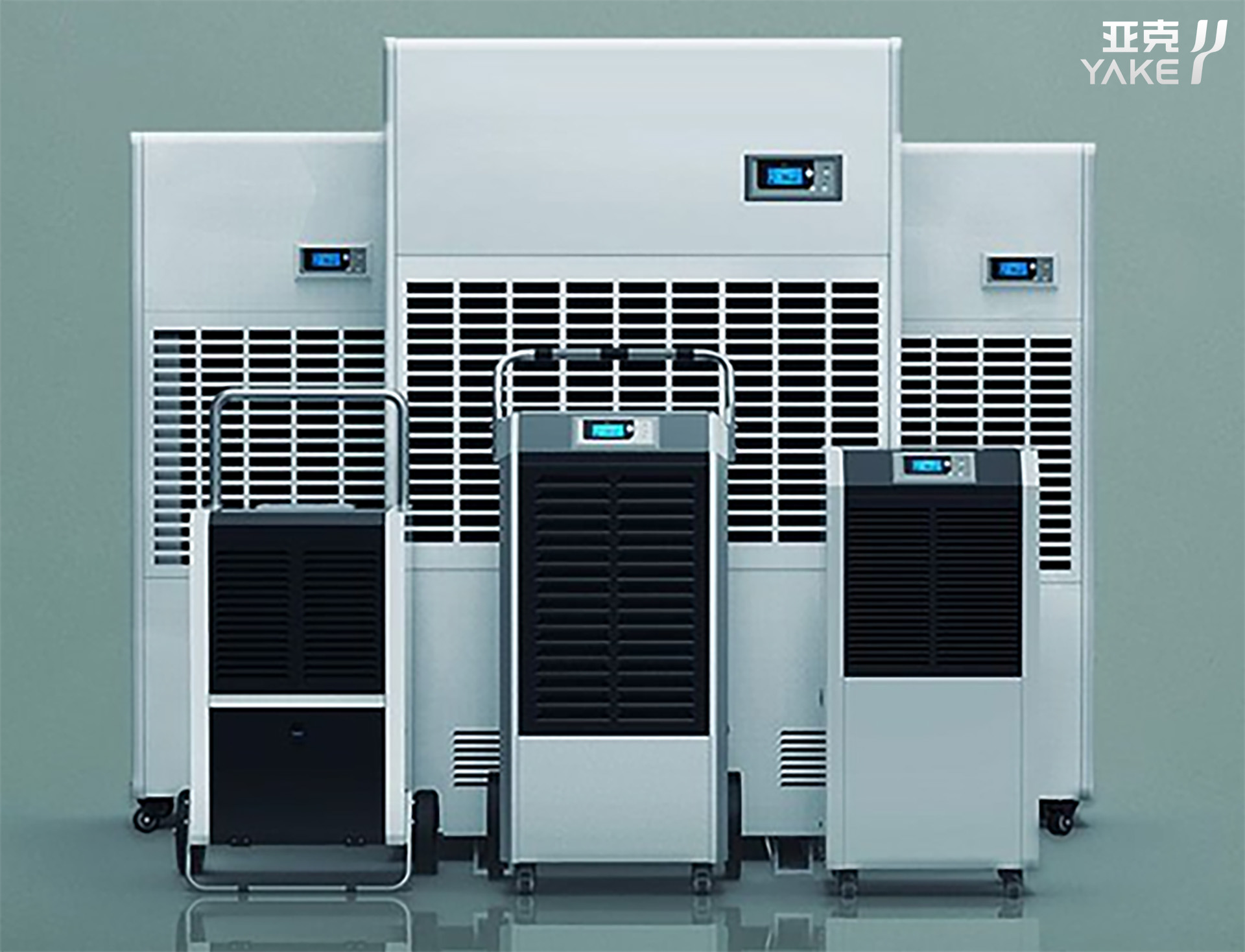
Contact us to find the best place to buy your Yakeclimate solution today!
Our experts have proven solutions to keep your humidity levels in check while keeping your energy costs low.