
Building 34, No. 535 Shunfeng Road, Hangzhou, Zhejiang, China
[email protected]


Evaporative cooling efficiency refers to the extent to which an evaporative cooler can reduce air temperature through the absorption of heat using water. Excellent efficiency means the system cools air with less water and power, saving expenses and keeping crops healthy in indoor farms. A number of growers select evaporative cooling for its energy savings benefits, particularly in dry areas. Critical variables such as air flow, water quality and outside humidity all influence the efficiency of these systems. With the proper arrangement, this results in consistent climate control, increased plant vitality and reduced potential for mold or heat stress. In this blog, discover what impacts evaporative cooling efficiency and how to optimize your indoor grow system.

Evaporative cooling sucks heat from the air by converting water into vapor. This is the principle behind cooling systems like misters and wet pads. The science is based on air temperature, humidity, and water quantity.
For water to evaporate, the air must be warm and dry. When temperatures go above 27 °C (80 °F), relative humidity decreases, allowing even more water to evaporate. If the air is dry, under 50% humidity for example, it can absorb a lot more vapor, making the cooling even stronger. For instance, misting systems can achieve 66% evaporation at 31 °C (88 °F) and 54% humidity, but only around 32% at 27 °C and 73% humidity.
The more water that vaporizes, the cooler the air gets. High humidity slows this down, limiting how much cooling you get. The rate of water turning to vapor matters a lot for system efficiency. If the air is already damp, like during early mornings or late nights, the effect drops. The temperature of the water used, whether it’s 10 °C or 32 °C, barely changes the end result.
Evaporation extracts heat from the air as water transitions to vapor. That’s what cools the air. The heat required for this phase change is drawn from the air, which is why temperatures drop. Systems employing finer droplets or wet pads soak up heat faster and are typically more effective.
Whether more heat gets absorbed depends on humidity and airflow. If you know how heat flows, you can select a system for your space that suits your needs, particularly in regions where conventional air conditioning is energy prohibitive.
Evaporative cooling can reduce air temperature by a few degrees, particularly when it’s hot and dry. In dry climates, the drop can be 5 to 15 degrees Celsius, whereas in humid areas the effect is less, sometimes only 1 or 2 degrees Celsius. That’s because evaporative coolers, while stationary and using much less power than air conditioners, do not perform as well in muggier climates.
The most substantial temperature drops occur when the humidity is at its lowest, typically between 10 p.m. 10 a.m., when the air is coolest and driest. That’s when these systems excel.
Moving air makes evaporative cooling more effective. Use fans or vents to push cool, moist air around, ensuring it circulates throughout the room. If you don’t have good airflow, you have hot and cold spots and the system fights.
Poor air movement leaves the air stale or too humid, damaging comfort and air quality. To correct this, increase fans or open additional vents. In addition to cooling better, moving air makes indoor air fresher and healthier.
There are a few key factors in evaporative cooling efficiency. Knowing them helps users maximize results in various environments. Wet-bulb effectiveness is the conventional metric to quantify proximity to ideal cooling. The performance is related to the system’s proximity to adiabatic saturation and how little loss there is in the setup. Here are the primary factors affecting system efficiency and how to optimize them in practice.
Ambient humidity is key for evaporative cooling. When the air is saturated, it’s not able to hold too much additional water. This reduces evaporation and leads to less cooling. High humidity dampens the cooling result, particularly in closed spaces or during monsoon. Evaporative coolers work most efficiently when relative humidity is under 60%. Dry climates, such as desert territory, are the best settings for these. In these regions, direct evaporative coolers can reduce air temperatures by over 10°C.
Controlling interior moisture is crucial to consistent efficiency. Exhaust fans, opened windows, or installed dehumidifiers can maintain levels in the goal range. For bigger installations, hybrid systems that transition to compression cooling during humid stretches provide flexibility and energy efficiency.
Outdoor air temperature influences the efficiency of evaporative cooling. Even when outside temperatures increase, if the humidity is high, the cooling drops. In hot, dry climates, evaporative coolers can be up to 90% wet-bulb effective, dropping indoor temps in a flash. It’s important to monitor the temperature inside and outside. It assists users in calibrating system parameters, such as fan speed or water flow, to their surrounding environment.
In heat waves, indirect or two-stage cooling can really increase efficiency. These configurations pre-chill air before it hits the main room, which works well when daytime spikes surge.
It does make a difference in moisture absorption and airflow what kind of pad you choose. Cellulose pads retain water and blow air with minimal resistance. Aspen pads cost less, but have to be replaced more often. They are synthetic pads that function in areas of hard water or where it is too difficult to clean regularly.
Pads need to be rinsed or replaced every 6 to 12 months to avoid clogging and mold. This keeps the system running at peak efficiency and prevents unnecessary water or energy waste.
Intelligently designed airflow creates balanced cooling. Air must pass through all the cooling pads and reach every corner of the room. Crossflow or counterflow systems promote more efficient mixing of air and water to maximize cooling performance.
Vents that are adjusted, variable-speed fans, and coolers in open areas all contribute to efficient distribution of cooled air. If circulation is bad, certain areas cool off too much and others remain warm. For greenhouses and large open rooms, the right custom duct layout and fan placement lead to the best results.
They convert warm air to cool air through the use of water. Selecting the correct type makes a difference in both comfort and efficiency. There are three main types: direct, indirect, and two-stage. Each caters to various requirements and environments. Certain models are portable or designed to sit in windows, while others have additional features for specialized applications. It provides an overview of the types, best uses, and average prices of evaporative coolers:
| Cooler Type | Best Use Cases | Climate Suitability | Main Benefits | Common Features |
|---|---|---|---|---|
| Direct | Homes, small offices | Dry | Simple, low cost, easy upkeep | Portable, window-mounted, adjustable louvers |
| Indirect | Schools, data rooms | Humid | Low added humidity, higher efficiency | Side-draft, down-draft |
| Two-Stage | Large spaces, factories | All, especially mixed | Balanced cooling, energy savings | Multiple fan speeds, ionizers |
Direct coolers blow hot air through water-saturated pads. The air cools and humidifies as it passes through. This technique is straightforward and inexpensive, so it’s commonly used for residences and small offices. In arid regions, direct coolers can reduce temperatures by several degrees using minimal energy. Most window and portable units utilize this method because it’s easy to install and inexpensive to operate.
In humid regions, direct coolers are not very effective. The air is saturated, so it can’t hold too much more, which equals less cooling and occasionally sticky indoor air. They’re most effective in dry climates, such as deserts or other arid areas. For larger projects or overly humid locations, other types may be more suitable.
Indirect evaporative coolers utilize a heat exchanger. Hot air brushes across a wet membrane but never directly contacts the water. The result is cooler air with less humidification added. This renders them ideal for locations where maintaining low humidity is imperative, such as in laboratories or data centers.
More efficient than direct coolers in humid climates. They frequently employ side-draft or down-draft flows, which assist with air movement in big structures. These systems, although more expensive initially, conserve energy over time. They are a good fit for schools, server rooms, and other moisture control applications.
Two-stage systems combine both direct and indirect. The air cools with no additional moisture. Then it passes through water-soaked pads for an additional cooling touch. This double process leads to superior results, even when the air is not arid.
These units are more expensive initially, but they provide huge energy savings in the long run. They reduce energy consumption and can efficiently cool large spaces. Factories, warehouses, and big open rooms get the most use. Others pack in add-ons such as fan speed control or air ionizers to enhance air quality.
Evaporative cooling systems can greatly benefit from performance measurement when it comes to making them work better and last longer. The metrics of importance are saturation efficiency, energy ratio, and water use. Each speaks to a piece of the narrative around how effectively the system operates and its operational cost. Standards and tests like the Evaporative Australian Standards and Eurovent provide means to measure and compare system performance for various units and climates.
Saturation efficiency indicates how near to wet-bulb temperature the system can cool air. The higher the saturation efficiency, the more effective the cooler. This is obtained by measuring the dry-bulb and wet-bulb temperatures at the inlet and outlet and plugging them into an equation. For example, one study measured an evaporative efficiency of 89% for a well-tuned unit.
Greater saturation efficiency means more cooling for the same airflow. When the system approaches the air’s wet-bulb temperature, it’s operating at peak efficiency. Pressure loss, fan type, and pump quality can modify this value. Better pads, cleaner fans, and tuning fan speed can push saturation efficiency even higher. Altering fan rotation speed can increase performance and conserve energy if configured correctly.
The energy efficiency ratio (EER) compares cooling power to power consumed. In evaporative coolers, a more recent metric called EvaCOP is used. This index helps compare systems. EvaCOPs can be as high as 45.58 W/W. Higher numbers indicate that the system cools more with less power.
EER determines how expensive it is to operate a system on a daily basis. When choosing a system, considering its EER or EvaCOP can help identify one that conserves energy in the long term. To increase energy ratio from smart fans to pressure loss to checking for leaks, proper maintenance, such as cleaning pads and fans, maintains low energy consumption.
Water use is a significant component of operating evaporative cooling. It ties directly to cooling output. More water can translate to more cooling, but it can also lead to more expense and waste. Balancing water used and cooling provided is key, particularly where water is scarce.
Smart-sensor-based systems can reduce waste and add water only when necessary. Maintaining pads and inspecting for leaks doesn’t hurt either. Water management is important for overall system health, not simply cost. Less waste leads to more for cooling, less stress on the system and the environment.
Extracting the maximum from an evaporative cooling system requires more than selecting a good unit. System efficiency relies on air flow, water management, maintenance, and intelligent controls. Your decisions here will impact energy consumption, moisture levels, cooling efficiency, and even system longevity.
Practical Steps to Optimize Performance:
Good cooling requires proper ventilation. If air can’t move, your system can’t ditch warm, damp air and cooling drops. Utilize exhaust fans or windows to vent used air outside. Installing vents or fans up higher can assist air flow in large areas. Good ventilation helps keep humidity under control and enhances thermal comfort. When the air is fresh and circulating, we feel cooler even when the room temperature remains unchanged. Too little airflow creates hot spots and increased humidity, damaging both comfort and efficiency.
Regular inspections can prevent serious headaches. Pads must be replaced when necessary because clogged or dirty pads reduce cooling. Clean ducts and check lines for drips. If you catch leaks early, you prevent water waste and future damage. Most systems require a complete checking before the season and spot checks during the peak of use.
Maintenance Checklist:
Water is central to cooling. Salvaging water means looking for leaks and drips and having water-saving pads and recycling where you can. This fresh, clean water helps keep pads working and reduces build-up. Hard water will cause accelerated wear and additional cleaning. A few growers recycle water through filtration or rudimentary catchment systems. Water-saving strategies save money and the environment.
Smart controls bring flexibility. They can activate or disable systems, increase fan speed or water flow according to real-time conditions. Intelligent systems maintain humidity and cooling at fixed points, ensuring that agricultural products or individuals remain comfortable. Check for temperature, humidity, and water use controls. Certain systems even notify when maintenance is due. These upgrades reduce energy costs and increase system life.
Evaporative cooling has gained ground for its real-world applicability across numerous industries and buildings globally. The technology cools air by passing it through water-saturated pads, which lowers the air temperature and often brings in 100% fresh outdoor air. This approach, which embraces both comfort and health, has relevance for offices, schools, manufacturing, and agricultural operations. The method’s simplicity and reliance on natural processes distinguishes it from mechanical air conditioning, which employs refrigerants and requires more power.
Evaporative cooling consumes significantly less electricity than conventional air conditioners. In certain instances, these systems have consumed as little as 10% of the power required for mechanical cooling. That can translate into reduced energy bills, particularly in hot, arid climates where evaporative cooling is most effective. For instance, a manufacturing plant in Spain saw its cooling costs drop as much as 70% after it replaced split AC units with evaporative coolers.
Savings vary with climate, system size, and the tightness of the building. Dry climates benefit the most. Even in mixed or humid conditions, mixing evaporative coolers with other ventilation can make a difference. Australian and Middle Eastern case studies show factories, greenhouses, and offices reducing energy consumption while keeping air fresh and cool.
Evaporative coolers leave a significantly smaller environmental footprint than traditional air conditioning. They don’t use refrigerants, which can leak and contribute to greenhouse gas emissions. By consuming less electricity, they emit fewer carbon emissions, which is crucial as outdoor CO2 levels continue to climb globally.
Sustainability advantages appear in multiple contexts. For example, commercial-scale greenhouses utilizing these systems have reduced their carbon footprint while maintaining plant health. They can go even further in reducing impact by integrating evaporative cooling with smart controls or renewable energy. Such systems coupled with displacement ventilation, which not only save energy but purge stale air, provide both efficient and healthy indoor air.
Evaporative cooling makes indoor spaces more comfortable in hot weather. It can increase worker productivity and safety by maintaining consistent temperatures and fresh air. By utilizing 100% fresh air, it eliminates particles and pollutants, which is healthful. Poor air quality shaves years off life expectancy, as demonstrated in worldwide studies.
The comfort depends on factors like humidity, air movement and system design. When configured appropriately, such systems maintain cool spaces without the aridity or staleness that typically accompanies air conditioning. Cleaner air packs a punch with fewer allergens and irritants, which can boost productivity and well-being.
Evaporative cooling is notable for its ease and effectiveness. Coolers use water and air to reduce temperatures quickly and with less energy than most other methods. Even in heat-scorched, rain-starved spots, they can maintain crops and spaces at consistent levels. Routine inspections and intelligent design maximize output and minimize waste. From farms and greenhouses to indoor grows, these systems yield increased plant health and cost savings. With tools to monitor air flow and water consumption, they see immediate successes. To maximize your setup, keep experimenting and try new hacks. For more tips or assistance with your system, contact us and take your next step.
Evaporative cooling efficiency tells you how efficiently a system is cooling air relative to the maximum it could. It is typically given as a percentage. The higher the efficiency, the closer the cooler is to performing at its optimal level.
Efficiency varies based on humidity, temperature, air flow and the quality of the pads. Lower humidity and warmer air are good for evaporative cooling efficiency. Serving maintains high efficiency.
Record inlet and outlet air temperature. Combine this with humidity to determine the system’s efficiency. Specialized meters can simplify this procedure and increase accuracy.
Direct, indirect, and hybrid evaporative coolers. Direct coolers add moisture to the air. Indirect types use a heat exchanger. Hybrid systems mix the two.
For optimal evaporative cooling efficiency, keep cooling pads clean, have proper water distribution, and ensure good airflow. Periodically inspect for leaks or blockages. High-quality pads and system settings optimization help efficiency.
With efficient evaporative coolers, you can cut energy costs and emissions while enjoying a nice, cool indoor environment. They are particularly efficient in arid areas and provide an environmentally sustainable alternative to typical air conditioning.
Evaporative coolers are most efficient in hot, dry conditions. Humid air diminishes their performance. In mild or humid areas, it may not perform as well as other cooling options.


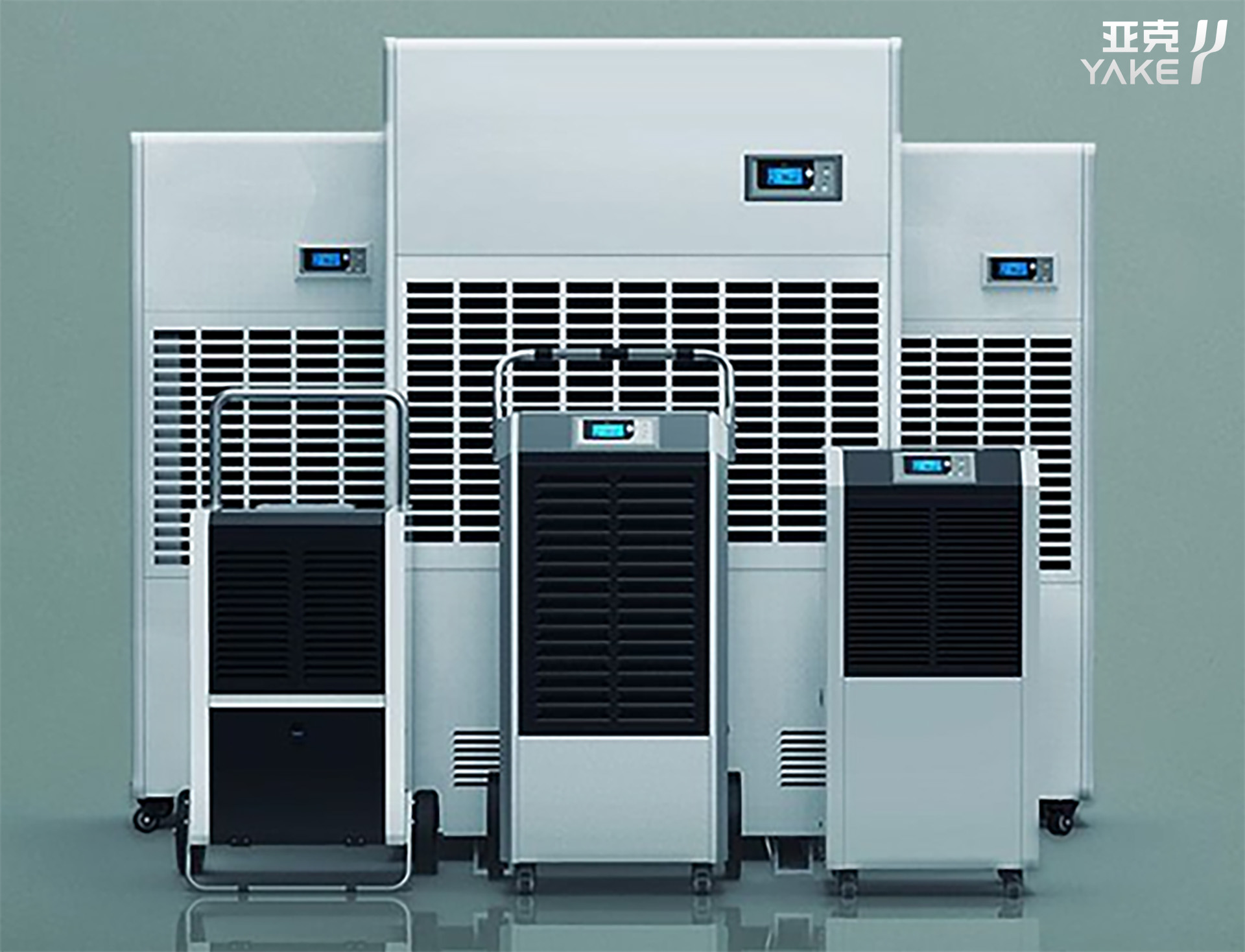
Contact us to find the best place to buy your Yakeclimate solution today!
Our experts have proven solutions to keep your humidity levels in check while keeping your energy costs low.