
Building 34, No. 535 Shunfeng Road, Hangzhou, Zhejiang, China
[email protected]
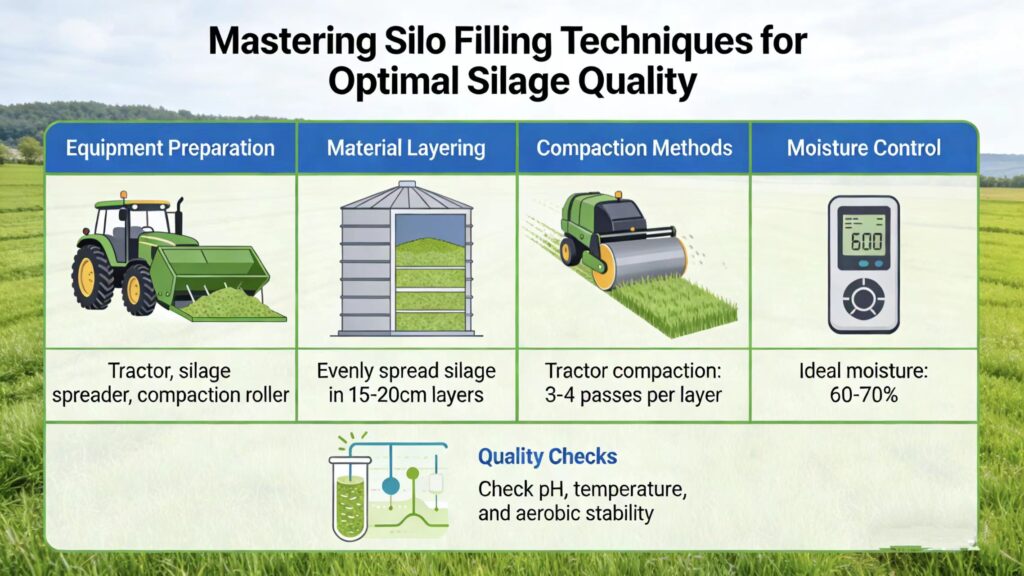

Silo filling techniques refer to methods of depositing bulk materials such as grain, powder or pellets into storage silos. Whether pneumatic or mechanical, each has been designed to keep commodities safe, dry and unspoiled to prevent caking. The proper technique reduces dust, maintains air flow and prevents bridging. Whether you belong to the food, feed, chemical or cement industry, choosing the proper filling method is essential to guarantee quality and safety. Some install conveyors, augers or air slides, and some use vacuum or pressure. The optimal method varies based on the product, space and flow requirements. Subsequent chapters demonstrate how to implement each technique, what equipment suits best and how to minimize expenses and hazards.

The silage paradox sums up a real-world problem: even when producers follow the known rules, silage quality and storage losses still cause headaches. This knowledge to result gap is not just theoretical; it translates into less feed value, more spoilage, and lost money. The paradox finds itself at the center of countless farms and factories, where feed quality and efficiency are high-stakes concerns.
Balancing silage quality and storage losses is tricky. Losses occur in filling, packing, and storage, fueled by oxygen, inadequate compaction, and delays in sealing. Even minor errors at any stage can increase losses and decrease quality. A few hours’ delay before sealing, for instance, can allow aerobic microbes to multiply, initiating spoilage prior to fermentation. This is why each step—cutting, filling, packing, and sealing—has to be fast and tight. Research reveals that variations in harvest timing, chop length, and compaction pressure drive wide silage swings across sites and seasons.
Moisture content matters most for fermentation and nutrient retention. Too much water causes seepage and undesirable fermentation. Too little delays fermentation and invites mold. The sweet spot tends to be 60 to 70 percent for most crops, but it’s hard to nail down. Every crop and climate requires its own tweaking. For instance, corn silage that’s harvested too wet can spoil with clostridia, but harvested too dry won’t pack well and air pockets form. This is where technology, such as precision moisture sensors and automated harvesters, assists, but variability persists.
Aerobic spoilage is the top enemy of silage. If air makes it into the silo, yeasts and molds flourish rapidly, heating up and spoiling the feed. This usually begins at the surface or margins, where sealing is most vulnerable. Studies find that even small leaks or gaps can double spoilage rates. Aerobic spoilage ties to increased mycotoxin dangers that damage animal health and performance. This drives producers to employ superior barriers, swifter filling, and more reinforced sealing.
Good sealing is the only way to reduce spoilage rates. Oxygen-barrier films, weighted covers, and quick sealing can cut losses up to 50 percent compared to old-fashioned plastic or loose covers. Specialized dehumidification systems, as employed in industrial food processing, can further maintain a stable, dry storage environment, making it harder for spoilage organisms to gain a foothold. Better seals yield more feed value, less waste, and more predictability.
Core silo filling methods All of these mechanical, pneumatic, gravity-assisted, layering, and compaction have their own advantages. The right technique depends on material type, process needs, and efficiency goals. Below, a comparison table showcases the efficiency of major silo types.
| Silo type | Fill method | Efficiency (1-5) | Energy | Best for |
|——————-|——————–|—————-|————|—————————| | Tower Silo | Pneumatic/Mechanical| 4 | Moderate | Fermented forage, grains. | | Bunker Silo | Mechanical/Gravity | 5 | Low | Silage, high-moisture | | Bag Silo | Mechanical | 3 | Moderate | Zwischenlager | | Horizontal Silo | Gravity/Mechanical | 4 | Low | Bulk feed, by-products |
Mechanical conveying systems, such as screw conveyors and bucket elevators, transport high volumes rapidly. Screw conveyors employ motor-powered blades within an encased housing. The blades shove material by friction and thrust, which is suitable for dry grains or chopped forage. Bucket elevators employ large chains and buckets to vertically lift the material, making them best suited for tower silos. Controlling feed rate is critical. Real-time inspections identify flow issues quickly. Upkeep is a necessity. Check conveyor belts, blades, buckets, and chains frequently to prevent expensive breakdowns.
Pneumatic systems use air to shoot material at high velocity, which is great for consistent filling and accessing hard-to-reach areas in tall or slender silos. Air pressure needs to be consistent to maintain smooth flow and reduce dust. Safety is critical—compressed air can be dangerous stuff, so you need a powerful control system. Periodic inspections of seals and pressure gauges help avoid leaks or bursts.
Gravity-assisted filling reduces energy consumption and is most effective for dry, free-flowing materials. A smartly engineered silo inlet allows gravity to draw material down quickly. It’s dangerous. Workers need to adhere to strict procedures to not slip or fall. Gravity can accelerate this, but inconsistent flow may result in bridging or air gaps if unsupervised.
Layering involves spreading the forage in less than 15 cm thick layers, which aids compaction and is used in bunker siloes. Thin, even layers minimize air pockets and maximize fermentation. We need to keep track of layer thickness; if it is too thick, compaction goes out the window. Forage type, such as wet or leafy crops, requires more care. Layering different materials helps balance nutrients but requires careful monitoring.
Proper compaction eliminates oxygen and preserves silage. Packing tractors roll over every layer, sometimes two at once for speed. Moisture has to be just right. If it is too dry, air remains trapped. If it is too wet, the risk for spoiling is increased. Monitor the silage face for evidence of spoilage or subsidence, which are indicators of inadequate packing. Real-time checks during filling stop issues from propagating.
Good fermentation is what makes or breaks silage. When forage is tightly packed into a silo, fermentation begins the moment the oxygen is depleted. It’s the first three weeks that matter; this is when most of the fermentation occurs. It’s four months before lactic acid gets high, pH falls, and soluble protein peaks. That’s why professionals recommend waiting a minimum of 3 to 4 weeks prior to feeding new silage. This allows fermentation to do its thing and for the feed to become more stable. If you feed too early, you miss out on feed value and risk spoilage.
Temperature reveals plenty of information about what’s happening inside the silo. Immediately after filling, heat accumulates rapidly. If it remains too warm, it indicates air is still trapped or fermentation is skewed. With temperature probes, plant managers can identify these issues before they start. The greatest risk for silo gas, harmful to both workers and animals, occurs in the initial 12 to 60 hours, but gases can build for close to three weeks. Effective monitoring minimizes hazards, protects personnel, and ensures fermentation remains on track.
For optimal preservation, you want lactic acid to increase quickly. That’s packing forage tight and nailing moisture, preferably 30 to 35 percent dry matter. If the forage is too wet, you get seepage and loss. If it’s too dry, you lose compaction. When dry matter is low, additives such as organic acids, propionic or acetic-propionic blends at 5 to 10 kg per metric ton, come to the rescue. These additives lower pH quicker and can reduce waste from rot. Drying the crop or employing these additives prevents clostridial fermentation, which spoils silage with bad taste and low feed value.
Fermentation is what ferments silage’s nutrition. Lactic acid accumulates first, lowering pH and preserving nutrients. Acetic acid and soluble protein continue to increase for up to six months, further stabilizing the silage and supporting digestibility in animals. Corn silage, for example, shows big jumps in starch digestibility in the first five to six months. If it’s a high nitrate crop, ensiling can reduce those levels by fifty percent, making it a safer feed.
Successful silo filling begins with a concrete plan based on structure, frameworks, and governance. Clever pre-fill planning reduces waste, protects products and prevents issues. Everything from the crop check to the equipment prep needs people with defined roles. Of course, all plans have to be actionable and accessible. Small steps, real targets, and ongoing team input fuel success.
Solid crop readiness checklist – grain maturity, moisture, disease inspection, uniformity. Each point makes certain crops strike the right nutrient balance and do not go bad.
Harvest timing is everything. For silage, the sweet spot is typically 30 to 35 percent dry matter. Pick too early and flavor suffers. If you wait too long, digestibility suffers.
Try crops before the harvest. Use moisture meters, visuals, and lab samples to identify problems early. This prevents filling the silo with subpar stuff.
Harvest varies with crop. Corn silage requires kernel processing. Grass silage requires a longer chop length. Tune gear and technique to each crop for feed value lock in!
Begin by phasing and calibrating all augers and conveyors to align with the crop’s thickness and movement. Pinpoint calibration prevents clogging and stabilizes fill levels.
Pre-fill strategic planning » Pre-check and service all machines pre-use. Pre-fill strategy number two is to replace old parts and clean hoppers. Little issues unattended can increase downtime during key fill windows.
Train each operator on calibration steps. Ensure they can identify when things need to shift and how to quickly log updates.
Remember to write down calibrations and results. This log establishes a reference for various crop types and assists in troubleshooting future problems.
| Evaluation Criteria | Description |
|---|---|
| Wall structure | Check for cracks, bulges, or corrosion |
| Sealing mechanisms | Inspect gaskets, doors, and roof junctions |
| Foundation stability | Assess for settlement or shifting |
| Support systems | Examine braces, ladders, and platforms |
So maintain all seals tight. Air leaks cause spoilage and invite pests.
Examine the foundation and pillars. Even tiny movements can endanger the entire form while filling.
Pre-fill strategic planning Maintenance logs don’t just keep track of repairs, but can be used to guide future inspections.
Advanced silo management combines smart technology and good practices to maintain feed and grain security, quality, and mobility. Precision is the key. Wireless sensors monitor grain temperature, moisture, oxygen, and carbon dioxide. Web platforms track all this data, send alerts, and assist crew in responding rapidly. The most advanced silo management systems are intelligent enough to even recommend the best aeration plan by analyzing fan specifications, silo shape, ambient conditions, and grain conditions. Monitoring grain level, movement, and feed rate prevents issues from occurring. Segregation can occur during silo filling or emptying; it is therefore vital to manage the feed rate and monitor carefully. Dust explosions are a genuine safety hazard in bulk filling, so dust monitoring and maintaining controlled air flows is essential.
Select silage additives that match your desired result, such as lactic acid bacteria for enhanced fermentation or chemical preservatives for mold mitigation. Additives have to be added at exactly the right point, typically as forage is filling into the silo, spread in thin, even layers. This ensures each silo-sized piece gets some coverage.
Cost-benefit checks are essential. A few additives are more expensive than others, but they might provide superior feed stability or extended storage life. Training staff to mix and apply these products is critical. Accurate dosing is how you avoid batch-to-batch variations in results.
Airtight seals keep oxygen out and keep the silo in anaerobic mode. Top quality covers, double plastic, and sandbags or gravel weigh down edges. Aim at problem areas such as corners and seams because they usually leak first.
See the sealing in action, from beginning to end. Employ checklists and frequent inspections, particularly post-storm. Leaks or open seams can let in air and spoil feed. Inspections every week, with clean records, help catch problems early.
Sketch out the grain’s extraction. Advanced Silo Management involves removing silage in layers to maintain face smoothness and minimize air exposure. Swift, easy access prevents leaving the feed face exposed.
Train staff to start at one side and work across, not digging down to wells or leaving steps. Observe the exposed face every day. If you see any indication of heating, mold, or spoilage, it requires immediate intervention.
Silo filling can go awry at top speed if the proper safeguards are not in place. Little things, if overlooked, can cause big problems. Feed rate tracking in real time is a must. It detects stool impactions, irregular flow or obstructions immediately. If the feed rate deviates from normal, it is an obvious indication that something is wrong with the conveying line. Mechanical conveyors demand scrutiny as well. Inspect belts, chains and bearings frequently. Old pieces can cause the entire mechanism to come to a grinding halt or shatter. These verifications prevent failures and expensive downtime.
Inspect the silo base for cracks, rust, or shifting. Quick walks around the silo each day catch problems before they grow. Corrosion can sneak up on metal parts and frame. Small cracks might not seem pressing, but they can split wide or water can infiltrate. Foundation shifts indicate that the silo is in danger of falling down. Don’t disregard these early indications; they can become disasters in a hurry.
Regular cleanings and annual pro visits prevent bigger issues. Vacuum out stale product, dust, and debris. Have welds, seams, and supports inspected annually by professional teams. Their experienced eyes identify fatigue that most employees overlook. Identifying these early means repairs are cheaper and the risk of collapse is lower.
Gas buildup is a silent killer. Following filling, gases such as carbon dioxide can ascend quickly, sometimes in as little as two to four days. If not vented, this can cause spoilage, fermentation, or even safety hazards. Keep an eye out for odd odors, discolored feed, or silo walls that are bulging. Repair venting and maintain clarity.
To make filling better, follow these steps:
To fill a silo the right way, know your plan and stick to it. Good prep leads to an easy fill. Compacted silage stays put and excludes oxygen. Fast fill preserves the crop. Small crews can employ hand tools or basic loaders. Big farms use blowers or conveyors. Maintain layers that are compact and uniform. Look out for wet spots or clumps. Plug leaks promptly. Make frequent top checks. Bad fill creates either spoil or heat. Efficient fill reduces loss and benefits animals. You need more feed and less work. Experiment with innovative equipment, educate your team, and evaluate every fill. Ready to step up your next silo fill? Contact us for silo filling tips and tools that fit your operation.
Some of the principal methods are forage wagons, blowers, conveyors, and special loaders. All three ways are to fill the silo evenly so that the forage is compacted and fermented properly.
The key to successful silo filling is compaction. This keeps the silage nutritious for livestock.
Distribute in thin layers and pack after each. This prevents the chance of air pockets and allows for improved storage and fermentation.
Silo filling methods
Typical indicators are irregular silage, air holes and spoilage along the top or side. Tackle these issues early to save feed.
Pre-siling planning aids equipment, labor, and crop harvesting organization. This optimizes the loading process and minimizes the potential for bottlenecks or contamination.
Advanced management involves tracking moisture, temperature, and compaction. These measures preserve silage quality, minimize wastage, and offer more nutritious feed to livestock.


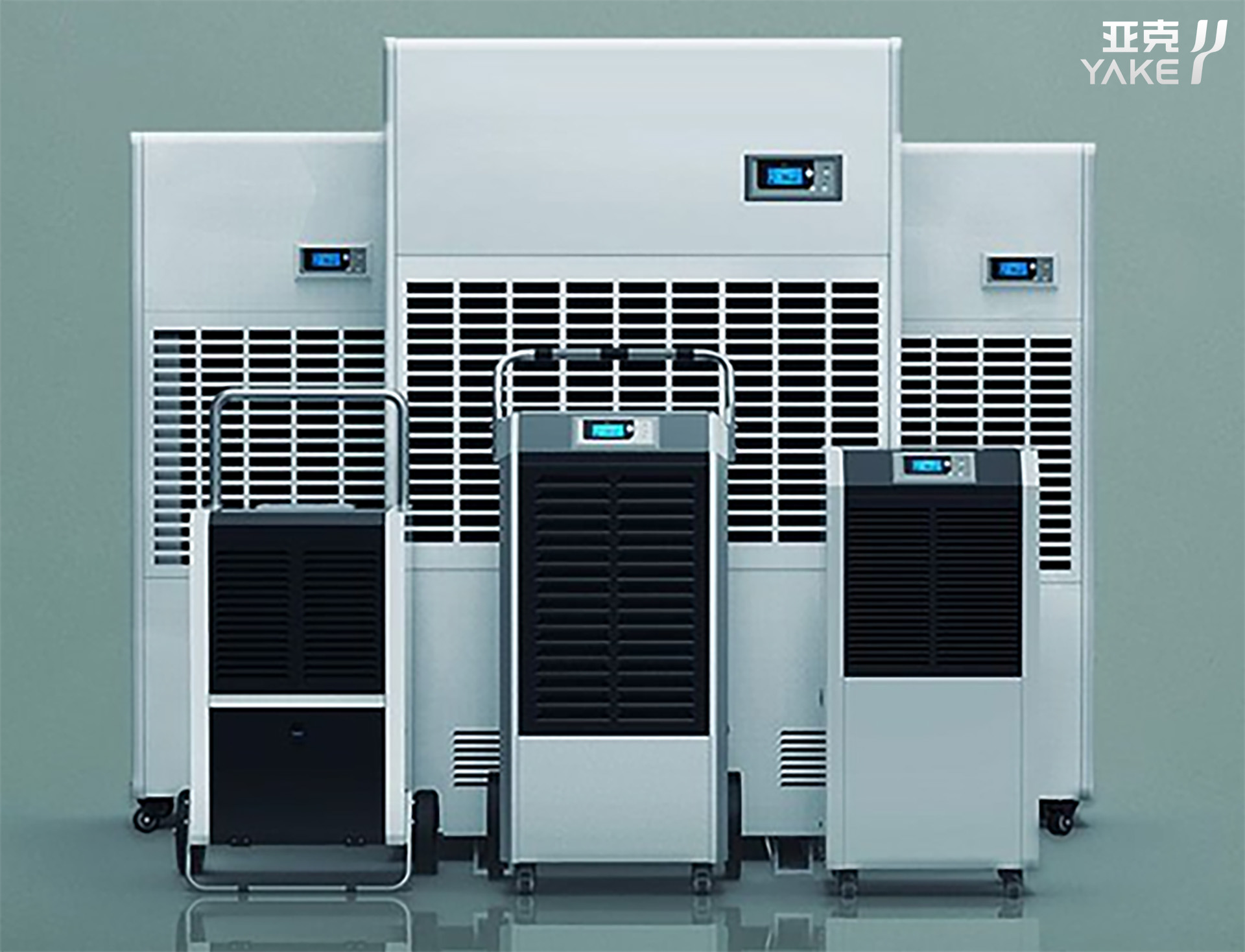
Contact us to find the best place to buy your Yakeclimate solution today!
Our experts have proven solutions to keep your humidity levels in check while keeping your energy costs low.