
Building 34, No. 535 Shunfeng Road, Hangzhou, Zhejiang, China
[email protected]
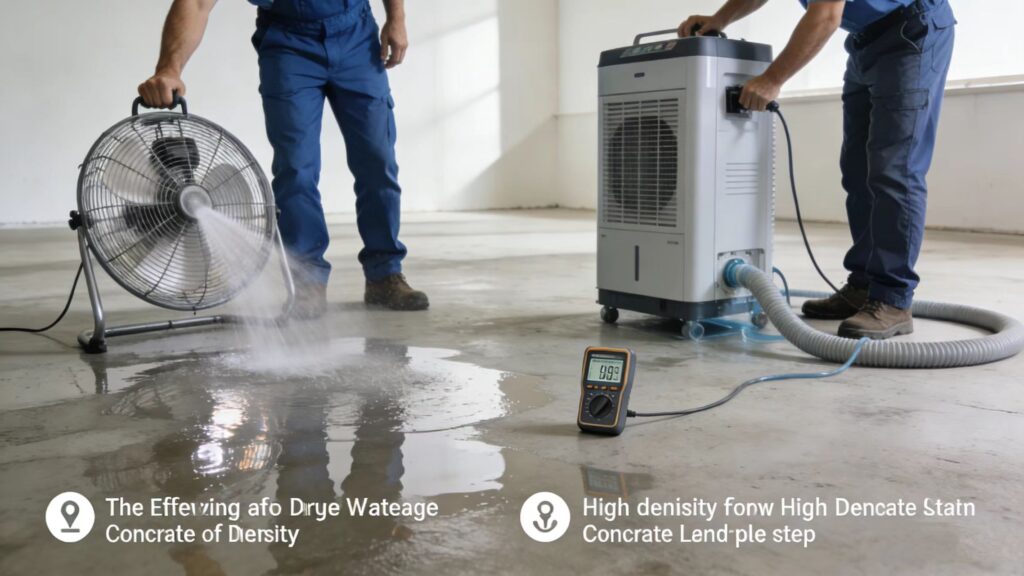

Drying concrete floor after leak is fans, dehumidifiers, and airflow to extract water from the slab and prevent mold or damage. Wet concrete contains more water than most floors, so mere air drying usually takes too long. Rapid drying requires high-velocity air movement and consistent humidity management. Industrial dehumidifiers reduce drying time and minimize the risk of residual moisture. These tools assist in drying the concrete floor after leak, ensuring the floor remains usable and preventing issues such as cracks or weak spots. Proper drying aids in compliance with safety regulations and protects merchandise or equipment in industrial environments. For plant engineers or facility managers, fast, full drying reduces repair expenses and minimizes job downtime. The following sections cover optimal procedures and equipment for this work.

When a leak strikes a concrete industrial floor, time is what causes damage. Taking action now not only preserves equity but maintains your site secure and regulatory compliant. Below are actionable advice plant managers and engineers use to minimize downtime, control moisture, and protect against chronic issues.
First, shut off the power to the vicinity. This prevents hazards from exposed wiring or wet outlets, which can result in shock or fire. Gloves and boots should always be insulated. Water can mask oils, chemicals, or biohazards harmful to skin. Open doors to increase airflow or, if you can, turn on some industrial fans. This action reduces atmospheric humidity and assists in venting volatile compounds. Block it off. Keep non-essential employees, children, and animals at bay. This saves us all from slipping, open wires, and airborne mold.
Trace that water back to its source and do it quick. Tinker with it or bring in an expert. Plumbing, HVAC, and roof leaks are the usual suspects. Use buckets and towels or even sandbags for an immediate remedy as you work on the permanent solution.
| Leak Source | How to Identify | Immediate Fix |
|---|---|---|
| Pipe joints or valves | Drips, wet patches on pipes | Shut off water, tape |
| Appliances (washers, HVAC) | Puddles under units, odd sounds | Unplug, elevate units |
| Roof or skylights | Water stains, ceiling drips | Place buckets, tarp |
| Wall cracks | Damp spots, peeling paint | Apply sealant |
Look under every rock. Moisture meters assist in identifying concealed moisture. If the water is seasonal, like from a heavy downpour, check that drains or gutters are unclogged.
Grab a wet-vac for quick water extraction. For little messes, cloth rags or absorbent towels do the trick. Mop up what the vacuum leaves behind. Bag and toss all infected materials, such as rugs, cardboard, or packaging. This step kills germs and mold. For big events, reach for a disinfectant. Allow it to rest for a minimum of 10 to 15 minutes for optimal outcome. Inspect the surroundings for concealed moisture. If humidity remains higher than 50 percent, deploy an industrial dehumidifier. This helps the slab dry and prevents mold. Check moisture with a meter. If it is above 10 percent, more drying is required. Mold can begin to develop if they are not completely dried in 24 to 48 hours.
Drying out a concrete floor after a leak requires a thoughtful process. Every step in this process is critical for reducing the time out of operation and guaranteeing safety. Employ proper equipment, control moisture and maintain cleanliness to ensure durable outcomes. For commercial spaces, the mix of air movement, heat and dehumidification and routine monitoring is what yields optimal results.
First, rip up any floor coverings—carpets, rugs, vinyl, or mats—that hold water against concrete. This inhibits moisture lingering in the environment, potentially breeding mold or eating away at subfloor materials. Inspect the subfloor and any underlayment for soft spots or staining. Peel away any adhesives or sealants that would prevent the vapor from escaping. Concrete has to be able to “breathe” to dry completely. Once you pull out items, keep them stored in a dry, well-ventilated area to prevent mold growth on them.
Shift air across the surface by situating fans around the edge and swapping their locations every few hours. Throw open doors and windows wide to establish cross-ventilation that forces humid air out and sucks drier air inside. Exhaust fans in adjacent rooms can help to evacuate excess vapor, particularly after toilet or kitchen leaks. Continue moving ventilation equipment so every area of the floor receives care, not just the middle.
Industrial dehumidifiers are critical to extract moisture from the air, particularly if levels remain above 50% relative humidity. Run units continuously until concrete tests within safe moisture levels. For bigger areas, utilize several dehumidifiers for uniform drying and faster turnaround. Inspect and dewater every collection tank frequently to maintain optimal efficiency. Daily during drying, and again upon completion, moisture monitoring is performed. This data validates recovery or indicates continued intervention might be necessary.
Portable heaters can be used to raise the ambient temperature, which accelerates evaporation. Too much heat can crack concrete or harm finishes. Keep an eye on your workspace with a thermometer and stay within 10 to 30 degrees Celsius to optimize between speed and safety. Use heat with fans. For the most part, a 24 to 72 hour heating cycle helps drive out deep-set moisture, though it can still take weeks to fully dry.
Wash the floor with a non-corrosive disinfectant to kill bacteria and remove odors. Rinse off all residue, as lingering chemicals can mess with later sealers or coatings. Check for remaining stains or salt deposits and treat appropriately. Prior to re-sealing or coating, verify the surface is completely dry. Test with a moisture meter and continue testing every other day to monitor progress.
Drying a concrete floor after a leak is not a general process. Drying time can vary significantly due to factors such as air circulation, temperature, and volume of water deposited. Even if concrete feels dry after several days, moisture can linger deep within, causing issues such as mold or floor failure down the road. Industrial plants and process sites want to know these risks to maintain smooth and safe production.
Actual drying time is subject to many factors. High outdoor humidity can add days to the clock. Wet air can’t absorb much more moisture, so floors remain wet. If you attempt to dry a concrete slab in the summer or wet climate, it may take a couple of days longer than in a dry season. Cold months can drag it out as well. Although the air may be drier, cold weather causes water to evaporate slowly, resulting in the slab remaining wet for a longer period of time. While most concrete cures in around 28 days, drying is another ball of wax. It might be months before the floor is actually dry and ready for new finishes or flooring.
Keep an eye on the site’s air and slab conditions with moisture meters and dew point gauges. Drying is most effective with a dew point under -1°C (30°F) and a constant, low speed air flow. If the air is too still, water vapor just lingers around on the surface. Professional drying frequently involves a slight increase in room temperature, somewhere in the area of 21 to 24°C (70 to 75°F). This helps drive out moisture and prevents damaging the slab or machinery.
Factors that affect drying time:
Industrial dehumidifiers and air movers are essential for rapid, uniform drying. With Yakeclimate’s solutions, you get it all: drying faster, energy savings, and a safe, compliant operation.
How do you test a concrete floor for dryness after a leak? This includes how to test for dryness or safely utilize and cover the stuff. Plant managers, engineers, and facility pros require explicit, dependable ways to do this. Testing is conducted during and after drying, as the levels can fluctuate as the concrete balances with its surroundings. Our readings indicate whether drying techniques, such as commercial dehumidifiers, are successful or if additional measures are necessary. ASTM standards call for the building to be at service conditions for a minimum of 48 hours prior to certain tests. Certain tests, such as F2170 or F1869, measure vapor rather than moisture and cannot be utilized until post-drying has occurred. A combination of flat, surface, in-situ relative humidity, and electrical impedance tests provides the best overall snapshot. Calcium chloride testing can be an option if results aren’t clear, but it is not always suitable for all concrete types.
Summary of Verification Methods:
A great first step is the plastic sheet test. Lay a plastic sheet no less than 0.2 mm thick flat on the cleaned concrete and tape the edges. Set aside for 24 hours. After waiting, peek under the plastic. If you notice water droplets or a darkened concrete surface, the floor is still wet. If there is no condensation or color change, that spot should be dry. Repeat in multiple locations, particularly around previous leak locations or refrigeration units. This aids in spotting hidden moist areas.
Electronic moisture meters provide a more accurate test. Get one designed for concrete, not wood or drywall. It’s these meters that I rely on to verify dryness. These meters utilize electrical resistance or impedance to sense water in the slab. Take readings at various locations and depths, recording each. If it’s under 4% moisture by mass or whatever your project spec says, it’s probably good to go. For optimal verification, pair this with in-situ RH testing, which employs probes embedded at 40% slab depth to monitor equilibrium. Track to identify patterns or areas that dry slower. Re-test any place where readings are high and treat with localized drying.
Water leaks can leave more than just a wet spot on the floor. The underrecognized long-term damage is caused by moisture in concrete. Drying delays or poor techniques threaten both facilities and people. Below are the main dangers to watch for after a leak:
Cracks, unevenness or warping are red flags that there is more serious trouble lurking in the concrete. These indicators signify water has already begun to erode the slab’s integrity. Load bearing locations such as columns or footings are most at risk. If cracks widen or floors appear to sag, the danger of collapse increases. Early RH testing can reveal if internal moisture is elevated, preventing failure before it spreads.
For small cracks, immediate repair is key. Basic caulking can keep water from penetrating further. If there is visible shifting or the floor feels unstable, reach out to a structural engineer. They are able to identify hidden vulnerabilities and suggest safe remedies. Concrete repairs are step one in getting back to safe operations.
Mold gets a foothold because it grows quickly within a day or two when concrete remains wet. Even minor damp areas can turn into a hotbed. Musty odors or moldy rags on walls and floors indicate mold. When humidity is above 50 percent, spores propagate more quickly. Mold has the potential to trigger respiratory complications and compromise indoor air quality.
Preventive measures such as increasing ventilation and utilizing dehumidifiers assist in keeping mold at bay. If the outbreak is severe or returns post-cleaning, professional remediation is required. Maintaining concrete under 75% relative humidity prior to flooring installation reduces future risk.
Efflorescence is the white, chalky powder you see on concrete. It develops when the water in the slab evaporates, leaving salts behind. This tends to make floors slippery and destroy adhesives. If the water table rises or there is no moisture barrier, efflorescence is more prone.
Cleaning efflorescence shortly after it appears avoids more serious damage. Sealing the concrete prevents salts from coming to the surface. For facilities with sensitive flooring, Dry-Tek’s ability to keep slabs dry and sealed prevents both cosmetic and structural issues.
Drying out a concrete floor after a leak is not as easy as it might seem. In industrial environments, the risk and cost of drying improperly can be significant. We can handle small drips or seasonal leaks with towels or rags. High volumes or floodwater frequently require the assistance of professionals. Concrete can seem dry on the surface and be wet several inches or even deeper below. This slow, unseen moisture movement is the real problem. Even after the surface is dry and tests indicate low moisture, the lower layers may remain moist. These layers can rewet the upper surface days later, threatening product contamination or equipment damage.
Professionals have moisture meters that can test concrete. Anything above 10 percent indicates active water damage and professional assistance is required. This is when industrial dehumidifiers, such as Yakeclimate’s, can help bring that humidity down below 50 percent for quicker, safer drying. Still, for thick slabs, old concrete, or plants with specialized blends or coatings, typical dehumidification won’t cut it. Slab thickness, age, type of concrete, and vapor barriers all influence drying time. In areas of high ambient humidity, these issues are exacerbated.
Mold is an obvious warning that you need professional remediation. Mold can sprout within days with moisture entrapped, and concrete’s porous nature makes it difficult to eradicate. Don’t mess around with structural issues like cracking, sagging, or visible rot. If the building’s integrity is compromised, only professionals can evaluate and salvage the site. If your drying methods have been incorrect, such as using fans or heat alone, lurking damage or health risks may remain. When in doubt, err on the side of caution. It protects both assets and people.
Below is a summary table for when to seek professional help:
| Criteria | When to Seek Professional Help |
|---|---|
| Spill size | Large leaks, not manageable with cloths |
| Surface rewetting | Upper layer dries, then becomes wet again |
| Moisture meter reading | Above 10% moisture content |
| Mold presence | Any sign of mold growth |
| Structural issues | Cracks, sagging, or deterioration |
| Complex slab factors | Thick/old slab, vapor barrier, coatings |
| Humidity control | Humidity remains above 50% |
| Uncertainty | Unsure about extent or efficacy of drying |
Drying a concrete floor following a leak requires both active work and an organized strategy. Fast airflow, consistent heat, and the right equipment dry water out quickly. Don’t trust your finger; check for trapped moisture with a meter. Missed wet spots can invite mold or damage. Some leaks keep it easy, but deep water or ancient stains demand expert assistance. Many plants and shops employ large dehumidifiers to accelerate the process and maintain safe floors. Dry concrete walls, floors, and doors mean no rust, less chance of slips and falls, and good air. For a rock-steady floor, inspect tools and surfaces regularly and work quickly at the first indication of leaks. For hard-to-dry jobs or large spaces, contact us for professional equipment or guidance.
Drying out a concrete floor can take days to weeks. It varies based on how thick the concrete is, how good the ventilation is, humidity, temperature, and other factors. Fans and dehumidifiers help dry it faster.
Yes, you can do it. After a leak, dry the concrete floor as much as you can using fans, dehumidifiers, and open windows or doors to promote airflow. If you have any wet rugs or carpeting on the floor, remove them to allow the concrete to dry out quicker.
Test with a concrete moisture meter for dryness. Looking and feeling are not accurate. Concrete should be low in moisture before repair or floor coverings.
Otherwise, you can have mold, mildew, and structural damage. These problems can damage health and lead to expensive repairs.
Contact an expert if the leak was heavy, the affected area is huge, or you notice mold or damage. Professionals have the proper equipment to get the floor dry and safe.
Yes, but beware of heaters. Too much heat risks cracking or surface damage. Keep temperatures moderate and always play it safe.
No, you shouldn’t. When you put flooring down on top of wet concrete, it can seal the moisture in, causing all kinds of mold and damage. Always make sure the floor is dry before laying down any covering.



Contact us to find the best place to buy your Yakeclimate solution today!
Our experts have proven solutions to keep your humidity levels in check while keeping your energy costs low.