
Building 34, No. 535 Shunfeng Road, Hangzhou, Zhejiang, China
[email protected]


Water evaporation time is the duration for which water evaporates from a surface. This time is contingent on breeze, warmth, and humidity. In factories and plants, slow evaporation can lead to wet spots, rust, or affect how products end up. Rapid water evaporation assists in maintaining safe floors and prevents mold in locations such as food or drug facilities. Yakeclimate’s dehumidifiers support by extracting moisture from the air, reducing drying time and maintaining smooth operations. For plant heads and engineers alike, understanding what affects evaporation rate can aid in selecting the proper implements and preventing bottlenecks. Next, predict how each influences water evaporation time and why intelligent climate management keeps production on track.

Evaporation is a phase change in which water goes from a liquid to a vapor. This transition requires warmth. Heat energy gives water molecules enough energy to move fast enough to break those bonds. In any industrial context, this simple process turns into a critical juncture for managing moisture, drying, and product quality.
In factories, the evaporation rate connects directly to multiple variables. Temperature is the culprit, primarily. Higher heat causes water molecules to move faster, and thus more of them can fly off into the air. Humidity goes the opposite way. Moist air impedes the rate of evaporation, which is the best way to dry anything. Airflow is equally important. The quicker the air moves, the more vapor gets swept away from the surface of the liquid and the faster the drying. Even the dimension of the exposed surface is relevant. Broader surfaces lose water more quickly. These aren’t just points on a theoretical map; they link to numerous practical issues, such as drying paint or handling condensation on manufacturing lines.
Intermolecular forces keep water molecules locked in liquid form. To escape, each molecule needs to gain enough energy to surmount these forces. This is why water can evaporate at low temperatures, even close to freezing, but it does so slowly. The rate increases with temperature because more molecules surmount the energy barrier. On the industrial scale, understanding these forces empowers engineers to select optimal drying temperatures and airflow rates, which are important for saving energy and preventing product degradation.
Vapor pressure is another crucial concept. On the surface, molecules exit liquid and enter the air, but others return. When the rates equalize, equilibrium is reached. Vapor pressure represents the tendency for a liquid to evaporate. In closed systems, this equilibrium determines the maximum amount of water that will evaporate. In open plants or outside, breeze or airstream changes upset this balance, so evaporation rates remain elevated. Innovative devices such as atmometers measure evaporation rates to monitor these transitions and inform the engineering of industrial processes.
Evaporation is more than a detail. It propels the water cycle and affects moisture worldwide. Each water molecule exists in the atmosphere for a decade before returning to earth as rain. Energy-efficient dehumidifiers, such as Yakeclimate’s, contribute to process control and sustainability by helping to control evaporation and humidity.
Water evaporation time varies depending on some physical and environmental factors. Knowing what drives water evaporation times assists sectors that depend on accurate drying and atmosphere control. Key influences include:
Warmer air accelerates evaporation. Molecules in warmer water move faster, which allows them to break free from the surface more easily. As temperature increases, drying time decreases rapidly. Plants located in hot climates experience water loss at a far greater rate from production floors or open tanks. Seasonal shifts matter; evaporation is faster in summer and slower in winter. The closest estimation I’ve found is an evaporation rate calculator that inputs air and water temperature to output drying time. This tool assists engineers in scheduling maintenance for maximum efficacy.
Humidity is a big factor. High humidity holds more moisture, so water in the air slows new evaporation. When the air is already near saturated, drying can stall. Relative humidity, measured with a hygrometer, indicates how much moisture the air can still hold. The greater it is, the longer water stays on surfaces. Tropical zones or badly-ventilated plants attain humidity ratios that keep floors or materials damp for hours. Using dehumidifiers in these environments reduces humidity rapidly, reduces drying times, and aids in achieving production deadlines.
Breezy air sweeps away humid air immediately adjacent to damp surfaces. Faster wind velocity ensures that a fresh layer of dry air constantly comes into contact with the water, hastening evaporation. Ventilation, including ducts, exhaust fans, or blowers, can make a huge difference in drying rooms or warehouses. Even a modest fan can double drying speed. Outside air, if dry and fast, can assist as well, but it varies with the weather. Maintaining airflow inside is the secret to consistent drying.
The greater the water surface exposed, the faster the loss. Wide, shallow trays evaporate more quickly than deep buckets because more water is exposed to the air. Thin films or puddles evaporate faster than pools. Plants employ flat drip pans or spread spills thin to accelerate drying. The evaporation rate is proportional to surface area, so doubling the width does more to remove water than doubling the depth.
Impurities such as salts, oils, or solvents alter water’s evaporation rate. If you heat pure water, it evaporates at a normal rate. Adding dissolved solids causes rates to fall or fluctuate unpredictably. Certain chemicals cling to water and keep it on surfaces for longer. Clear water assists in achieving the quickest evaporation time, as contaminated fluids can cause delays or lingering marks. Tracking water quality means you can make precise plans for mission-critical tasks.
Water drying times vary a lot by surface, air flow and weather. In a plant or shop, these shifts have a huge impact on labor and equipment. Drying is when water evaporates from a wet object into the air by heat and air circulation. When water lingers on a hard floor or in drywall or wood, how long it remains wet is important for safety and for seamless construction.
Drying rates vary with air, heat, and surface. High heat and fast air push water out quickly. If wind speed jumps from 0 to 9 m/s at 30°C, water loss jumps from 6.8 mm per day to 12.9 mm per day. At 20°C, it moves from 3.2 mm per day to 6.1 mm per day. If the air is stagnant, water dries much slower. At 100% humidity, water cannot leave the surface and drying ceases. Narrow, deep ones dry more.
| Temp (°C) | Humidity (%) | Wind (m/s) | Evaporation Rate (mm/day) |
|---|---|---|---|
| 10 | 50 | 0 | 0.9 |
| 10 | 50 | 2 | 1.2 |
| 10 | 50 | 9 | 1.7 |
| 20 | 50 | 0 | 3.2 |
| 20 | 50 | 2 | 4.5 |
| 20 | 50 | 9 | 6.1 |
| 30 | 50 | 0 | 6.8 |
| 30 | 50 | 2 | 9.6 |
| 30 | 50 | 9 | 12.9 |
A lot of us use online calculators to check dry times given our temperature, humidity, and air speed. In stores, intelligent moisture management results in less damage and less wasted labor. Yakeclimate gear maintains proper air so work and products remain secure and dry.
Predicting how quickly water evaporates is a fundamental problem in a number of industries. Climate control, drying rooms, and restoration all need to understand how long evaporation takes. Models assist us in estimating this time, but real-world issues get in the way.
There are a lot of models that scientists use to predict evaporation. Classic physics-based models give us a start, but today, hybrid and deep learning models take center stage. For instance, a wavelet transform-support vector machines hybrid model posted a mean absolute error of only 0.17 millimeters per day. That’s pretty close to reality, even on a day-to-day basis. Deep learning, such as Perrin sequence CNN models, approaches similar levels of accuracy as well with errors as low as 6.7 percent. Ensemble models, which mix LSTM and TCN, outperform single models for longer-term predictions, like seven days out. These methods assist facility engineers in scheduling maintenance and preventing downtime.
In real projects, like water damage restoration or industrial drying, these predictions matter. Teams rely on these drying time predictions to plan work and minimize downtime. Even with just raw weather data, machine learning models like Bi-LSTM assist. This is important for remote locations or older buildings lacking comprehensive sensor arrays. Restoration crews can leverage these tools to select optimal drying strategies, which reduces both energy and time.
Models have limitations. The real world is tricky. Conditions such as wind, temperature fluctuations and even dust can affect drying. Research indicates that even the best models can vary significantly. For instance, over one test, annual average evaporation rates shifted from 1,232 to 2,608 millimeters per year, according to the model. The inter-model gap gets even wider under real test conditions, with ensemble models reducing mean squared error by 27.5 percent versus single models. Even so, hybrid frameworks are now a research focus, combining signal decomposition, optimization, and deep learning to tackle complex, changing patterns.
Evaporation maps in color make these figures easy to interpret on the ground. Engineers use these maps to identify dry areas or danger in a plant. These devices assist crops in operating smoothly, fulfilling regulations, and wasting less. Improved forecasts translate to less wasted energy, less wasted time, and less wasted risk for products and people.
Evaporation determines the moisture balance in every structure. When water evaporates, it dries things out if the situation is appropriate. Too slow and moisture hangs. Around 90% of the world’s moisture in the air comes from open water, and inside factories and plants, there are human activities, leaks, or process water that contribute to the load. Evaporation can range from under 30 inches to more than 120 inches per year, depending on heat, wind, and humidity. In arid regions, evaporation can exceed 1,300 millimeters per year. These figures count for plant managers and facility engineers. They prove that evaporation isn’t just natural—it’s practical.
Not drying out wet areas quickly enough invites danger. Water that stands can seep into floors, walls or machinery. This invisible water is a typical culprit behind damage, corrosion and microbial growth, particularly in pristine environments such as a cleanroom or electronics line. Over time, slow evaporation can increase the salinity and density of water trapped in or around materials, an issue encountered at the Dead Sea, but one that can reverberate on a miniature scale inside buildings. The consequence is not merely surface blemishes. It can mean weakened structures, ruined insulation or shorted circuits. Only about 10% of ocean-evaporated water makes it inland as rain. What is left behind in buildings has to be handled by restoration and climate systems.
Time, moisture without ventilation, and it rots. Wood swells, steel rusts, and mold grows. Structural integrity falls, and allegiance to safety codes becomes more difficult. To industrial users, this translates to downtime, lost product, and inflated repair costs. On average, a water molecule hangs out in the air for about 10 days before returning to earth as rain, meaning that unaddressed humidity can pass through a plant multiple times if left unchecked. Evaporation ponds show how useful this process can be, like making salt, but inside a facility, the goal is often the opposite: to remove water before it causes harm.
The solution is fast, focused drying and high-tech dehumidification. About: The Hidden Cost of Evaporation Yakeclimate’s systems, engineered for resource efficiency and built in partnership with its customers, provide the regulation required to comply with stringent standards and enable sustainable manufacturing.
Water evaporation time governs everything from how we process moisture in industry to how we dry our clothes in real life. Knowing when and how fast water dries is crucial for plant managers, facility engineers and anyone who keeps manufacturing lines running safe and smooth. When it comes to water damage restoration, timing is everything. Big spills or floods require immediate response. Fans, heaters, and industrial dehumidifiers suck water from air and surfaces. For large projects, experts employ industrial drying equipment. Delays invite mold, equipment rust and safety hazards. When water sits too long, expenses increase and downtime drags. Yakeclimate’s precision dehumidifiers maintain dry air in these environments, accelerate evaporation and reduce downtime. In small leaks or home settings, you use box fans, open windows or a home dehumidifier. Even towels and sunshine assist. Drying wet spots, carpet or wallboard quickly stops mold growth and keeps repairs easy.
Evaporation isn’t cleanup—it’s a tool. Salt makers have employed shallow ponds for millennia to evaporate salty water and deposit table salt. The Dead Sea is a natural illustration. Since water evaporates so quickly, salt accumulates, too salty for fish or plants. In cooling, evaporative coolers are prevalent where it’s hot and dry. They inhale air, humidify it, and exhale cool, wet breath. These coolers are most efficient in low humidity areas, decreasing air temperatures up to 11°C. They’re less helpful when the air is already saturated. On a global scale, 90% of air’s moisture originates from water evaporating from oceans, seas, lakes, and rivers. A mere 10% of that falls as rain over land. Every water droplet stays airborne for nearly 10 days before raining down elsewhere. This cycle influences everything from the weather to how factories plan for humidity fluctuations.
Humidity control indoors protects product, prevents machine breakdowns and maintains a healthy workspace. Key tips: fix leaks quick, vent steam outside, keep air moving, and check humidity with meters. For large locations, collaborate with climate control professionals to select the optimal dehumidifier. Likeclimate makes gear that fits your plant’s size and needs, helps reduce energy waste, and achieves green targets.
Water doesn’t linger in most plant areas. Air rushes, heat rises, and dry air sucks water to evaporate quickly. Each drop dries at a different rate. A hot flux of wind evaporates a canvas of wet dirt in minutes. Cool air really puts the brakes on it. That’s why engineers look at air, heat, and surface types. We strive to preserve floors, prevent rust, and protect equipment. Good tools help you identify wet spots before they wreak havoc. Plant teams who understand these fundamentals keep lines humming and prevent flubs. To squeeze more from your system or address a tough area, consult a humidity expert or consider a real-time monitor. Stay sharp and dry your floor.
Temperature, humidity, air movement and surface area affect evaporation rate. The hotter, windier and less humid it is, the quicker water evaporates. The bigger the surface area, the faster the evaporation.
A little puddle might dry in a few hours if it’s warm, dry, and windy. Cooler or humid conditions can make it take much longer, even days, for water to evaporate.
Yep, salt makes evaporation slower. Saltwater evaporates slower than fresh water because the dissolved salt decreases the escape rate of water molecules into the air.
Yes. Raising the temperature, introducing a fan to increase airflow, and spreading the water out over a larger surface area will all help water evaporate more quickly.
Evaporation is critical to the water cycle. It cools surfaces, facilitates climate regulation, and sustains life by transferring water from the land to the atmosphere.
Yes, there are models and formulas that take into account the weather, temperature, and humidity to estimate how much evaporation would occur under various conditions.
Understanding evaporation rates has applications in water resource management, agriculture, climate science, and even everyday activities such as drying laundry or mopping. It could conserve resources and energy.


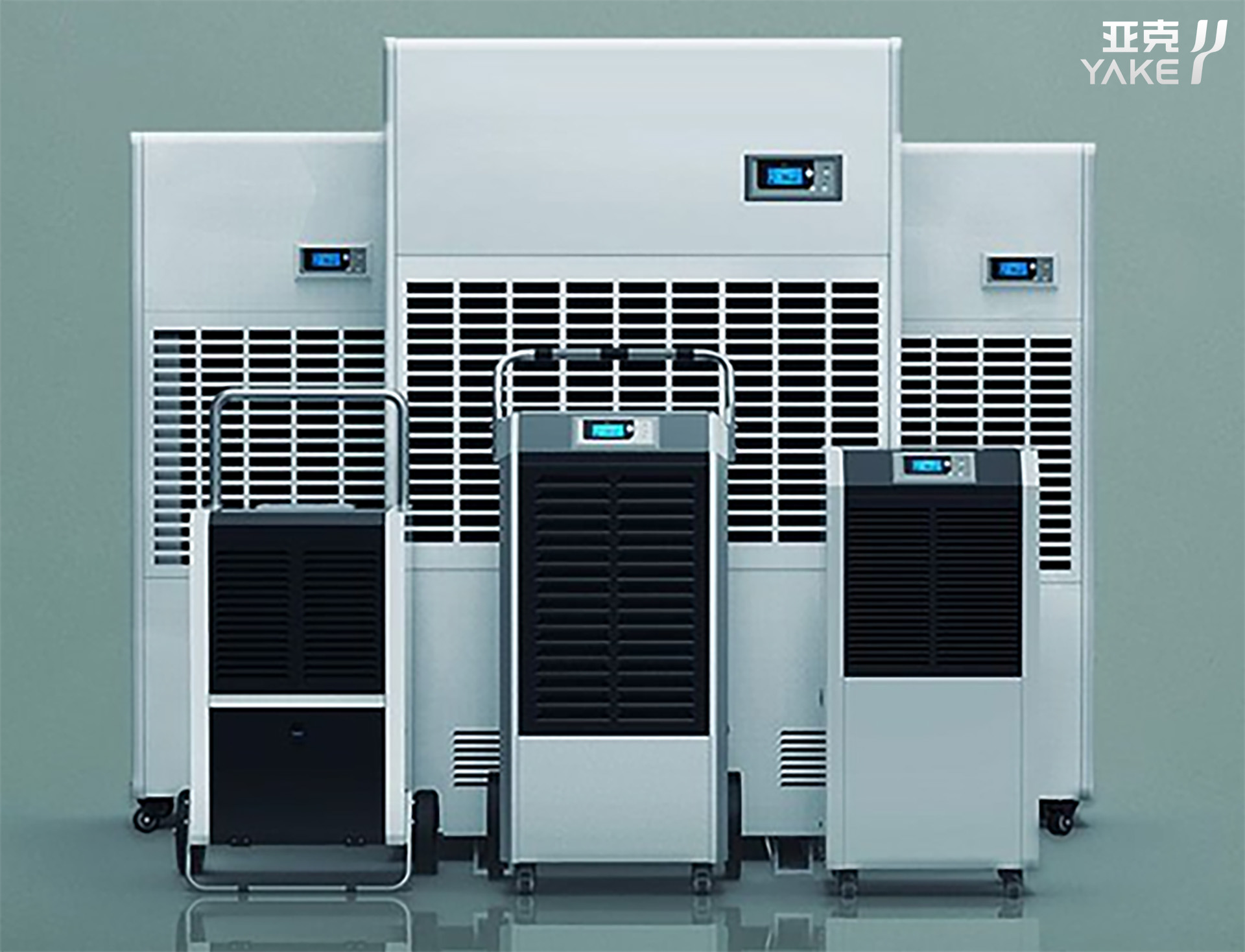
Contact us to find the best place to buy your Yakeclimate solution today!
Our experts have proven solutions to keep your humidity levels in check while keeping your energy costs low.