
Building 34, No. 535 Shunfeng Road, Hangzhou, Zhejiang, China
[email protected]
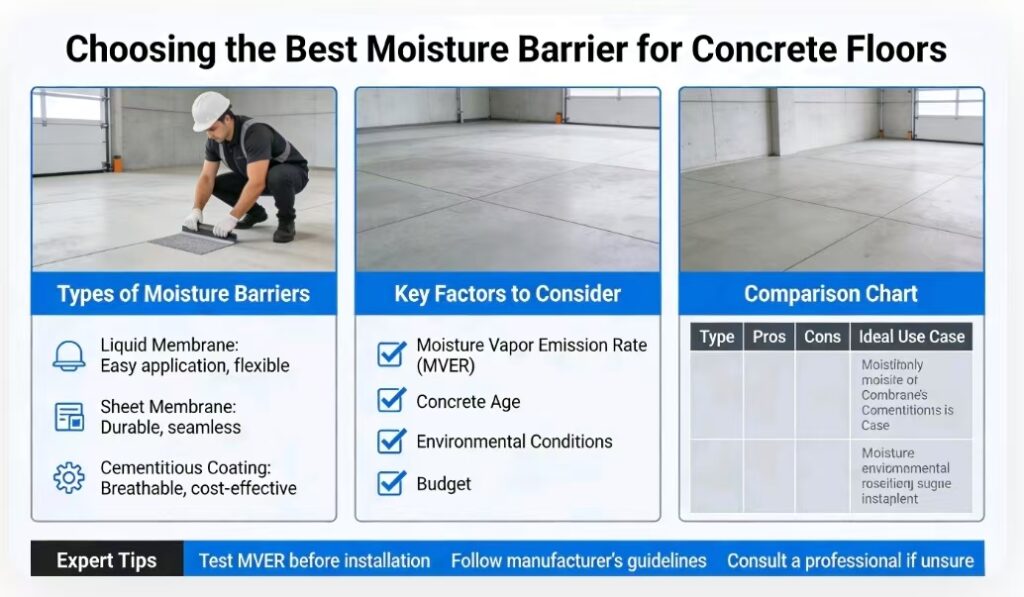

The best moisture barrier for concrete floor is a high-quality vapor barrier crafted from thick polyethylene sheeting or specialized composite membranes. Moisture barriers prevent water vapor from percolating through the concrete, which in turn helps prevent mold, floor damage, and indoor air quality issues. The best have low WVT, are highly puncture-resistant, and remain stable for a long time. Most industrial locations utilize 0.15 mm or greater membranes, often with welded seams for additional peace of mind. Choosing the right barrier guarantees dry floors, functioning machinery, and enduring finishes. Factories, warehouses, and cleanrooms comply with stringent standards with these solutions. In the following sections, find out how these barriers function, why they’re important, and what to look for to ensure success.

Concrete floors in industrial and commercial environments are under constant attack from moisture. Water vapor comes up from the ground, penetrates slab pores, or seeps in through leaks. These problems can degrade concrete, damage the building’s integrity, and make it dangerous for workers. Applying the appropriate moisture barrier creates a significant impact in terms of long-term floor performance, safety, and air quality.
Water vapor penetrates concrete in multiple forms. It can seep up from the earth beneath, particularly in areas with moist ground or a high water table. This vapor moves through capillaries in the slab and accumulates beneath surface coatings. If a vapor barrier is absent or poorly installed, moisture builds up and causes “Sweating Slab Syndrome.” This condition causes surfaces to be slick and increases the danger of slip and fall, exposing facility managers to liability.
Ground moisture affects indoor air quality. As water travels through the slab, it carries with it alkaline salts from Portland cement. These salts can chemically react with floor adhesives or finishes and cause damage and airborne particles. When HVAC systems run, humidity levels beneath the slab can hit 100%, making it difficult to maintain clean indoor air.
Typical sources of moisture are plumbing leaks, condensation from HVAC ducts and rainwater getting in through cracks. Manufacturing plants, spilled process liquids and regular washdowns exacerbate moisture problems. If humidity is left unaddressed, the potential for damage increases.
Moisture ruins floors on top of slabs. Wood and laminate can warp, swell or delaminate when exposed to water vapor, necessitating costly repairs or premature replacement. Vinyl and carpet may peel up or grow mold underneath, ruining floors and creating downtime. When a floor fails, value declines and repairing it typically involves halting production lines.
The appearance of moisture damage is hard to miss: staining, bubbling, and unevenness. Concrete left unprotected will eventually curl on the edges, making floors dangerous. Long-term exposure breaks down adhesives and coatings, further jeopardizing your investment in new floors.
Mold and mildew love wet concrete. These fungi emit spores that can cause allergies, asthma, and other respiratory issues, particularly in vulnerable workers. Substandard air quality due to mold growth diminishes comfort, productivity, and regulatory compliance with health standards.
These symptoms could indicate moisture problems, such as a musty smell, mold on walls or baseboards, and occupants constantly complaining of headaches or sinus issues. Building maintenance teams need to act fast to keep it dry and preserve worker health.
Moisture barriers for concrete floors are instrumental in protecting industrial settings from water vapor, condensation and damage. Selecting your concrete moisture barrier means balancing permeability, thickness and durability considerations to meet industry standards, contain moisture and provide long-term value for high-performance facilities.
Permeability is an indication of the amount of water vapor that can permeate through a material. Low permeability barriers prevent vapor from migrating up through concrete, so it’s worth investing in for electronics plants, pharma, and food processing. ASTM E-1745 sets clear guidelines. Class A barriers offer the lowest permeance, making them ideal for settings where strict moisture control is needed. Polyethylene films and specialized membranes typically take the lead thanks to their superior permeability scores. Choosing the right type of low-perm barrier minimizes the risk of corrosion and mold and keeps vulnerable and sensitive production runs on time.
Barrier thickness is directly tied to strength and moisture resistance. The American Concrete Institute suggests a minimum of 10 mils (0.25 mm) for general use. Commercial areas typically need a minimum of 15 mils. For more rigorous or moisture-intensive locations, such as industrial crawl spaces or regions that experience rapid temperature changes, 20-mil barriers are the norm. Heavier materials stand up to punctures from heavy equipment and foot traffic, offering a more durable defense. Steer clear of flimsy barriers, too. They typically don’t hold up well in tough environments.
Durability is about more than tear resistance. Industrial barriers have to withstand chemicals, weather changes, and abrasion. Class A vapor barriers per ASTM E-1745 are ideal for high-traffic or sharp-puncture-risk environments. Options such as reinforced polyethylene or composite membranes are more durable and provide longer-lasting moisture protection. A durable barrier means fewer replacements, which is great for the environment and your budget as well!
How it’s applied varies by product. Sheets require painstaking overlap and sealing at joints. Coatings must be applied uniformly to a free, stable surface. Bypassing these steps results in drips and wasted capital. Manufacturer’s guidelines count; every product has directions for application in various conditions and situations. Barriers that are poorly installed or placed over uneven ground frequently do not work.
Barrier costs range by thickness, material, and brand. Thicker, high-grade barriers require a larger initial investment but avoid costly floor repairs down the road. Budgeting needs to balance both upfront expense and the savings of fewer failures or moisture shutdowns. Where downtime is not an option, investing in quality pays off in high-stakes manufacturing.
Concrete floor moisture barriers exist in several forms. They all work to prevent vapor from migrating up into the slab and inhibiting performance. These solutions fall into two main groups: sheet membranes and liquid-applied coatings. Each is sub-categorized by ASTM E1745 into Class A, B, or C, which is based on strength and durability. Selecting the appropriate type varies according to the project’s specific needs, environmental threats, and regulatory compliance.
| Barrier Type | Advantages | Disadvantages |
|---|---|---|
| Sheet Membranes | High durability, strong puncture resistance, proven for heavy industry | Seams must be overlapped and sealed, can be labor-intensive, limited flexibility on uneven surfaces |
| Liquid Coatings | Seamless application, easy to use on irregular shapes, fast installation | Vulnerable if not applied at correct thickness, longer cure times, may require skilled applicator |
| Integrated Systems | Comprehensive protection, customizable, combines strengths of multiple barriers | Higher upfront cost, complex installation, may be over-specified for basic needs |
Sheet membranes are flexible sheets of plastic, usually comprised of polyethylene or a similar polymer. They’re placed beneath or on top of concrete slabs prior to finishing. These membranes function by forming a water vapor-proof barrier. Installation involves an overlap of a minimum of 150 mm, and all joints are to be sealed. Sheets range from 10 to 20 mil or more in thickness, with thicker sheets being more puncture resistant and ideal for high-traffic or industrial spaces. Commonly used products are Stego Wrap, Perminator, and Yakeclimate’s heavy duty sheet barriers. Sheet membranes are ideal for warehouses, factories, and locations where heavy loads or high humidity are anticipated. They fare well in new construction and where code compliance is vigorous.
Liquid coatings are brushed or rolled directly onto concrete, creating a monolithic, continuous barrier. They self-level and fill small cracks so you don’t risk leaks. The installation is simple yet requires uniform coverage and drying time, typically 12 to 48 hours. Liquid coatings work well where the floor is intricate or has penetrations. They’re good for repair jobs, cleanrooms, and areas where looks are important; they can be tinted or smoothed over. Epoxy and polyurethane-based coatings are among the most common, with Yakeclimate’s quick-cure formulas providing dependable moisture control as well as energy savings.
Integrated systems utilize a combination of membranes and coatings, sometimes in conjunction with drainage mats or insulation. This method delivers the best coverage, coupling the puncture resistance of sheets with the seamless coverage of coatings. Integrated systems are best for critical environments such as pharmaceutical plants or electronics assembly lines, where experiencing downtime from moisture is expensive. They tend to have a higher initial price, but they can reduce ongoing maintenance and energy expenses. They accommodate big developments with sophisticated moisture requirements, and Yakeclimate partners with plant teams to customize solutions for every location.
Proper moisture barrier installation is a process that requires precision and consistency at every step. When it comes to industrial concrete floors, every step, including surface preparation, seam integrity, and edge sealing, is crucial to long-term barrier performance and regulatory compliance. Bypassing shortcuts and common pitfalls is essential for preserving efficiency, product integrity, and facility safety.
Surface preparation is hands down the number one key to getting a barrier to stick and remain in place. Begin with dust, oil, debris and loose material removal from the concrete. A vacuum and then a damp mop are typically sufficient. Level out the surface with a grinder or patching compound if necessary, as any bumps, pits, or cracks will cause your barrier to pucker or tear.
Even minor imperfections in the substrate can cause air pockets or voids beneath the barrier. These openings allow water vapor to accumulate and wander, undermining the intent of the barrier. Don’t forget to check for spalls or efflorescence and patch them up before you do anything! A level, clean slab ensures the vapor barrier can adhere uniformly, increasing both adhesion and longevity.
For optimal performance, have a 4 to 6 inch (100 to 150 mm) layer of pea gravel under the slab. This establishes a firm, even foundation. Install the vapor barrier on top of this base, not the concrete, to keep it safe during the pour.
Seam integrity is important. Let each seam overlap 150mm (6 inches) and seal all joints with manufacturer-approved tape. This step prevents water vapor from infiltrating through the seams, the Achilles heel of any barrier. Improperly sealed seams cause localized failure and corrosion or mold underneath the floor.
Tape is important. Use high adhesion and use chemically compatible products. Give every seam a once-over for gaps or folds before you continue.
ASTM’s Class A vapor barriers, used for industrial floors, must be at least 10-mil thick with strong seams. There is a high risk of barrier breach.
Edge sealing is equally important to seams and is commonly forgotten. Ensure that all barrier edges, including walls, columns, or penetrations, are sealed with compatible adhesives or tapes. This locks out vapor from the perimeter, a prime entry point, particularly in variable climates.
Unsealed edges will allow moisture in, resulting in delamination and raised moisture content in process spaces. Don’t forget every edge, even those tucked away after construction.
Moisture barriers over concrete floors prevent vapor migration, condensation, and mold. These barriers are critical in industrial and commercial environments, where moisture control correlates with product quality and longer-term operational stability. Proper selection and installation is key for code, durability, and energy targets.
Moisture barriers are indispensable in areas where humidity is high, spills are common, or water intrusion is a risk. Pharmaceutical plants, electronics assembly, and food processing come to mind. Barriers prevent moisture from damaging flooring and sensitive equipment in flood-prone zones or basements. New builds get the most benefit, as barriers can be laid down prior to the flooring, thus weaving a seamless shield. In renovations, barriers can still be applied but might need surface preparation or special adhesives to adhere properly. Laying a barrier after the sub-base is leveled but before flooring minimizes the risk of punctures and ensures the best adhesion.
Barrier possibilities are polyethylene sheets, epoxy coatings, liquid membranes and sheet membranes. Polyethylene, particularly 10-mil to 20-mil, is recommended for heavy traffic and industrial applications, far surpassing the minimally acceptable 6-mil protection and offering better puncture resistance. Products rated at 0.1 perms or less work well for vapor blocking. Well-known brands in industrial markets like Stego, W.R. Meadows and Tremco typically meet or surpass ASTM E-1745 standards. Industry reviews and code updates (2021 IRC) now suggest at least 10-mil for longevity and code compliance.
Materials needed: vapor barrier sheet or membrane, tape or adhesive, utility knife, measuring tape, PPE. Please follow product instructions fully for best results and warranty coverage.
Crawl spaces are especially vulnerable to excessive moisture from groundwater, humid air, and inadequate drainage. Left unattended, this can lead to mold and rot and even jeopardize the building’s foundation. Encapsulation with appropriate moisture barriers is the best defense against these risks. The correct system protects not only structural integrity but encourages healthier air throughout the building.
Encapsulation shuts the door to outside moisture in the crawl space. It employs a robust vapor barrier, typically on the ground and walls, and at times seals vents and installs a dehumidifier. The main parts of a system include reinforced polyethylene sheeting, tape or sealant for seams, and fasteners for anchoring the barrier to masonry or wood.
This prevents outside moisture from wicking up through the dirt or venting. Once encapsulated, the crawl space is less susceptible to condensation, resulting in less mold and mildew issues. In humid climates or high-rain areas, this can be the difference between nonstop repairs and a worry-free foundation.
A dry crawl space further translates into improved insulation for the entire structure. Energy loss plummets because less moist air rises into the living spaces. Over the years, this reduces energy costs and extends the life of HVAC units.
| Material Type | Permeance (perm) | Thickness (mm) | Puncture Resistance | Key Pros | Key Cons |
|---|---|---|---|---|---|
| Polyethylene (reinforced) | <0.1 | ||||
| 0.25–0.5 | High | Durable, flexible | Higher cost |
| Polyethylene (typical) | Less than 0.3 | Between 0.15 and 0.3 | Medium | Cheap | Rips easily |
| PVC | Less than 0.1 | Between 0.3 and 0.6 | Very high | Strong, chemical resistant | Harder to install |
| Foil-faced barriers | Less than 0.05 | Between 0.2 and 0.4 | Medium | Reflective, blocks radon | Less flexible
Reinforced polyethylene and PVC provide first protection against punctures and moisture. Regular polyethylene is fine for low-traffic areas but can easily rip when accessed for an inspection or repair. Foil-faced barriers block vapor and radon but do not bend well around tight corners.
For humid zones and high-traffic areas, select a minimum of 10 to 20 mil thick, reinforced polyethylene. Always overlap seams 15 to 30 cm and seal with specialty tape. Keep a 7 to 8 cm space from the top of the wall, as suggested. Regular storm checks catch small leaks before they become big problems.
Moisture barrier failure with concrete floors is a nightmare for facility managers and engineers. These failures can jeopardize not just the slab but the entire construction, interrupting business and driving costs up. When barriers break down, early identification, root cause analysis, and rapid remediation are key. Regular inspections and individualized solutions by HVAC experts such as Yakeclimate aid in preventing and repairing these issues.
Air quality sags with heavy humidity and damp smells can alert you to vapor barrier failure. Too much indoor moisture can cause condensation on cold surfaces, damage electronics, and impact sensitive processes.
Water invasion ruins flooring and breaks down adhesives. Extended exposure can rust rebar, jeopardize the load-bearing capacity of buildings and make structural panels bloat. Early detection protects both assets and occupant health.
Regular inspections, at least once a year and after severe weather, are essential. They enable teams to spot warning signals before expensive failures occur.
Improper curing can lower concrete’s strength by as much as 50%, leaving it vulnerable to creeping moisture. Installation errors, like failing to seal seams with at least 150 mm (6 in) lap, are common offenders. Forgotten drainage, like failed French drains, can lead to water pooling beneath slabs.
Harsh climates, water table shifts, and seasonal flooding all put stress on these barriers. Neglected maintenance is not apparent until you see the leaks.
Fixes can be patch or complete replacement. High-performance barriers, installed by expert teams, bring safety and compliance back. Addressing the underlying issue, not just treating superficial symptoms, guarantees enduring impact and stops crash and burn cycles.
To prevent concrete moisture, choose the right barrier. A quality membrane or liquid prevents water from migrating upward. Verify grade and thickness prior to purchase. For large slabs, install a vapor sheet. For fast patch-ups, apply with a roll-on coat. It is important that the floor is dry and clean. Tape seams tightly. Press sheets smooth. Spray or brush liquids sleek. In crawl spaces, use a thick sheet with taped edges. If you notice damp patches or mold, inspect the seal. Repair leaks quickly. A good moisture barrier keeps floors dry, safe, and robust. Need additional assistance with climate or moisture? Use the best moisture barrier for concrete floor.
The best moisture barrier for you really depends on your needs. Polyethylene sheets (minimum 0.15 mm) and liquid-applied membranes are both dependable for the majority of concrete floors. It is important to choose a barrier rated for your project.
A moisture barrier blocks moisture vapor transmission through the concrete. This safeguards flooring materials, minimizes mold potential, and increases the longevity of your floor.
Ok, so you can put a moisture barrier on existing concrete. First, clean the surface and apply a liquid-applied product or suitable sheet barrier.
A typical thickness is a minimum of 0.15mm, although certain projects might specify thicker barriers. Consult the manufacturer’s specifications.
Neglecting a barrier can lead to floor damage, mold, and indoor air quality problems. It degrades the years off your floors.
Indeed, moisture barriers are highly suggested in crawl spaces. They keep moisture out, prevent mold, and protect your home’s structure.
If a good moisture barrier is not damaged and was installed properly, there is no reason it can’t last for decades. Periodic inspections will help guarantee long term performance.


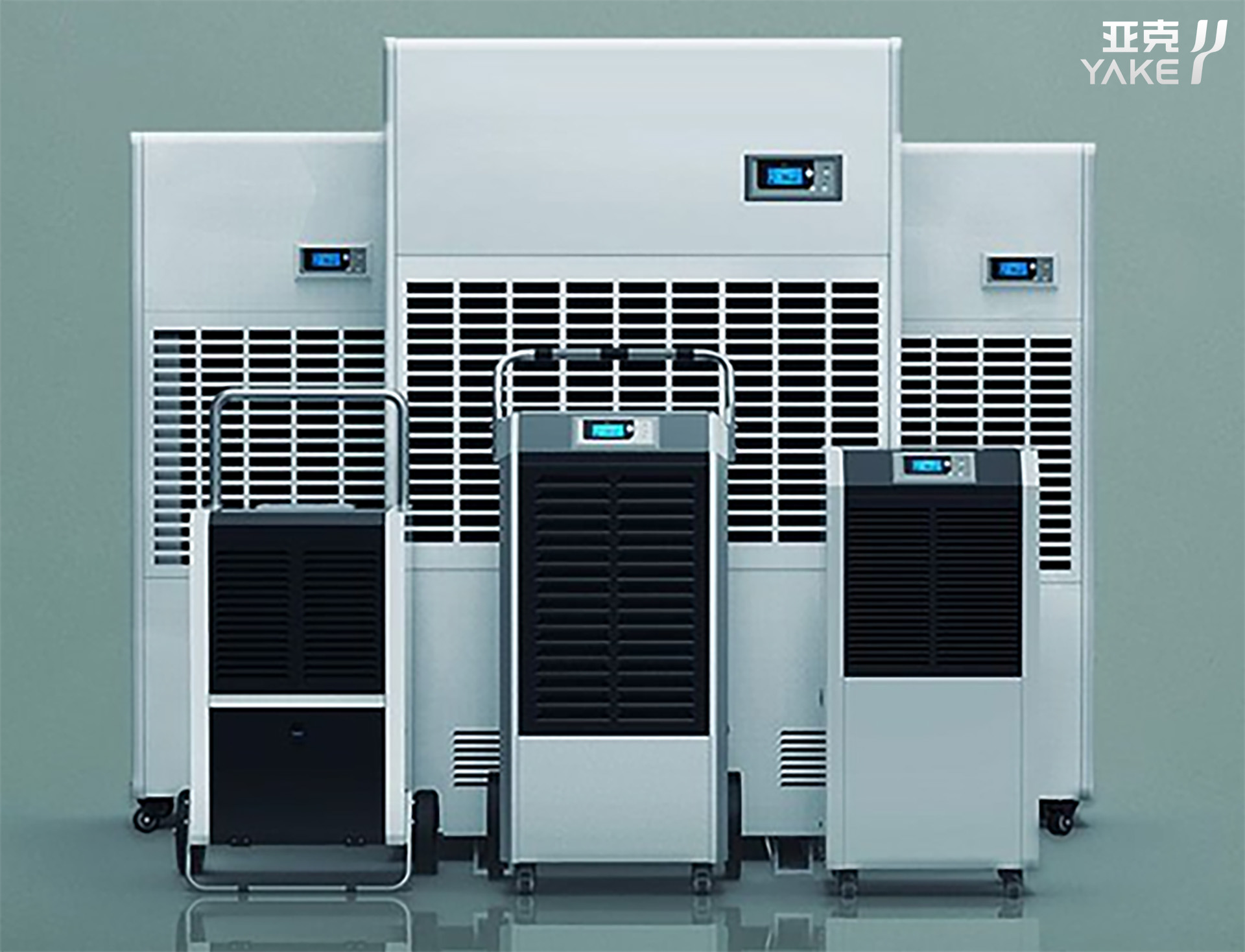
Contact us to find the best place to buy your Yakeclimate solution today!
Our experts have proven solutions to keep your humidity levels in check while keeping your energy costs low.