
Building 34, No. 535 Shunfeng Road, Hangzhou, Zhejiang, China
[email protected]
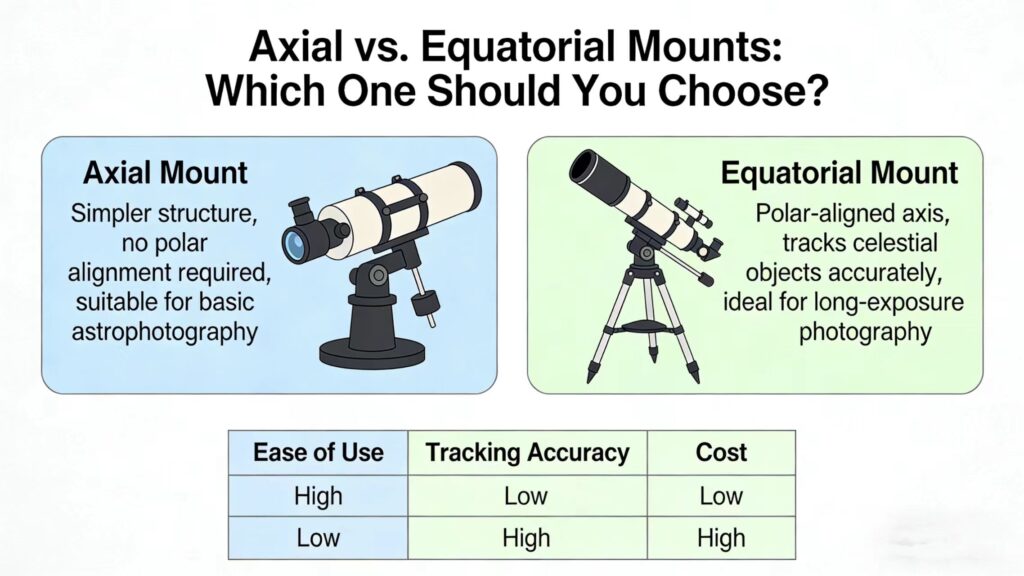

Axial and equatorial mounts are two main types of support systems used for mounting rotating equipment and instruments.
Axial mounts maintain the axis of rotation in a fixed, straight line. Equatorial mounts tip one axis to align with Earth’s axis, allowing robots or tools to follow motion through the sky or workspace with fewer corrections. Both assist in maintaining machine stability and proper functioning, but they cater to different requirements. Axial mounts work beautifully where movement is simple, and equatorial mounts are essential for astronomy and ultra-precise manufacturing. Understanding the distinction aids in selecting the appropriate mount for any task.

Axial and equatorial mounts define an approach to moving telescopes and tracking the sky. It largely comes down to their axis alignment and tracking of celestial objects. Axial mounts, or alt-azimuth mounts, move up and down and left and right. Equatorial mounts introduce a polar axis aligned with Earth’s axis, allowing them to follow stars as Earth rotates. Here we break down these fundamental differences, their design origins, and what they mean for industrial, research, and enthusiast usage.
| Feature | Axial (Alt-Azimuth) Mount | Equatorial Mount (GEM, Fork, etc.) |
|---|---|---|
| Axes of Rotation | Altitude (up/down), Azimuth (side) | Right Ascension, Declination (plus Polar Axis) |
| Movement | Simple, intuitive | Needs polar alignment, rotates with Earth |
| Tracking Efficiency | Manual corrections needed | Smooth, motorized tracking possible |
| Astrophotography | Limited by field rotation | Best for long-exposure imaging |
| Complexity | Low, easy for beginners | Higher, suited for advanced users |
| Use Case | Casual viewing, education, scouting | Research, imaging, detailed study |
Axial mounts utilize two axes: altitude for up-and-down and azimuth for side-to-side. This makes them easy and fast to aim. Users can slide the scope around a bit like a camera tripod, making them ideal for scanning the sky or fast setup in the field.
Equatorial mounts rotate on right ascension and declination axes. The polar axis points to Earth’s north or south celestial pole. This allows the mount to track a star’s motion with only one fluid movement. Users must align the mount before using, but tracking is a breeze once it’s set.
Tripod-style mounts are lightweight, fast to deploy, and portable. Equatorial designs such as the German Equatorial Mount (GEM) are bulkier and require counterweights. They provide smooth, accurate tracking.
Getting these mechanics down is important, particularly if you’re a novice or want a swift workflow.
Axial mounts prioritize weight and speed. They use fewer moving parts and fit smaller to mid-sized telescopes, perfect for field teams or rapid surveys. Their form is streamlined, aesthetically often enjoyable, and convenient to stow.
Equatorial mounts emphasize accuracy. Their design can support heavy optics and allow for precise tweaks. It’s not about aesthetics; it’s about performance, reducing shake, locking in alignment, and fueling long sessions.
Stability and durability are crucial when working with sensitive equipment or in rough terrain. The more sophisticated the mount, the better it handles weight and wind.
Equatorial mounts excel in tracking. With the polar axis aligned, the mount can track a planet, star, or satellite with ease. Motors can handle this automation, lessening manual tweaking. These polar scopes assist users in achieving the perfect alignment.
Axial mounts flounder in this area. They require constant nudging to track an object in the moving sky. For casual sky tours, this is okay. For imaging or data logging, it is not good enough.
Accurate tracking is essential for long exposure astrophotography and scientific observation. The better the track, the crisper the result.
Field rotation is what occurs when a mount doesn’t track the sky’s movement. For axial mounts, this causes stars to streak or trails to appear in photos even with short exposures.
Equatorial types minimize this. Once the polar axis is established, the field remains stable, allowing the capture of crisp images for extended periods. That’s why most astrophotography rigs use equatorial mounts.
If field rotation isn’t controlled, even the finest telescope will not produce sharp results. That’s why pros pick up on this early.
Axial mounts, known as equatorial mounts, are a staple in astronomy rigs. This system employs dual axes: right ascension (RA) and declination (dec.) to allow smooth star tracking. The RA and dec. Axes are similar to longitude and latitude, providing a reference frame for locating objects in the night sky or when observing terrestrial landmarks. This design allows observers to rotate only a single axis at the same speed as the Earth’s rotation, thereby keeping celestial bodies in view. They aren’t just for astronomy either; they can be used while watching a landscape, skyline, or distant animals.
Axial mounts are favored because they are easy to use and easy to set up. Most are lightweight, so you can carry them to remote sites. A lot of beginner telescopes come with this mount because it’s easy for novices.
Their uncomplicated design translates to fewer components to calibrate, rendering them ideal for quick installations and expeditions. For beginners, these mounts provide dependability with no learning curve.
Axial mounts are not without their limits. Its tracking precision is not as good as the higher-end systems, which can annoy those attempting long exposure astrophotography. They do not perform well with strong wind and are not as feature-rich as top-end models.
You can go to high magnification, but you can get wobble. This makes them less suitable for faint deep sky objects or professional research.
That’s why axial mounts shine in casual stargazing, outdoor education, and public demos. Easy setups make them perfect for spontaneous sessions in parks or at school events. Novice astronomers, educators, and amateurs get the most out of them when viewing bright stars, the Moon, or planets. Their portability makes them a favorite for travel, outreach, or fieldwork with minimal setup time. For anyone seeking a dependable, flexible, and inexpensive option, axial mounts are typically the way to go.
With an equatorial mount, a telescope can track stars as they move across the sky because of Earth’s rotation. It uses two main axes: declination (north-south) and right ascension (east-west). When the right ascension axis is lined up with the pole star, the mount’s movement corresponds to Earth’s movement. Most commercial iterations utilize the German Equatorial Mount design, known for its strength and flexibility. High-end versions frequently incorporate motorized tracking and computer-powered object location, facilitating the pursuit of remote targets such as galaxies. These mounts accommodate a wide variety of telescope types, from compact refractors to massive reflectors, for visual and imaging purposes.
The beauty of equatorial mounts is tracking. The right ascension axis replicates the Earth’s motion, so the mount holds objects still in the eyepiece or camera. This is essential for marathon observing sessions or when tracking dim objects.
The equatorial mount 1 of 2 Long-exposure astrophotography requires stable tracking. An equatorial mount halts field rotation, so pictures remain crisp over minutes or hours. This makes them a favorite among astrophotographers.
Precision and stability are important in professional setups.
Equatorial Mounts in Action
The balanced design of an equatorial mount keeps heavy telescopes rock steady even when buffeted by wind or holding massive cameras. That minimizes vibration and maintains signal purity.
Heavy scopes or imaging rigs require support. Our German Equatorial Mounts carry hefty payloads, allowing you to attach larger optics or accessories with assurance.
Takes a while to set up and align. Technically, users have to aim the mount’s primary axis at the pole star, which isn’t always clear, particularly for novices.
Good equatorial mounts are more expensive than simpler types. Adding computerized controls and powerful motors increases the cost.
An equatorial mount, explained. Some say it requires weeks, if not formal study, to master, especially if working with precision.
They’re big and heavy, these mounts. They can be cumbersome to transport if you’re traveling or relocating regularly. Axial (alt-azimuth) mounts are lighter and simpler for quick use.
Deep-sky observation is best done with equatorial mounts. They can follow dim galaxies and nebulae throughout the night without drift.
Astrophotographers use these mounts for crisp, streak-less photographs. The Equatorial Mount Explained. Long exposures reveal more detail because the mount is turning with the stars.
Serious research demands equatorial mounts. They allow astronomers to track objects with precision and record data for hours or days.
For fuzzy, mobile targets, accuracy matters. Equatorial mounts shine at keeping these targets centered for detailed investigation.
About That Telescope Mount! Your perfect mount connects your style, gear, and site to provide effortless tracking or simple operation. All mount types have trade-offs. Consider your requirements before you select.
Casual users tend to like axial (alt-azimuth) mounts. These mounts angle up and swivel. They’re fast to learn, install, and use. They are great for sweeping open the eastern morning or western evening sky and are perfect for those seeking quick, easy star power.
If you’re chasing dim galaxies or want to attempt astroimaging, equatorial mounts assist. They follow stars as Earth rotates, keeping items still for extended stares or pictures. These mounts require some talent. You’d have to know sky charts and the Earth’s tilt. Hard core observers tend to like them for their firm, accurate steering.
Others opt for a hybrid approach, convenience with a little monitoring. Alt-azimuth mounts with wedges allow you to track stars, but require more adjustments than a genuine equatorial. So please keep in mind your observing habits. If you spend hours on a single target, tracking is crucial. If you move quickly from star to star, simplicity triumphs.
Mount and scope must correspond. Big Dobsonians rely on these axial mounts for stability and simplicity. Refractors, reflectors, or catadioptrics couple nicely with equatorial mounts, particularly when long exposure images or high magnification is required.
Size and weight are important. Verify the mount’s load capacity. Heavy scopes require solid mounting or tracking will suffer. Lightweight mounts are perfect for tiny scopes and quick jaunts outdoors. Be sure to test ride; fit is everything.
Money molds your decisions. Axial mounts, which are cheaper, are great if you’re a beginner. A few entry level equatorial mounts offer good value but tend to have lower capacity or fewer features.
A quality equatorial mount costs more, naturally. They endure and carry weightier equipment. If you want to upgrade later, purchasing a robust mount upfront can save you money down the line. Consider short-term savings against long-term needs.
Light pollution in your urban skies will nudge you towards the easy-to-move mounts. If you go to remote, dark places, portability counts for more. Weather matters too. Heavy, complex mounts are difficult to set up in wind or cold.
Local conditions dictate your selection. If you have a permanent observatory, weight is less important. For field work, light and fast mounts rule. Pair your equipment with the location you stargaze most.
Industrial professionals require tools that keep up with the speed and accuracy of their work. The fact of whether a mount — axial or equatorial — lends its initial aura and continuing delight with any observation rig. The table below juxtaposes key elements of each mount’s setup experience.
| Feature | Axial Mount | Equatorial Mount |
|---|---|---|
| Assembly Time | Fast, under 5 minutes | Moderate, 10–20 minutes |
| Skill Level Required | Beginner-friendly | Intermediate to advanced |
| Adjustment Complexity | Minimal, basic controls | Detailed, requires polar alignment |
| Precision Needed | General pointing | High, for celestial tracking |
| Suitable for | Quick, casual use | Long-term, precise observation |
| Typical User Experience | Plug-and-play, intuitive | Methodical, technical |
Axial mounts are designed for clean operation. Most units snap or screw into place with a few common tools. Our customers typically do an assembly in minutes, which is crucial for settings where downtime needs to be minimal. No special skills or calibration tools are required. Normal alignment is typically enough.
Hardly any tweaking is required. Focus and angle adjustments can be made with simple dials or levers. This decreases the chance of user error and makes axial mounts simple to integrate into training intensive workflows. For new hires or high-turnover teams, this simplicity makes sense from a business standpoint.
Axial mounts work best where velocity is key. Instant gratification, few instructions, and little chance of set-up errors. A packaging line supervisor can install an axial to check condensation or particulates in the air with zero downtime. This design enables users to begin observations immediately, which enhances productivity and minimizes frustration.
Equatorial mounts require more of you. Assembly involves several interconnected steps: placing the mount, securing the tripod, and ensuring the right ascension (RA) axis is pointed at the celestial pole. This setup is ideally done in daylight, particularly if you’re a newbie. We need to set the latitude and longitude so the RA axis aligns with the North or South Celestial Pole. It’s made easier with a pole star and more complicated in the southern hemisphere where there is no pole star.
Proper polar alignment is important. This is actually a key point, as the user now has to adjust altazimuth and azimuth bolts to fine-tune the mount’s angle. The RA disc indicates time, and the declination disc indicates angular distance. This level of control enables longterm stable tracking of moving objects, which is essential for process control or automated inspection in manufacturing lines.
Once mastered, equatorial mounts enable three-star or multi-point alignments, which reduce tracking errors. This results in less manual noodling while in action. Power users love the repeatability and stability these mounts provide, perfect for professional settings where accuracy and data preservation are mandatory.
Contemporary telescope mounts go well beyond the basics. Modern systems employ sophisticated mechanics and electronics to assist amateurs and professionals alike in tracking the night sky with greater accuracy. Axial vs Equatorial Mount
This is where the decision between an axial and equatorial mount usually boils down to smooth tracking and ease of use when observing for extended periods or capturing images of celestial objects.
Go-To mounts utilize integrated motors and computer systems to locate and track stars, planets, and galaxies. With Go-To, users input their destination and the mount points the telescope, eliminating all the guesswork from sky navigation. This is great for novices who may have a hard time locating objects, as well as experienced users who want to squeeze every last minute out of their observing time. Most Go-To mounts today connect straight to smartphone applications, so setup and control is much more intuitive. You simply tap a target on your screen and view the mount orient itself. By automating tracking, Go-To technology saves time, reduces error, and allows more time for actually observing.
Ongoing maintenance is essential to maintaining both axial and equatorial mounts properly. Easy things such as looking for dust, wiping away grime, and ensuring all moving parts are lubricated can save you a lot of headaches. Checking the gears, tightening loose bolts, and inspecting cables or hand controllers for wear prolongs the life of the equipment. Clean mounts slide more easily, track better, and fail less during important sessions. Good maintenance guards your investment and keeps observing sessions trouble-free.
New materials, from composites and alloys, are making mounts lighter and stronger. That translates to simpler portability and smoother tracking, even with heavyweight telescopes. Improvements in tracking systems mean more precision for astrophotography, helping to keep objects centered for longer exposures. Wireless controls and automated alignment routines will likely become standard, further reducing the learning curve for neophyte astronomers. Keeping up with these trends means that professionals and hobbyists alike can get the most from their gear.
Axial and equatorial mounts both do the job, just differently. Axial mounts remain streamlined and rugged, ideal for quick configurations and operations in confined areas. Equatorial mounts provide smooth tracking, crucial for high-detail or extended observations of the same target. Both sorts work across fields, from plant floors to labs. Choose depending on your requirement — fast, easy, or precise tracking. Try both and see which better fits your daily work. See what teams like yours use. Contact a Yakeclimate expert to discuss your installation’s requirements. Eliminate the guesswork and obtain the correct mount for your configuration.
Axial mounts turn around a single horizontal axis as opposed to equatorial mounts, which rotate around two axes. Equatorial mounts align with Earth’s axis and are therefore better suited for tracking celestial objects.
Axial mounts are easier and faster to set up, making them perfect for novices. Equatorial mounts are a bit more difficult at first to align, but they provide superior tracking for astronomy.
Yes, equatorial mounts are the best choice for astrophotography. They follow stars gracefully and minimize image blur in long exposures.
An axial mount can be used for simple sky observation. For accurate astronomical tracking, you’ll want an equatorial mount.
Axial mounts typically take minutes. Equatorial mounts take longer to align, particularly for precise tracking.
They’re lighter and more compact, so they’re easier to transport. Equatorial mounts are heavier because of these additional parts.
Think about your experience, usage, portability, and budget. Axial mounts are good for beginners. Equatorial mounts are for power users and astrophotographers.


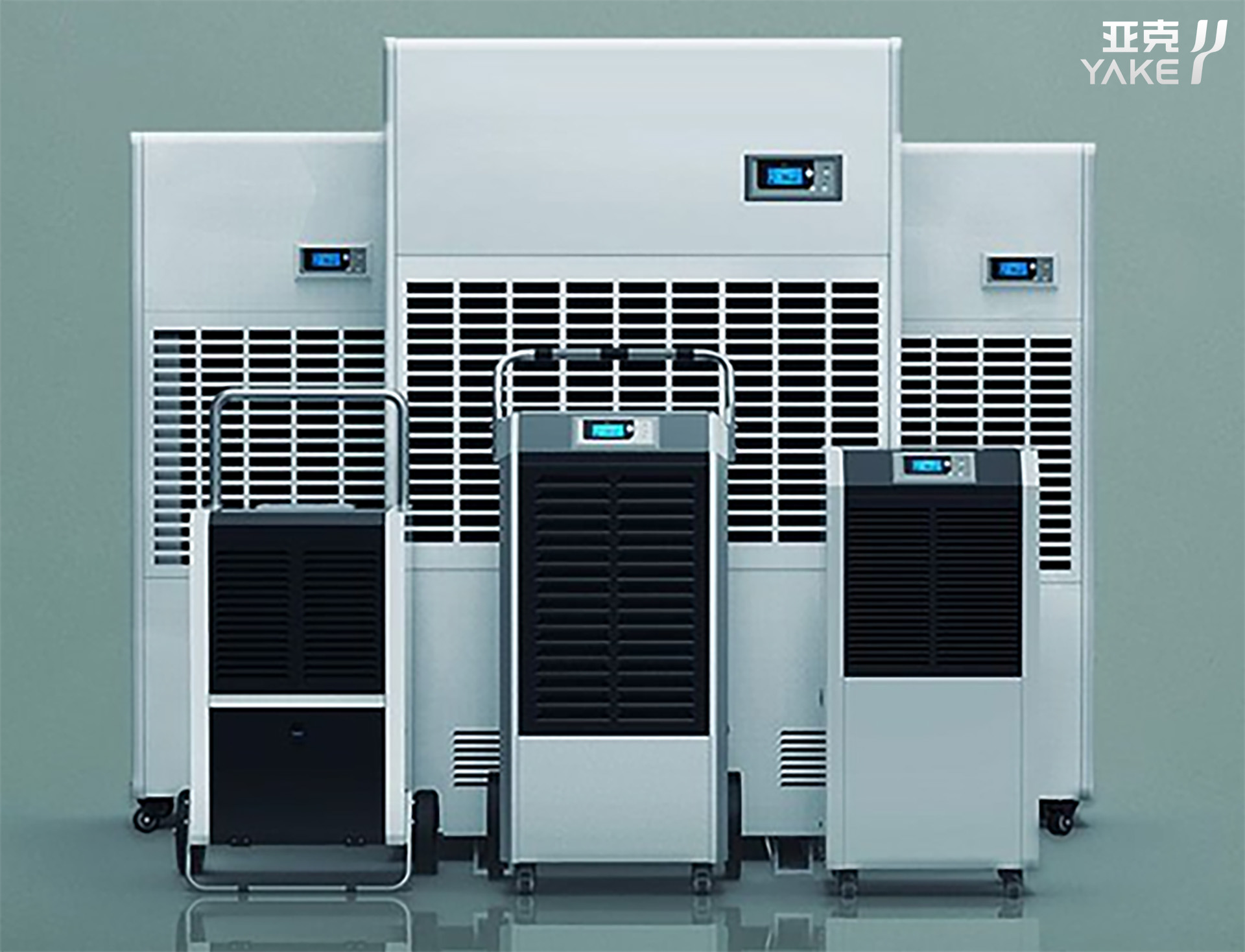
Contact us to find the best place to buy your Yakeclimate solution today!
Our experts have proven solutions to keep your humidity levels in check while keeping your energy costs low.